How to Stop Leash Pulling: The Force-Free Walking Guide (Evidence-Based, Step-by-Step)
Most dog owners have experienced it: you step outside, your dog hits the end of the leash, and suddenly you're being dragged down the sidewalk like a sled dog. Leash pulling is the single most commonly reported behavior problem in pet dogs, and it's one of the leading reasons dogs end up in shelters. But here's what most people get wrong: leash pulling is not defiance. It's biomechanics, reinforcement history, and a training gap that no amount of yanking on the leash will fix.
This guide explains why dogs pull using peer-reviewed biomechanics research, walks through the equipment science so you can choose the right tools, and gives you a 14-day progressive protocol for loose-leash walking that doesn't rely on pain, fear, or suppression.
Why Dogs Pull: The Opposition Reflex
The root cause of leash pulling is a reflex every dog is born with.
When you pull back on a leash, your dog's body instinctively pulls forward. This is called the opposition reflex — a neurological response where muscles automatically contract against directional pressure. It's the same reflex that makes a dog plant their feet when you try to move them. The harder you pull back, the harder your dog pulls forward. It's not stubbornness. It's anatomy.
But the opposition reflex is only half the story. The other half is reinforcement. Every single time your dog pulls and reaches what they want — another dog, a squirrel, a patch of grass — pulling gets rewarded. The universe delivers the thing they wanted, and their brain logs: pulling works. This is operant conditioning in its simplest form, and it's running in the background of every walk you take.
Research confirms that pulling intensity varies by individual factors. A 2020 study using a leash tension meter found that male dogs pull more frequently and create higher leash tensions than female dogs (Williams et al., 2020, Animals). Dogs also showed more stress-related behaviors when walked by male handlers, suggesting handler-dog dynamics influence pulling patterns beyond just the dog's preferences.
Equipment choice compounds the problem. Shih et al. (2021) measured leash tension in 52 shelter dogs and found that dogs pulled significantly harder and more steadily when wearing a back-connection harness compared to a neck collar (p=0.0085 for maximum tension). The force-dispersing design of harnesses actually makes pulling more comfortable, which means pulling gets reinforced more efficiently. If your dog wears a back-clip harness and pulls harder than ever, that's not coincidence — it's physics.
Understanding these mechanisms explains why traditional solutions fail. Yanking the leash activates the opposition reflex. Jerking a prong collar suppresses the behavior through pain but doesn't teach an alternative. And stopping halfway through a pull teaches your dog that partial pulling sometimes works. The only approach that addresses all three root causes — reflex, reinforcement, and handler mechanics — is a structured, force-free training protocol.
The Equipment That Actually Works
The science is clear: a front-clip harness is the most effective anti-pulling tool. No close second.
In 2024, researchers at Arizona State University conducted the first strain gauge study comparing four leash equipment types across 23 dogs. The results were striking. Dogs pulled significantly more on a martingale collar (which functions like a flat collar) than on any other equipment type (χ²=30.6, p<0.001). But here's the critical finding: there was no statistically significant difference in pulling force between a front-connection harness, a prong collar, and a polymer prong-style collar (Johnson & Wynne, 2024, PeerJ).
That finding demolishes a widespread myth. Prong collar advocates claim their tool is uniquely effective at stopping pulling. The data says otherwise. The front-clip harness — which works by mechanically redirecting your dog's forward momentum toward you when they pull — reduced pulling just as effectively as a tool designed to apply painful pressure to the neck. And it did so without any welfare concerns.
A 2025 comprehensive review by Cavalli and Protopopova in Animals reinforced this conclusion, recommending non-tightening front-clip harnesses as the preferred restraint for pulling dogs, offering the best balance of comfort and pulling reduction. The review cautioned that all "no-pull" devices work by creating some degree of discomfort — but front-clip harnesses create the least invasive form of that discomfort by redirecting direction rather than applying pain.
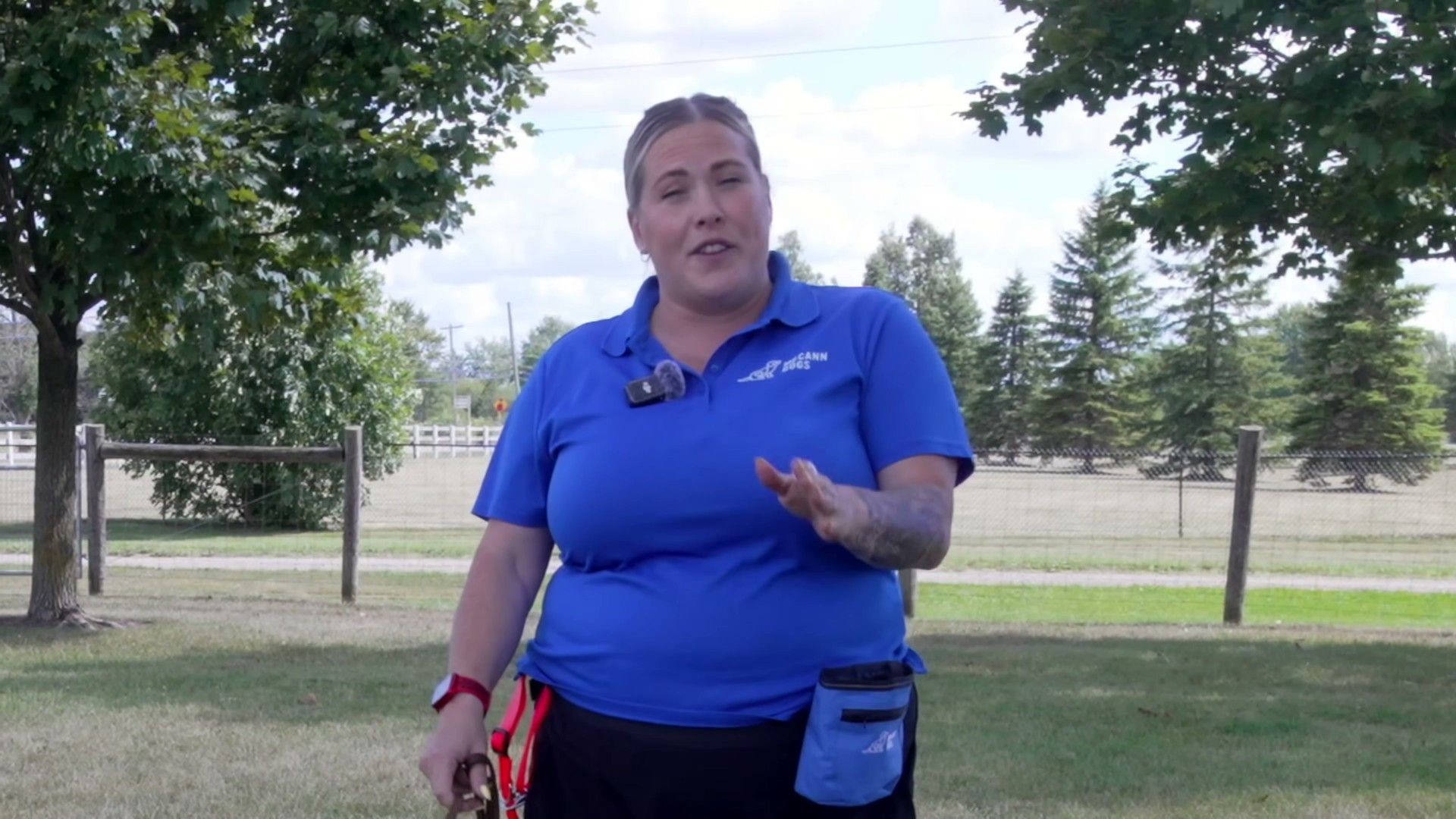
Equipment Hierarchy for Pulling Dogs
| Equipment | Pulling Reduction | Comfort | Recommended |
|---|---|---|---|
| Front-clip harness (non-tightening) | High | High | First choice |
| Front-clip harness (tightening) | High | Moderate | Use with caution |
| Head halter (Gentle Leader) | Very High | Low (requires gradual intro) | Extreme pullers only |
| Back-clip harness | None (may increase) | High | Not for pullers |
| Martingale/flat collar | Baseline | Moderate | Not for pullers |
| Prong collar | Moderate | Low (aversive) | Not recommended |
| E-collar | Moderate | Low (aversive) | Not recommended |
Important caveat: Equipment manages pulling. Training fixes it permanently. The best approach uses both simultaneously.
The 14-Day Loose-Leash Walking Protocol
This protocol is built on the same principles as the evidence-based methods cited in veterinary behavior literature: reward the behavior you want, remove the reward for the behavior you don't, and progress at your dog's pace. It's adapted from the stop-and-wait method validated in shelter studies, enhanced with interactive redirection that Liggett et al. (2010) found significantly accelerated learning.
What You Need
- Front-clip harness (Ruffwear Front Range or PetSafe Easy Walk)
- 6-foot flat leash (never retractable — retractables teach pulling)
- High-value treats (boiled chicken, freeze-dried liver, cheese cut to pea-size)
- 15 minutes twice daily for 14 days
Phase 1: Foundation (Days 1-3)
Goal: Build engagement and teach your dog that paying attention to you earns rewards.
Practice indoors or in a quiet yard — not on your normal walking route. Your dog needs to learn the rules before you add distractions.
Session structure (5-7 minutes):
- Have your dog on leash and harness
- Walk slowly in one direction
- The instant your dog looks at you OR keeps the leash loose, say "Yes!" and deliver a treat at the seam of your pants (not from your face — treat delivery position matters)
- Change direction frequently — every 3-5 steps initially
- If the leash goes tight, stop. Wait. The moment it goes loose, mark and treat
Add "Watch Me":
- Say "Watch me" while holding a treat near your face
- When your dog makes eye contact, mark and reward
- Practice until eye contact on "Watch me" is reliable indoors (usually 20-30 reps over 3 sessions)
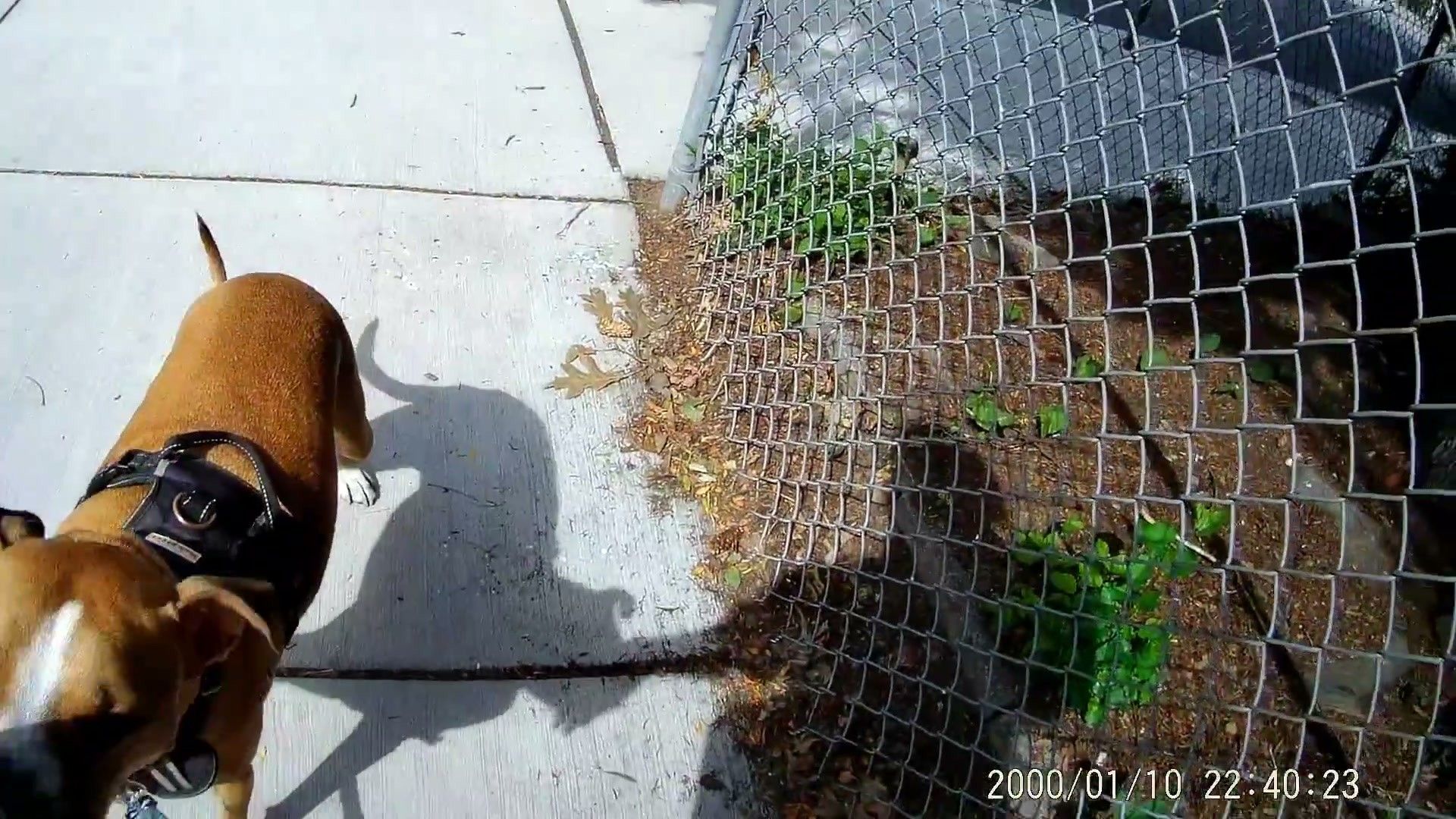
Phase 2: The Stop-and-Redirect (Days 4-7)
Goal: Teach your dog that pulling stops progress and loose-leash walking continues it.
This is the core mechanism. It works by making pulling ineffective and loose-leash rewarding. Your first few walks will cover about 100 yards in 30 minutes. That's normal.
The exact sequence:
- Start walking with your dog in a low-distraction area
- The instant the leash goes tight — stop completely. Don't pull back. Don't say anything. Don't move.
- Wait. Your dog will eventually turn to look at you or take a step back, creating slack. This could take 10 seconds or 90 seconds.
- The moment the leash is loose, say "Yes!" and treat
- Resume walking
- Repeat every single time. No exceptions.
Why this works: Pulling = stopping. Loose leash = treat + walking. Your dog learns that the only way to move forward is to keep the leash loose.
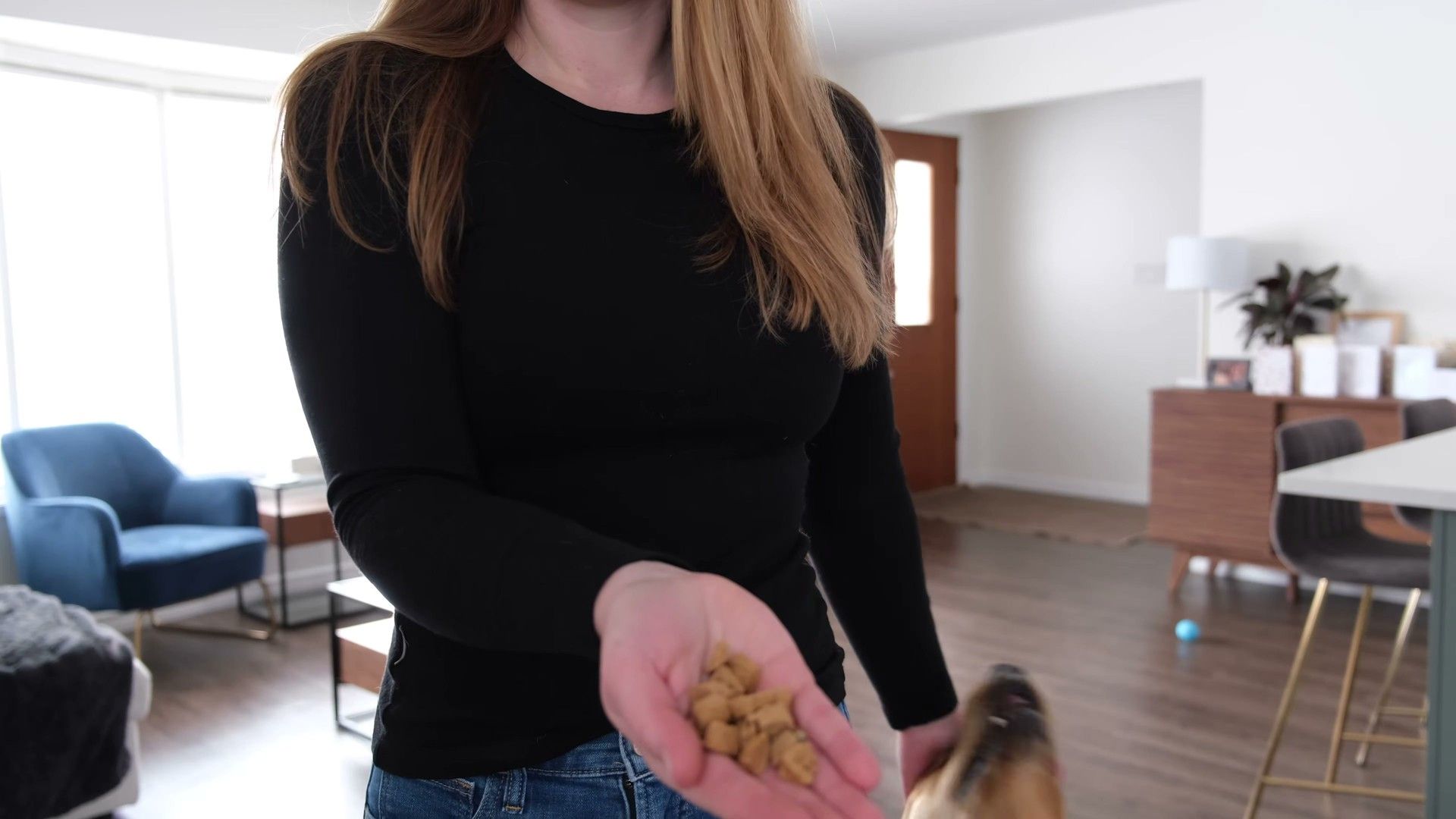
Phase 3: Progressive Difficulty (Days 8-11)
Goal: Generalize the behavior to increasingly distracting environments.
The 180-degree turn is your most powerful tool for dogs that fixate on triggers:
- When your dog locks onto something and starts pulling toward it, do a cheerful 180-degree turn
- Say "This way!" in an upbeat voice
- Reward the moment your dog follows you
- This teaches: lunging = moving away from what you want
Progression schedule:
- Days 8-9: Quiet residential street
- Days 10-11: Park perimeter (staying at distance from other dogs/people)
If your dog fails (consistent pulling, total disengagement), you went too fast. Drop back to the previous day's difficulty for the next walk, then try advancing again.
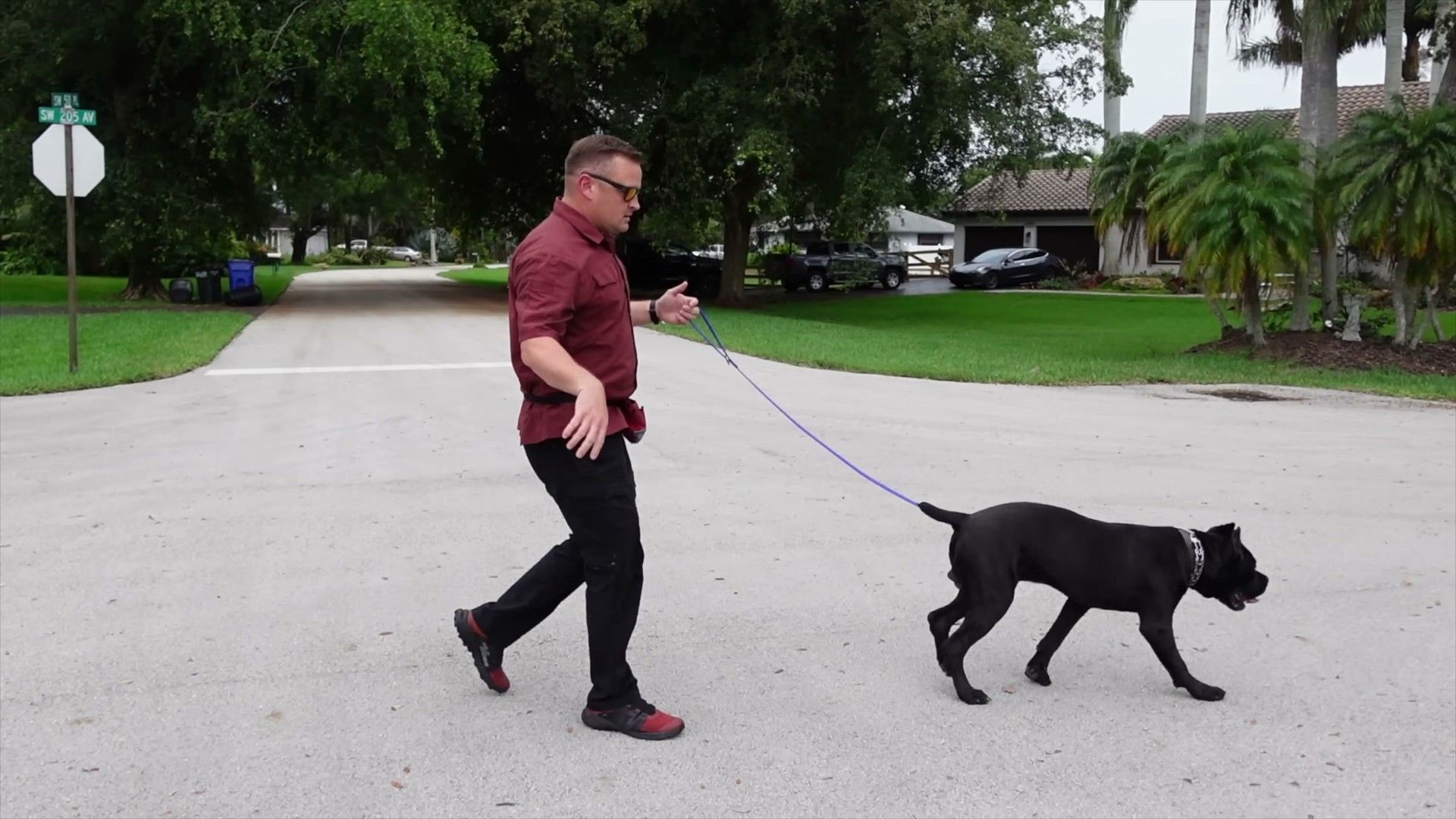
Phase 4: Real-World Testing (Days 12-14)
Goal: Maintain loose-leash walking in your normal walking environment.
Apply the graduated trigger exposure protocol:
- Start at maximum distance from known triggers (other dogs, squirrels, etc.)
- If your dog can't engage at 100 feet, try 200 feet
- Reduce distance by 25% every 2-3 successful walks
- If pulling resumes, increase distance immediately
Permission-based sniff breaks are your secret weapon for scent-driven dogs. Teach your dog that sniffing is a reward FOR loose-leash walking:
- When the leash is loose, say "Go sniff!" and let them explore for 10-15 seconds
- After the break, say "Let's go" and resume walking
- Sniffing becomes contingent on maintaining a loose leash

The Stop-and-Wait Timing Details
The difference between the stop-and-wait method working and failing is entirely about timing and consistency.
Critical timing rules:
- Mark the loose leash within 1 second of it going slack
- Resume walking within 3 seconds of marking
- Never restart walking while the leash is still tight
- Never say "come" or any other cue while your dog is pulling — the cue becomes associated with pulling
Liggett et al. (2010) compared three leash training methods at the University of Wisconsin. The pure "Make Like a Tree" approach (stop and wait without any redirection) never achieved mastery in any dog during the study period. The Major-Minor method, which combined stopping with immediate gentle redirection, achieved mastery in an average of 43 minutes of total training time.
This is why the protocol above includes both stopping AND the 180-degree turn. Stopping alone teaches your dog that pulling stops progress, but the 180-degree turn adds the interactive redirection that accelerates learning.
The 180-Degree Turn
For dogs that lunge at specific triggers:
- When your dog fixates and starts to pull toward something, do a 180-degree turn and walk the other way
- Use a cheerful voice: "This way!"
- Reward your dog the moment they follow you
- This teaches your dog that lunging = moving away from what they want
This technique is particularly effective for dog-reactive dogs because it removes the dog from the trigger while reinforcing the owner-directed behavior. Over time, reduce the distance at which you turn, and your dog will learn to check in with you before reacting.
Permission-Based Sniff Breaks
Sniffing is a dog's primary way of gathering information about their environment. Rather than fighting this natural behavior, use it as a training tool.
The protocol:
- Walk on a loose leash for 30-60 seconds
- Say "Go sniff!" and allow your dog to explore a specific area for 10-15 seconds
- Say "Let's go" and resume walking
- Gradually increase the loose-leash duration between sniff breaks
This works especially well for scent-driven dogs who pull because they're following interesting smells. When sniffing becomes contingent on maintaining a loose leash, the dog learns that nice leash manners unlock exploration opportunities.
Breed and Age Considerations
Not all dogs learn at the same speed, and that's normal.
- High-drive working breeds (Border Collies, Australian Shepherds, Pit Bull mixes, German Shepherds) often need 6-8 weeks of consistent practice. Their arousal levels are higher, and they're more reactive to environmental stimuli.
- Low-drive dogs and senior dogs sometimes reach reliable loose-leash walking in 3 weeks. They're less excitable and may be more focused on you from the start.
- Puppies have the advantage of no established pulling habit. Start the foundation exercises as soon as they're comfortable on a harness.
- Senior dogs with years of pulling habit can absolutely learn. The method is identical — the timeline is longer. Expect 6-8 weeks.
Troubleshooting
If your dog can't engage at any distance: You need more distance and better treats. Find the distance where your dog CAN succeed — even if it's 200 feet from another dog — and start there.
If pulling continues after 2 weeks: Increase treat value. Kibble isn't enough for most dogs during active walking. Switch to boiled chicken, freeze-dried liver, or string cheese.
If your dog pulls only toward other dogs: This may be leash reactivity rather than general pulling. Consult our guide on leash reactivity in dogs for trigger-specific desensitization protocols.
If your dog walks perfectly with the harness but reverts without it: That's expected initially. The harness is a management tool while training builds the habit. Over time, the behavior transfers to collar-only walking.
The Science Against Prong and E-Collars
Major veterinary organizations are aligned on this issue. The American Veterinary Society of Animal Behavior (AVSAB) recommends against prong collars, e-collars, and choke chains in their 2021 position statement. The British Veterinary Association, RSPCA, and multiple European countries have banned or restricted these tools.
The reason is simple: suppression is not learning. When a prong collar stops pulling through pain, it creates avoidance behavior. The dog learns: "pulling causes neck pain." What it doesn't teach: "loose-leash walking earns rewards." When the tool is removed, the behavior rebounds — often worse than before, because the underlying motivation (reaching the thing they want) hasn't been addressed.
Bangura (2026) reviewed the full body of evidence on aversive training equipment and concluded that prong collars, e-collars, and choke chains produce behavior change through nociception (pain processing), threat circuitry, and fear — not through learning. The behavior change is suppression, not acquisition.
Carter et al. (2020) documented that neck collars and prong collars can cause tracheal damage, soft tissue injury, and increased intraocular pressure when dogs pull. The physical risks compound the learning problems.
If someone tells you a prong collar is the only thing that works, they're telling you that pain is more effective than learning. The research says the opposite.
Maintenance and Long-Term Success
Once your dog is reliably walking on a loose leash (typically weeks 3-6), shift to a variable reinforcement schedule:
- Weeks 1-4: Treat every loose-leash moment
- Weeks 4-8: Treat every 3rd or 4th loose-leash moment
- After week 8: Occasional treats at random intervals
Variable reinforcement — like a slot machine — is actually MORE motivating than constant rewards. Occasional lifelong rewards are perfectly fine and effective.
Regression is normal, especially during adolescence (6-18 months). Your dog's brain is still developing impulse control. If pulling resurfaces, go back to Phase 2 for a few walks. The learning doesn't disappear — it just needs refreshing.

When to seek professional help: If your dog shows fear, aggression, or extreme reactivity on leash, hire a certified force-free trainer (look for CPDT-KA or KPA-CTP credentials). Avoid anyone recommending prong collars, e-collars, or "balanced training" — these approaches will undo your progress.
Key Takeaways
- Leash pulling is biomechanics (opposition reflex) and reinforcement (pulling works), not defiance
- Front-clip harnesses reduce pulling force as effectively as prong collars, without welfare concerns (Johnson & Wynne, 2024)
- Back-connection harnesses can increase pulling — front-clip is the critical distinction
- The 14-day protocol combines stop-and-wait with interactive redirection for faster learning
- Most dogs show significant improvement in 2-3 weeks; full reliability takes 4-6 weeks
- Prong collars suppress behavior through pain but don't teach alternatives — the behavior rebounds when removed
- Consistency is non-negotiable: pulling must never work, not even once
Frequently Asked Questions
How long does it take to stop leash pulling?
With consistent daily practice using a front-clip harness and positive reinforcement, most dogs show significant improvement within 2-3 weeks. Complete reliability typically takes 4-6 weeks. Older dogs with years of pulling habit may take 6-8 weeks.
What is the best harness to stop a dog from pulling?
A front-clip harness is the most effective anti-pulling tool. The attachment point at the chest redirects your dog's forward momentum toward you when they pull, mechanically discouraging pulling without pain.
Should I use a prong collar to stop my dog from pulling?
No. Major veterinary organizations including the AVSAB recommend against prong collars due to neck injury risk, tracheal damage, and the fact that they suppress behavior through pain without teaching alternatives. Front-clip harnesses are equally effective.
What is the Be a Tree method for leash training?
A positive reinforcement technique where you stop walking completely every time your dog pulls. You stand still until your dog creates slack in the leash, then immediately mark and reward before resuming walking. Research shows it works best when combined with interactive redirection.
Is a head halter or harness better for pulling dogs?
For most pulling dogs, a front-clip harness is the better first choice — it's easier to introduce and dogs accept it more readily. Head halters provide maximum control for extreme pullers but require 1-2 weeks of gradual introduction with treats.
Can I teach an old dog to stop pulling?
Yes. Dogs of any age can learn through positive reinforcement. Senior dogs with years of pulling habit may need 6-8 weeks instead of 2-4, but the training method is identical.
Why does my dog only pull toward other dogs?
This may be leash reactivity rather than general pulling. The trigger-specific nature suggests your dog is over-aroused by dog stimuli. Increase distance, use higher-value treats, and consider consulting a CPDT-KA certified trainer for trigger-specific protocols.
How often should I practice leash training?
Twice daily for 15 minutes each session. Consistency matters more than duration. Daily practice builds the habit; sporadic practice confuses your dog.