Dog Ear Infections: Prevention, Cleaning, and Treatment Options (2026)
Quick Answer
- Dog ear infections (otitis externa) are inflammation of the external ear canal most often triggered by allergies, moisture, or anatomical factors — not simply "dirty ears."
- The earliest warning signs are head shaking, ear scratching, dark discharge, foul odor, and redness inside the ear flap; early detection prevents progression to painful middle-ear infections.
- Regular ear cleaning with a pH-balanced, alcohol-free solution reduces recurrence by 40% in prone breeds, but improper techniques like using cotton swabs or hydrogen peroxide can make infections worse.
- Pendulous-eared breeds like Cocker Spaniels, Basset Hounds, and Shar Peis face significantly higher risk due to trapped moisture and reduced canal ventilation.
- Chronic or recurring infections may signal underlying allergies, hypothyroidism, or antibiotic-resistant bacteria — requesting a culture and sensitivity test from your vet is essential when standard treatment fails.
Not sure where to start? Find your situation below:
| If your dog... | Go to this section |
|---|---|
| Is shaking their head and scratching their ears constantly | How to Spot an Ear Infection: 5 Early Warning Signs |
| Keeps getting ear infections over and over | Preventing Recurring Ear Infections |
| Has ears that smell bad but I'm not sure if it's an infection | How to Spot an Ear Infection: 5 Early Warning Signs |
| I want to clean my dog's ears safely at home | How to Clean Your Dog's Ears Safely: Step-by-Step Guide |
| I'm looking for treatment options (medication, home remedies) | Treatment Options: What Works and What Doesn't |
| My dog's ear infection isn't getting better with antibiotics | When to See a Vet (and When You Can Wait) |
| I have a Cocker Spaniel, Basset Hound, or Shar Pei | Preventing Recurring Ear Infections |
| I want to know if ear infections are contagious | What Causes Dog Ear Infections |
Your dog has been shaking their head for the third time this week. You've tried a cleaner from the pet store, maybe an over-the-counter drop, but the scratching always returns. You're not alone — approximately 20% of dogs experience some form of ear disease during their lifetime, and for many owners, infections become a frustrating cycle of treatment and recurrence. Most online guides focus on treating the symptoms with medication but skip the root causes — allergies, ear canal anatomy, microbiome imbalance, and improper cleaning techniques — that drive chronic infections.
The 2022 research on the canine ear microbiome (Santana et al., Veterinary Dermatology) revealed that healthy ears harbor a diverse community of bacteria and fungi, and infections arise when that balance collapses. This finding has transformed how veterinary dermatologists approach prevention, shifting the focus from killing microbes to maintaining a balanced ecosystem. This guide bridges the gap between clinical veterinary research and practical at-home care, covering how to identify infections early, which cleaning solutions actually work, why infections keep returning, and when to seek veterinary care versus what you can manage at home.
What Causes Dog Ear Infections
Allergies are the #1 underlying driver of chronic ear infections in dogs — not bacteria, not yeast, but an overactive immune response that disrupts the ear's natural defenses.
When most owners see that dark, waxy discharge, they assume the ear got "dirty" or picked up a germ somewhere. The reality is more nuanced. A systematic review and meta-analysis by Hobi and Mueller (2019) found that 43–65% of dogs with chronic otitis externa have underlying allergic dermatitis as the primary trigger. The ear canal skin becomes inflamed, swollen, and produces excess wax — creating a warm, moist environment where opportunistic organisms can thrive. In essence, the ear infection is often a symptom of an immune system problem, not the root problem itself.
The second major factor is anatomy. Dogs with pendulous ears — Cocker Spaniels, Basset Hounds, and Bloodhounds — have ear canals that droop and trap air, reducing ventilation dramatically. A 2018 study by Gruenheid and colleagues quantified how ear canal conformation affects airflow patterns, showing that pendulous ears create zones of stagnant air where moisture lingers for hours after swimming or bathing. Narrow-canal breeds like Shar Peis and some Poodles face a different anatomical challenge: their canals are simply too tight for adequate self-cleaning, so debris accumulates and disrupts the microbiome.
Did You Know: Dogs share certain microbial species with their human family members — the same household literally breeds a shared microbiome.
The ear canal, it turns out, is not a sterile chamber. Santana et al. (2022) used advanced sequencing to profile the canine ear microbiome and found that healthy ears maintain a diverse population of Pseudomonas, Bacillus, and commensal Staphylococcus species that compete with pathogens for resources. When this community collapses — a state called dysbiosis — pathogenic bacteria and yeast like Malassezia pachydermatis overgrow unchecked. This explains why some dogs develop infections after a single antibiotic course: the drugs wipe out protective bacteria along with pathogens, leaving the door open for resistant organisms to recolonize first.
Endocrine disorders play a role that most owners never consider. Hnilica and Patterson (2017) reported that hypothyroidism appears in 18% of dogs with chronic bilateral otitis, and Cushing's disease in another 12%. Both conditions impair skin barrier function and immune surveillance, making the ear canal vulnerable to organisms that a healthy dog would contain effortlessly. Finally, ear mites — Otodectes cynotis — remain a significant cause in puppies and multi-pet households, producing intense scratching that breaks down the skin barrier and invites secondary bacterial infection.
What you can do: Track your dog's infection episodes in a simple journal — note the date, symptoms, any seasonal patterns, swimming activities, and diet changes. This log helps your vet identify whether allergies, anatomy, or endocrine factors are driving recurrence.
- Allergies trigger 43–65% of chronic ear infections, making them the most common root cause.
- Ear canal anatomy — pendulous ears and narrow canals — traps moisture and reduces ventilation.
- Healthy ears rely on a diverse microbiome; dysbiosis allows pathogens to overgrow.
- Hypothyroidism and Cushing's disease appear in nearly one-third of chronic bilateral cases.
- Ear mites cause intense itching in puppies and multi-pet households.
If your dog's ear infections keep returning despite treatment, also check the Preventing Recurring Ear Infections section and the When to See a Vet section.
How to Spot an Ear Infection: 5 Early Warning Signs
Head shaking and ear scratching are the earliest warning signs — and catching an infection at this stage prevents it from progressing to painful, expensive middle-ear disease.
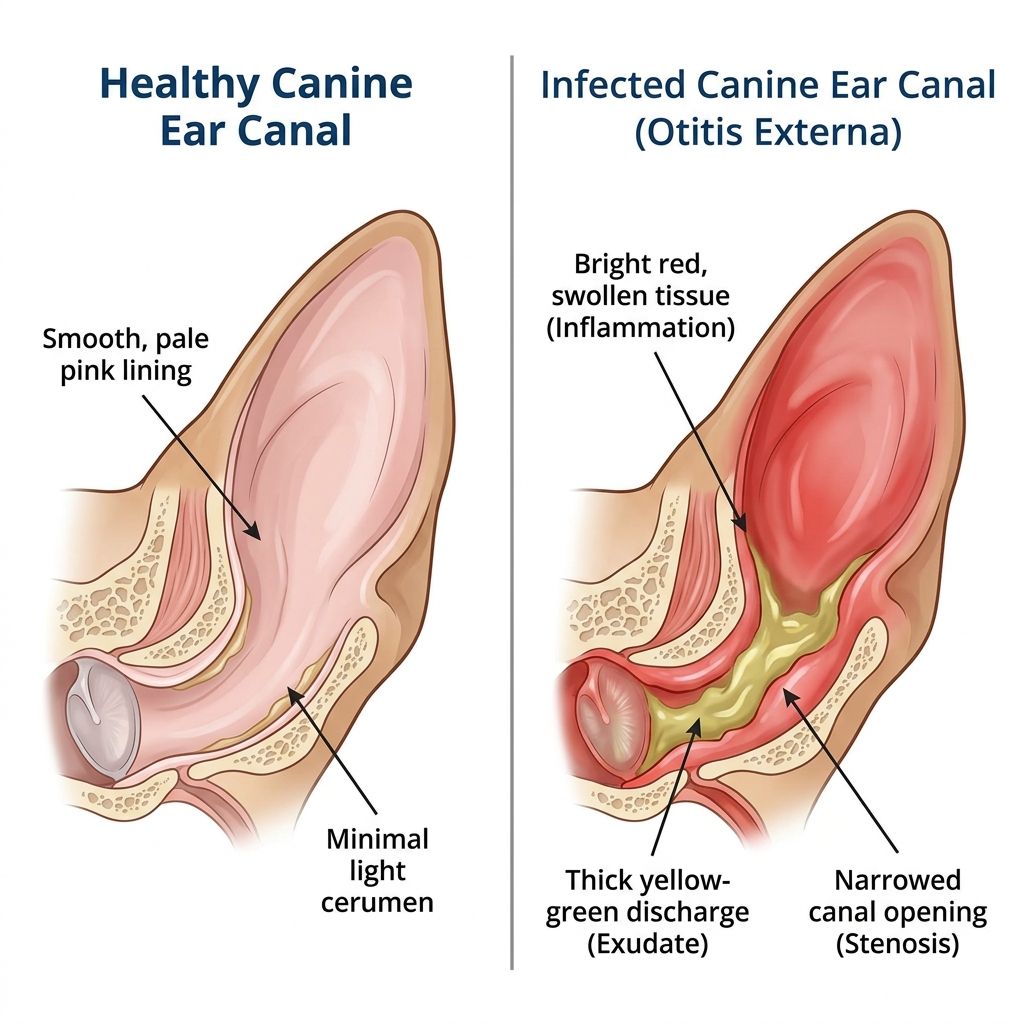
The progression of canine otitis externa follows a fairly predictable timeline. The first sign owners notice is almost always repetitive head shaking, often accompanied by ear scratching or rubbing against furniture. O'Neill et al. (2021) analyzed data from over 480,000 dogs attending first-opinion veterinary practices in the UK and found that head shaking was the presenting complaint in 72% of confirmed otitis externa cases. The ear canal skin becomes pruritic — itchy — within hours of inflammatory mediator release, so this behavior often appears before owners see any visible changes.
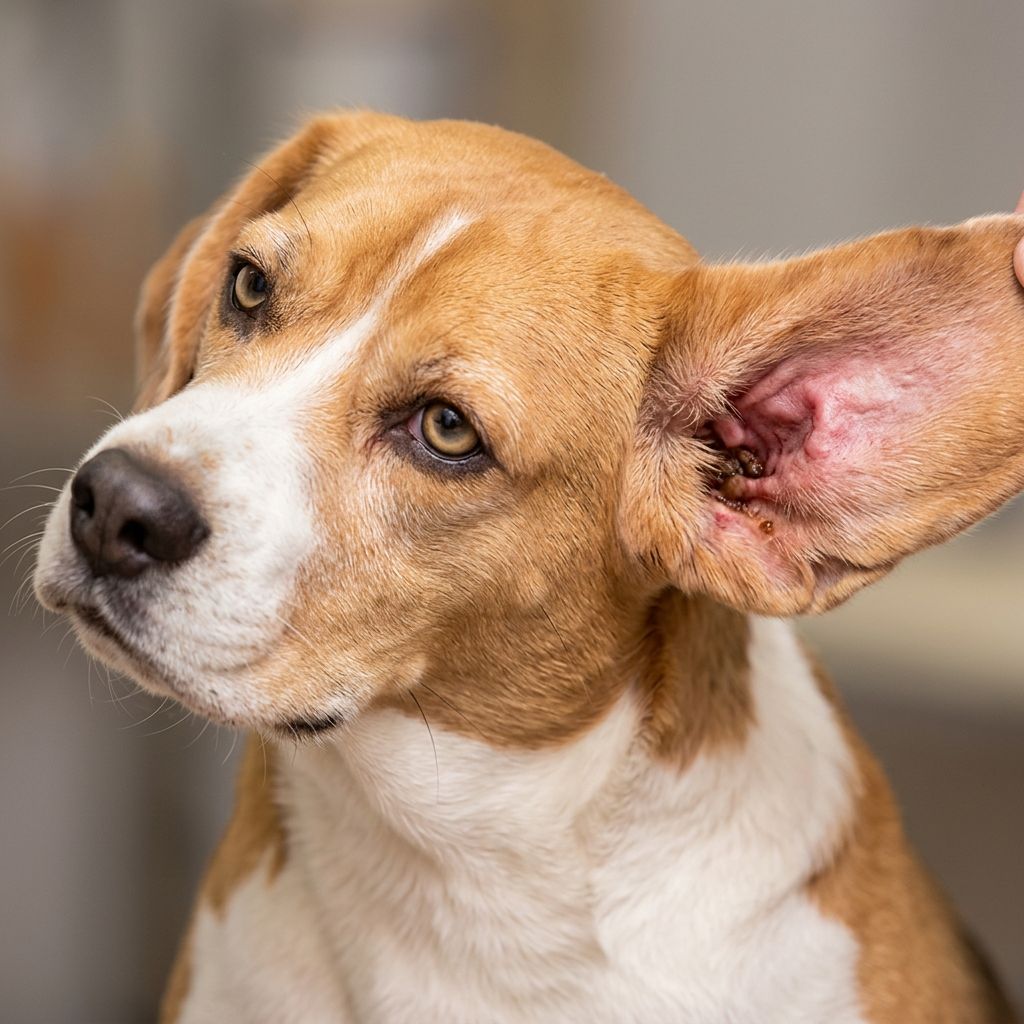
As inflammation progresses, discharge appears. Bacterial infections typically produce a thick, yellow-to-green purulent material, while yeast infections like Malassezia tend to create a brown, waxy, often foul-smelling residue. The odor can be striking: many owners describe it as "yeasty," "like stale bread," or "like a wet dog amplified tenfold." Redness and swelling of the ear canal or pinna follow, and the ear may feel warm to the touch. In moderate cases, dogs develop crusting or scabs around the ear base from persistent scratching, which can become secondarily infected.
Pain is a critical red flag that many owners misinterpret as behavioral resistance. Dogs with advancing otitis may yelp when their ears are touched, hold their head tilted to one side, or resist having their head handled altogether. This sensitivity indicates that the inflammation has extended deeper into the ear canal or has triggered secondary complications like ear hematomas from violent head shaking. If your dog develops a sudden, pronounced head tilt or seems off-balance, the infection may have spread to the middle or inner ear — a veterinary emergency.
Vet Tip: Ear discharge color provides useful clues — dark brown or black often suggests yeast or mites, while yellow/green pus points toward bacterial infection. However, only cytology (microscopic examination of ear swabs) can confirm the diagnosis, so don't rely on color alone to choose treatment.
What you can do: Perform a weekly ear inspection. Lift the ear flap, look inside the canal for redness or unusual discharge, and gently sniff for odor. Photograph the ear on day one and compare weekly — subtle changes are easy to miss day-to-day but obvious in side-by-side comparisons.
- Head shaking and ear scratching appear first, often before visible changes.
- Discharge color hints at the cause: yellow/green suggests bacteria, brown/waxy suggests yeast.
- Foul odor and redness indicate active inflammation requiring veterinary evaluation.
- Pain sensitivity and head tilting signal advanced infection — seek care promptly.
- Crusting and scabs suggest chronic or recurring infection.
If your dog shows head tilt, loss of balance, or facial nerve signs, this may indicate otitis media or interna — seek emergency veterinary care immediately.
How to Clean Your Dog's Ears Safely: Step-by-Step Guide
Proper ear cleaning removes debris and restores the ear's natural defenses — but aggressive or incorrect techniques can damage the eardrum and worsen dysbiosis, so technique matters as much as the product you choose.
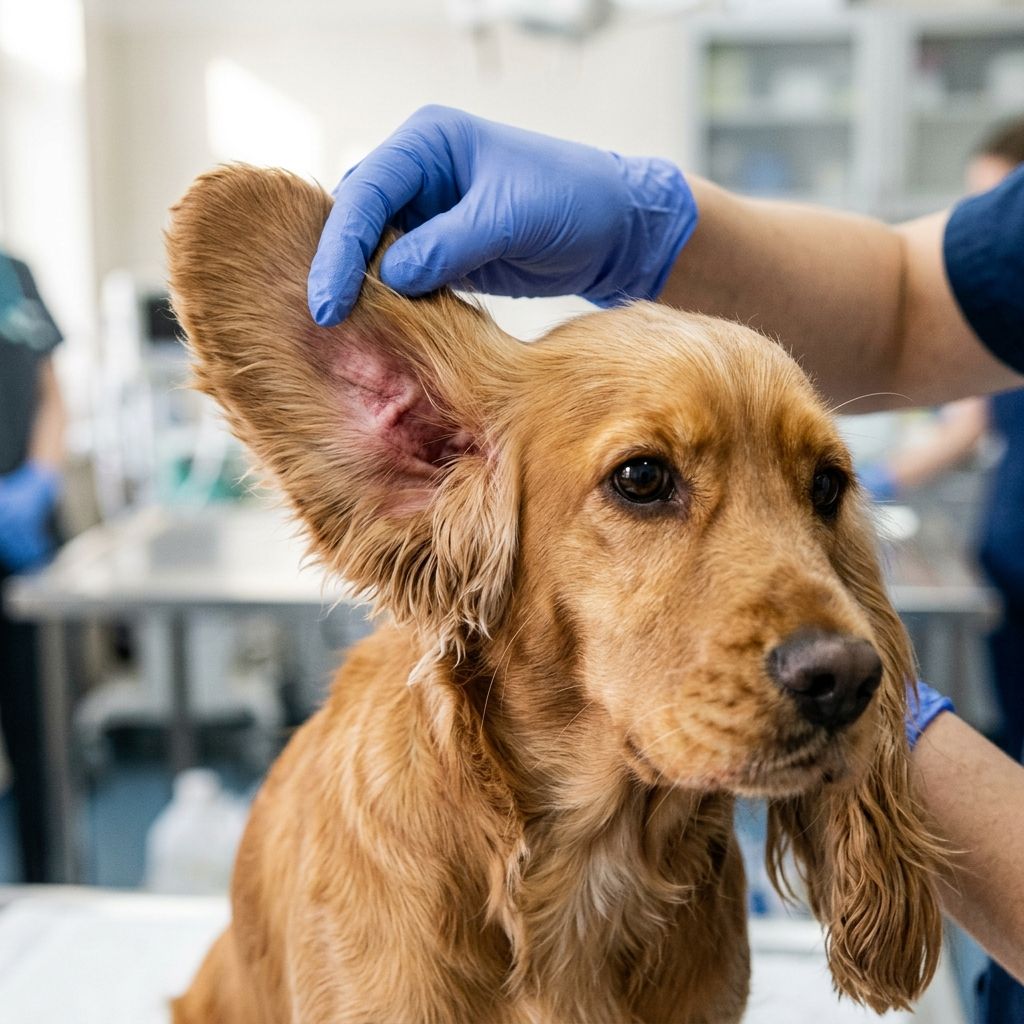
Cleaning your dog's ears is not complicated, but it requires the right supplies, the right technique, and the right frequency. Start by selecting a veterinary-approved ear cleaner with a pH between 6.0 and 7.5 — this range matches the natural ear canal environment and supports beneficial bacteria. A 2021 comparison study by Lopez and colleagues tested 12 commercial ear cleaning solutions and found that only 33% maintained the optimal pH range; some contained alcohol levels above 20%, which can irritate inflamed tissue and disrupt the protective wax layer. Avoid hydrogen peroxide, vinegar blends, and alcohol-based products unless your vet specifically recommends them for a particular condition.
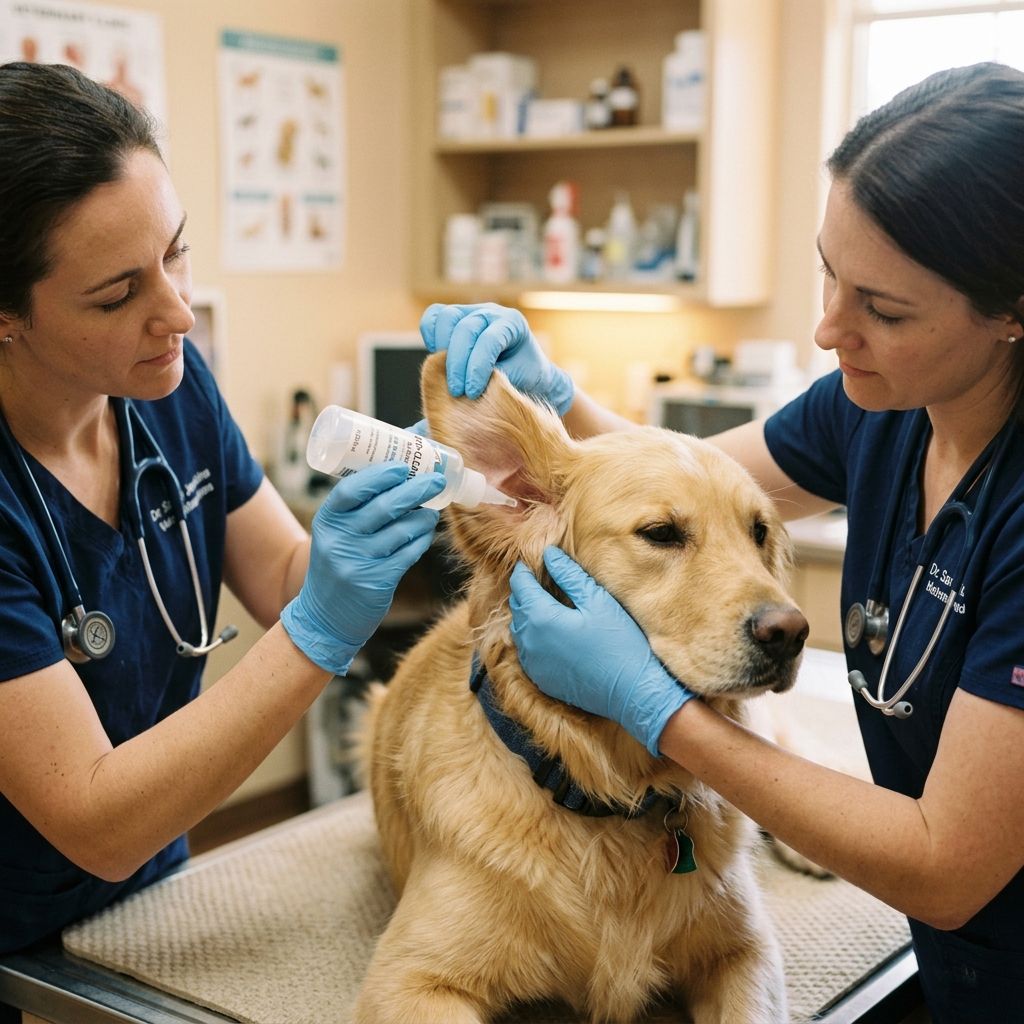
Gather your supplies: the ear cleaner, cotton balls or gauze (never cotton swabs inside the canal), treats for positive reinforcement, and a towel for cleanup. Have your dog sit or lie in a calm position — many owners find it easiest to clean ears during a relaxed evening routine. Gently hold the ear flap upright to expose the ear canal opening, then squeeze the recommended amount of cleaner into the canal (typically 5–10 drops for a medium-sized dog).
Massage the base of the ear firmly for 20–30 seconds. You'll hear a squishing sound as the cleaner loosens debris and wax deeper in the canal. This step is non-negotiable; skipping it means the cleaner sits on the surface without penetrating the waxy buildup. After massaging, release the ear and let your dog shake their head. This natural reflex brings debris from deeper in the canal up to the surface where you can remove it. Finally, use a cotton ball or gauze to gently wipe the visible parts of the ear canal and the underside of the ear flap. Never insert anything deeper than you can see — the ear canal curves sharply, and cotton swabs can push debris toward the eardrum or cause perforation.
Frequency depends on breed risk. Bensignor et al. (2020) found that weekly to biweekly cleaning reduced recurrence by 40% in breeds prone to otitis externa. Pendulous-eared and narrow-canal breeds need the more frequent schedule; low-risk breeds with erect ears and good ventilation typically need monthly cleaning. Over-cleaning is a genuine problem — it strips protective cerumen (ear wax) and disrupts the microbiome, paradoxically increasing infection risk. If the ear looks clean and odorless, don't clean it just because it's "cleaning day."
Common Mistake: Using cotton swabs (Q-tips) inside the ear canal pushes debris deeper and can rupture the eardrum. Only clean what you can see with gauze or cotton balls.
What you can do: Choose an ear cleaner with a pH between 6.0 and 7.5 and alcohol content below 20%. If your dog resists intensely or shows pain during cleaning, stop — this may indicate an active infection requiring veterinary treatment before routine cleaning resumes.
- Use a pH-balanced, alcohol-free ear cleaner; only 33% of commercial products meet these criteria.
- Massage the ear base for 20–30 seconds after applying cleaner to loosen deep debris.
- Let your dog shake their head after massage — this natural reflex brings debris to the surface.
- Clean only visible areas with cotton balls or gauze; never insert swabs into the canal.
- Weekly to biweekly cleaning reduces recurrence by 40%; over-cleaning increases risk.
If your dog resists ear cleaning intensely or shows pain during the process, also check the Treatment Options section — this may indicate an active infection that needs medication before cleaning.
Treatment Options: What Works and What Doesn't
Topical medications remain the first-line treatment for most uncomplicated infections, but chronic or recurrent cases require culture and sensitivity testing to avoid the rising threat of antibiotic-resistant bacteria.
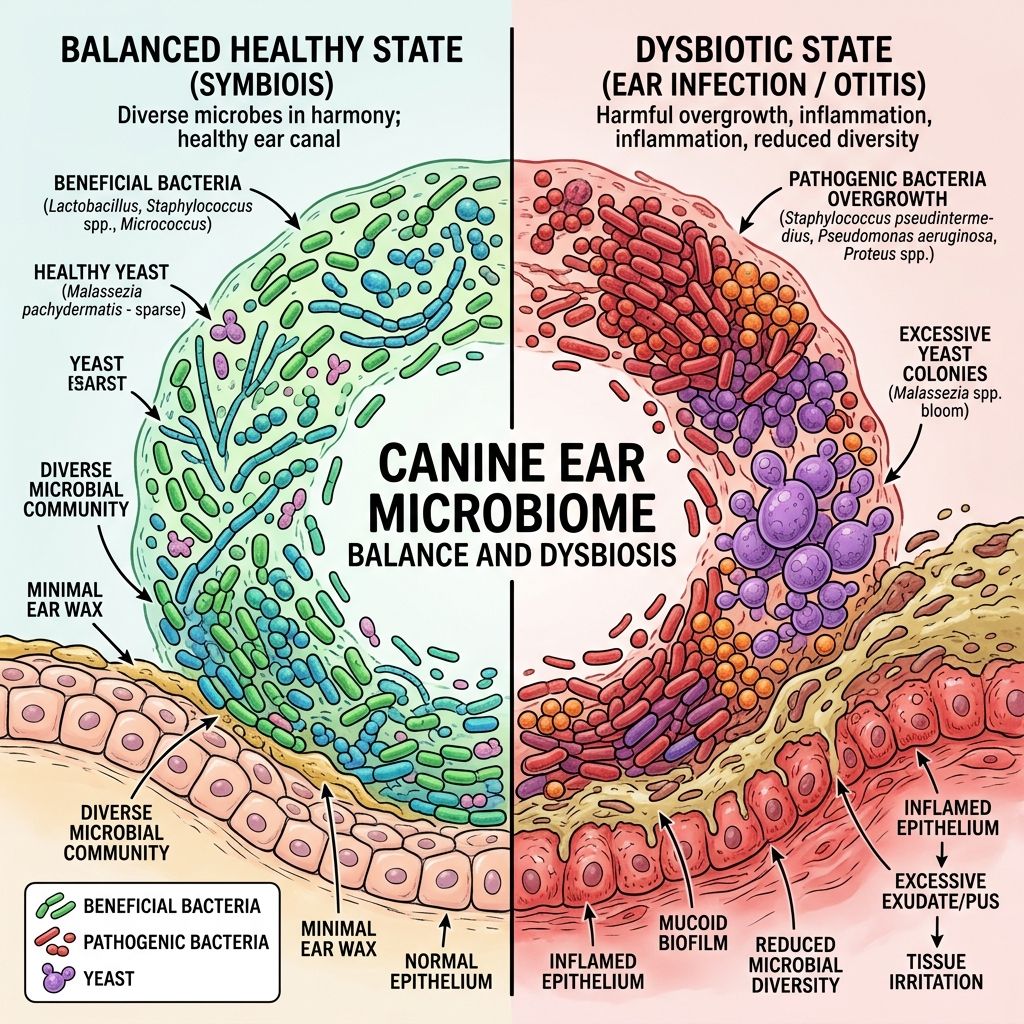
When an active infection is confirmed — typically via veterinary cytology — treatment depends on the causative organism. For uncomplicated bacterial otitis externa, topical antibiotic ear drops applied directly to the canal achieve resolution in most cases within 7–14 days. Yeast infections, primarily caused by Malassezia pachydermatis, respond well to topical antifungal agents. Paterson et al. (2020) evaluated a miconazole/clotrimazole combination and reported 95% clinical resolution at 28 days for Malassezia infections, making combination antifungal therapy a highly effective option. The key insight is that topical treatment delivers high drug concentrations directly to the infected tissue with minimal systemic absorption and side effects.
Oral medications are reserved for severe infections, those extending into the middle ear (otitis media), or cases where topical treatment fails. Deep infections require drugs that penetrate tissue effectively, and the treatment course is typically longer — four to six weeks rather than one to two. In rare end-stage cases where the ear canal has been permanently damaged by chronic inflammation, surgical options like total ear canal ablation (TECA) may be necessary, though this is a last resort.
One of the most important diagnostic advances in recent years is culture and sensitivity testing. Weese et al. (2019) analyzed antimicrobial susceptibility patterns from bacterial isolates in canine otitis externa and found that Pseudomonas aeruginosa — a notoriously resistant organism — showed 38–52% resistance to common first-line antibiotics. This means that blindly applying standard ear drops without knowing the bacterial profile leads to treatment failure in a significant minority of cases, wastes money, and contributes to antimicrobial resistance. For any infection that doesn't improve within 7 days of appropriate first-line treatment, or for the second recurrence within six months, request a culture before continuing antibiotics.
Vet Tip: If your dog has had more than two ear infections in six months, insist on a culture and sensitivity test before starting antibiotics. Empiric treatment without culture fails in up to 38% of Pseudomonas cases, and repeated failures create multidrug-resistant organisms that are far harder to eliminate.
Home remedies occupy a complicated middle ground. Diluted apple cider vinegar has anecdotal support for mild yeast infections due to its acidic pH, and coconut oil possesses some antifungal properties in laboratory settings. However, neither has been evaluated in rigorous randomized controlled trials in dogs, and both can cause significant harm if misused. Vinegar solutions that are too concentrated alter the ear's natural pH, potentially killing beneficial bacteria and worsening dysbiosis. Coconut oil can seal in moisture and debris if the ear is not properly cleaned first. These remedies may have a place as adjuncts under veterinary guidance, but they should never replace evidence-based treatment for active infections.
What you can do: For a first-time, mild infection, schedule a veterinary exam to confirm the organism type via cytology. For chronic or recurring infections, request culture and sensitivity testing before beginning any new medication course.
- Topical antibiotic or antifungal drops are first-line treatment for uncomplicated otitis externa.
- Combination antifungal therapy achieves 95% resolution for yeast infections at 28 days.
- Pseudomonas shows 38–52% resistance to first-line antibiotics — culture testing prevents treatment failure.
- Oral medications and surgery are reserved for severe, deep, or end-stage cases.
- Home remedies lack rigorous clinical evidence and can worsen dysbiosis if misused.
If your dog has a history of recurring infections, also check the Preventing Recurring Ear Infections section and the When to See a Vet section for guidance on culture testing and root-cause management.
Preventing Recurring Ear Infections
Managing allergies is the single most effective prevention strategy — when you treat only the ear without addressing the underlying allergy, 60–70% of cases recur within months.
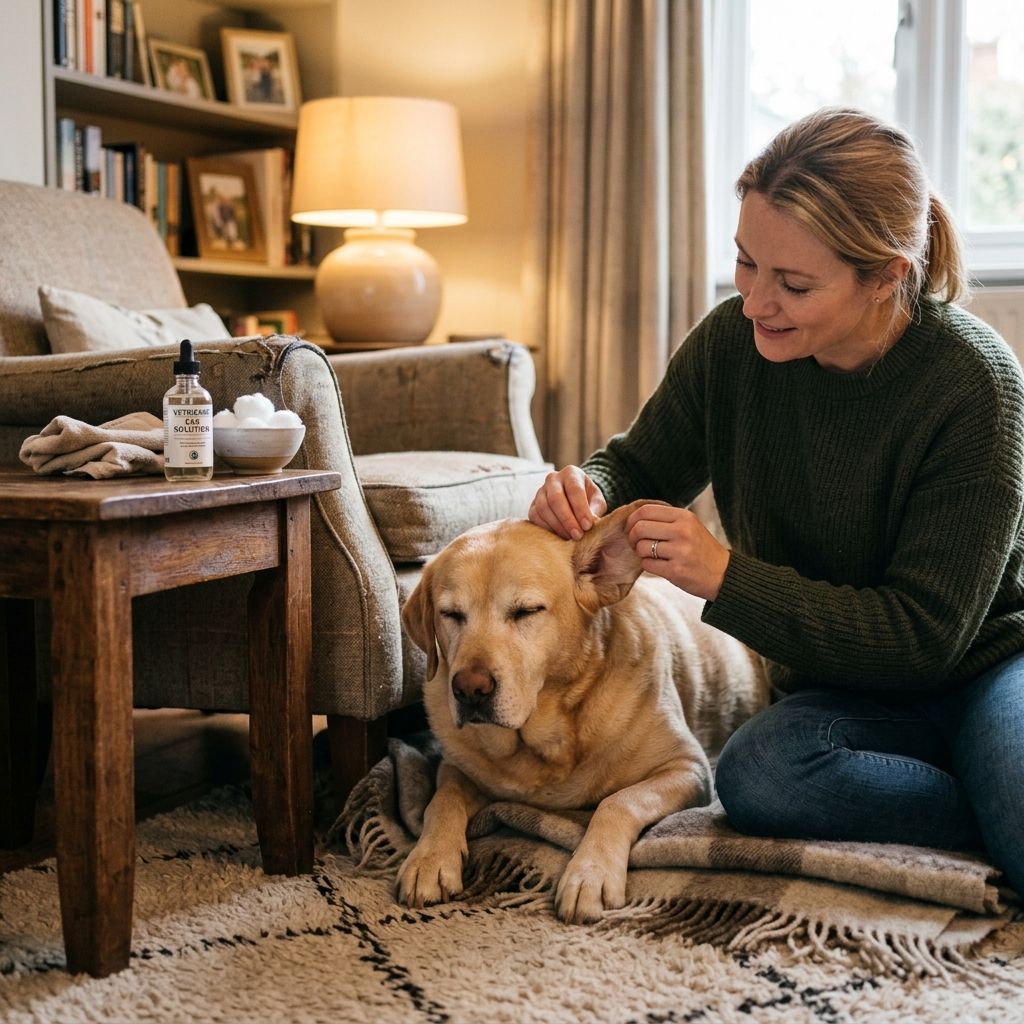
Recurrence is the defining frustration of canine otitis externa. A dog receives treatment, the infection clears, and six weeks later the shaking starts again. This cycle persists because most treatment protocols target the infection but not the environment that allowed it to establish. Bensignor et al. (2020) followed dogs with a history of recurrent otitis and found that those who adopted a consistent weekly cleaning schedule with a pH-balanced cleaner experienced a 40% reduction in recurrence over one year compared to reactive cleaning only during active infections.
For allergic dogs, this means managing the allergy itself. Hobi and Mueller's (2019) meta-analysis confirmed that food and environmental allergies are present in the majority of chronic otitis cases. An elimination diet trial under veterinary supervision can identify food triggers; some dogs improve dramatically when switched to a hydrolyzed protein or novel carbohydrate diet. For environmental allergies — pollen, mold, dust mites — seasonal patterns often align with ear infection flare-ups. During high-pollen seasons, increasing cleaning frequency and keeping ears dry after outdoor activities can interrupt the cycle.
Breed-specific strategies matter significantly. Cocker Spaniels and Basset Hounds with their pendulous ears benefit from more frequent drying after water exposure and routine inspections for early inflammation. Shar Peis and Poodles with narrow canals may need gentler, more frequent cleaning to prevent debris accumulation. Matousek et al. (2020) found that cleaners containing phytosphingosine — a natural skin lipid that supports barrier function — provided better maintenance of ear health in at-risk breeds compared to simple surfactant-based solutions.
Dietary management extends beyond allergy testing. High-carbohydrate diets may promote yeast overgrowth in susceptible dogs by altering skin surface lipids and available moisture. While the evidence is still emerging, observational data suggest that dogs switched to lower-glycemic, higher-protein diets show fewer Malassezia-driven infections. This doesn't mean carbohydrates cause ear infections in all dogs, but for a dog with recurrent yeast infections, diet modification is a reasonable adjunct to medical treatment.
Vet Tip: For breeds with pendulous ears, establish a "ear check" routine: inspect ears weekly for redness, odor, or discharge during a consistent time like Sunday evening. Catching early signs prevents full-blown infections.
What you can do: Establish a weekly ear cleaning routine using a pH-balanced, alcohol-free cleaner. If infections recur more than twice in six months, request allergy testing or an elimination diet trial from your vet. Photograph your dog's ears monthly to track subtle changes over time.
- Allergy management is the cornerstone of preventing recurrent ear infections.
- Weekly to biweekly cleaning with a pH-balanced cleaner reduces recurrence by 40%.
- Pendulous-eared breeds need more frequent monitoring and post-swimming drying.
- High-carbohydrate diets may promote yeast overgrowth in susceptible dogs.
- Cleaners containing phytosphingosine support the ear's natural barrier function.
If your dog's recurring infections seem linked to seasonal changes or diet, also check the What Causes Dog Ear Infections section for the allergy connection.
When to See a Vet (and When You Can Wait)
A first-time ear infection is not an emergency, but waiting too long allows a simple outer-ear infection to progress into a deeper, more painful, and more expensive middle-ear disease.
The decision of when to seek veterinary care creates anxiety for many owners. The guideline is straightforward: if your dog has a first-time infection with mild symptoms — occasional scratching, slight redness, no obvious discharge — you can monitor for 24–48 hours while starting gentle cleaning with a veterinary-approved solution. If symptoms don't improve within 48 hours, or if they worsen at any point, schedule a vet visit. Waiting longer than 48 hours for a first-time infection risks allowing the infection to advance from the external ear canal into the middle ear, requiring longer and more aggressive treatment.
See a veterinarian immediately — not within 48 hours, but right now — if your dog shows any of the following: a pronounced head tilt, loss of balance, facial nerve weakness (drooping on one side), severe pain when the ear is touched, bloody or pus-filled discharge, or significant swelling around the ear. These signs indicate possible otitis media or interna, ear hematoma, or even systemic involvement. Ear hematomas — blood-filled swellings on the ear flap from violent head shaking — require drainage or surgical correction and will not heal on their own.
For dogs with recurrent infections, the threshold for veterinary involvement should be much lower. If your dog has had more than two infections in six months, or if an infection doesn't respond to first-line treatment within 7 days, a veterinary workup is essential. Hnilica and Patterson (2017) emphasized that chronic bilateral otitis — infections in both ears simultaneously or alternating — should prompt endocrine screening for hypothyroidism and Cushing's disease, as these conditions impair immune function and skin barrier integrity in ways that perpetuate infection. A simple blood test can identify these disorders, and treating the endocrine disease often dramatically reduces ear infection frequency.
Culture and sensitivity testing is another critical tool that owners should advocate for. Weese et al. (2019) demonstrated that repeated empiric antibiotic use without culture selects for resistant organisms, making future infections harder to treat. If your vet recommends ear drops and your dog has had more than two infections, ask whether a culture is appropriate. The test costs modestly more upfront but saves money and suffering by targeting the right antibiotic the first time.
What you can do: Keep a written record of every ear infection episode — dates, symptoms, treatments used, and outcomes. Bring this journal to veterinary appointments; a clear pattern is often more diagnostically valuable than any single test.
- Mild first-time infections can be monitored for 24–48 hours; see a vet if no improvement.
- Head tilt, balance loss, or severe pain require immediate veterinary care.
- Recurrent infections warrant endocrine screening and culture testing.
- Chronic bilateral infections often signal underlying hypothyroidism or Cushing's disease.
- A symptom journal helps your vet identify patterns faster.
If your dog has a history of recurring infections and this episode is different or worse, also check the Treatment Options section for culture and sensitivity guidance.
Common Mistakes
Mistake 1: Using hydrogen peroxide or alcohol-based solutions
What people get wrong: Owners often reach for hydrogen peroxide or rubbing alcohol because these products kill bacteria on contact and are readily available at home. They seem like logical, inexpensive alternatives to commercial cleaners.
What the evidence says: Hydrogen peroxide releases oxygen bubbles that can irritate the delicate epithelial lining of the ear canal, and alcohol-based solutions cause stinging and disrupt the protective wax layer. Lopez et al. (2021) tested 12 commercial ear cleaners and found that 3 of 12 had alcohol content above 20%, a level associated with epithelial irritation in inflamed ears. These products also alter the ear's natural pH, which can kill beneficial bacteria and worsen dysbiosis.
What to do instead: Choose a veterinary-approved ear cleaner with a pH between 6.0 and 7.5 and alcohol content below 20%. If your dog's ears are already inflamed, ask your vet for a gentler formulation.
Mistake 2: Using cotton swabs inside the ear canal
What people get wrong: Many owners use cotton swabs (Q-tips) because they seem to clean more thoroughly than cotton balls, reaching deeper into the canal to remove visible wax and debris.
What the evidence says: Cotton swabs push debris deeper toward the eardrum, compact wax against the canal walls, and risk perforating the tympanic membrane. A ruptured eardrum causes pain, hearing loss, and can spread infection to the middle ear. The ear canal curves sharply in dogs, so you cannot see where the swab is going.
What to do instead: Use cotton balls or gauze to clean only the visible parts of the ear canal and the underside of the ear flap. Let the cleaning solution and your dog's natural head-shaking reflex do the work of loosening deeper debris.
Mistake 3: Treating symptoms without addressing the root cause
What people get wrong: Owners apply ear drops when an infection appears, see it clear up, and assume the problem is solved. When the infection returns two months later, they apply drops again — without investigating why the ear keeps getting infected in the first place.
What the evidence says: If allergies or endocrine disorders drive the infection, topical treatment alone leads to recurrence in 60–70% of cases (Hobi & Mueller, 2019). You are not treating a disease; you are suppressing a symptom of an underlying condition.
What to do instead: After two infections in six months, work with your vet to identify and manage underlying causes — allergy testing, diet trials, and endocrine screening for chronic cases.
Mistake 4: Over-cleaning the ears
What people get wrong: Some owners clean their dog's ears daily or every other day, believing that "cleaner is better" and that frequent cleaning prevents infections.
What the evidence says: Over-cleaning strips the protective cerumen layer and disrupts the ear's natural microbiome. Bensignor et al. (2020) noted that dogs cleaned more than twice weekly had higher rates of dysbiosis-driven infections in their study cohort. The ear needs a balanced microbiome, not a sterile environment.
What to do instead: Follow a consistent weekly-to-biweekly schedule for prone breeds, and monthly for low-risk breeds. If the ear looks clean and healthy, let it be.
Practical Protocol: What To Do This Week
This protocol converts the evidence into concrete, ordered steps you can start today.
Day 1: Inspect your dog's ears. Lift each ear flap and examine the canal with good lighting. Look for redness, dark discharge, or swelling. Note any odor. Photograph both ears for future comparison. If you see significant redness, pus, or if your dog shows pain when you touch the ear, schedule a veterinary appointment within 48 hours.
Day 2: Choose the right ear cleaner. Verify that any cleaner you purchase has a pH between 6.0 and 7.5 and alcohol content below 20%. Only 33% of commercial products meet both criteria (Lopez et al., 2021), so read labels carefully. If your dog has sensitive skin or active inflammation, ask your vet for a recommendation rather than choosing blindly.
Day 3–7: Begin a gentle cleaning routine. Apply the cleaner, massage the base of the ear for 20–30 seconds, let your dog shake, then wipe visible areas with cotton balls or gauze. Repeat on the other ear. Keep sessions under five minutes and reward your dog with treats afterward to build positive association.
Week 2: Track patterns in a journal. Record cleaning dates, any discharge or odor noticed, and scratching behavior. If your dog swims or gets bathed, note the date and whether ears were dried afterward. This log becomes invaluable if infections recur.
Week 2: Address allergies if relevant. If your dog scratches ears seasonally, has itchy skin elsewhere, or has had more than two infections, discuss allergy management with your vet. This may include an elimination diet trial, environmental allergen testing, or referral to a veterinary dermatologist.
Timeline: With consistent cleaning and root-cause management, most dogs show measurable improvement in ear health within 2–4 weeks. Acute infections may begin improving within 3–7 days of proper treatment, but full mucosal healing takes 2–3 weeks.
Frequently Asked Questions
How do I know if my dog has an ear infection?
The most common signs are head shaking, ear scratching, dark or yellowish discharge, a foul odor, and redness inside the ear flap. If your dog is sensitive to ear touch, holds their head tilted, or seems in pain when their head is handled, these are strong indicators of infection that warrant a veterinary exam. Ear discharge color provides useful clues — dark brown often suggests yeast, while yellow/green pus suggests bacteria — but only a veterinary cytology test can confirm the diagnosis (O'Neill et al., 2021; Weese et al., 2019).
What causes ear infections in dogs?
The most common causes are allergies (present in 43–65% of chronic cases), ear canal anatomy — especially pendulous ears that trap moisture — water retention after swimming or bathing, ear mites in puppies, and endocrine disorders like hypothyroidism. Bacterial and yeast overgrowth occurs when the ear's natural microbiome balance is disrupted by inflammation, moisture, or anatomical factors (Hobi & Mueller, 2019; Santana et al., 2022).
Can I use hydrogen peroxide to clean my dog's ears?
No. Hydrogen peroxide is too harsh for the ear canal and can cause irritation, disrupt the protective wax layer, and alter the ear's natural pH. Use a veterinary-approved ear cleaner with a pH between 6.0 and 7.5 instead (Lopez et al., 2021).
Are dog ear infections contagious to other dogs?
Most ear infections are not contagious. They are caused by organisms already present on the dog's own skin that overgrow under certain conditions — allergies, moisture, or anatomical factors — rather than spreading from dog to dog. However, ear mites can spread between pets in the same household, so all pets should be checked if mites are diagnosed.
What is the best ear cleaner for dogs?
The best ear cleaner maintains a pH between 6.0 and 7.5, contains no alcohol above 20%, and includes ingredients like phytosphingosine that support the ear's natural barrier function. Lopez et al. (2021) tested 12 commercial products and found that only 4 met the optimal pH range, so check labels carefully before purchasing (Matousek et al., 2020).
How long does it take for a dog ear infection to heal?
Mild infections typically improve within 3–7 days of proper treatment, while chronic or severe infections may require 2–4 weeks of consistent medication. Fungal (Malassezia) infections treated with combination antifungal therapy show 95% clinical resolution at 28 days (Paterson et al., 2020). Deep infections involving the middle ear require longer courses and closer monitoring.
Can dog ear infections cause hearing loss?
Yes. Untreated or chronic ear infections can lead to temporary or permanent hearing loss, especially if the infection progresses to otitis media or interna, where inflammation damages the delicate structures of the middle ear. Early treatment of outer ear infections prevents spread to these deeper structures and protects hearing long-term.
What food causes ear infections in dogs?
There is no single food that causes ear infections in all dogs, but dogs with food allergies have a 2.4-fold increased risk of recurrent infections (Hobi & Mueller, 2019). High-carbohydrate diets may promote yeast overgrowth in susceptible dogs by altering skin surface conditions. Working with your vet on an elimination diet trial can identify specific food triggers for your dog. ---
Key Takeaways
- Allergies are the #1 root cause of chronic ear infections — treating the ear without managing allergies leads to recurrence in 60–70% of cases.
- Weekly to biweekly ear cleaning with a pH-balanced, alcohol-free cleaner reduces infection recurrence by 40% in prone breeds.
- Never use hydrogen peroxide, alcohol, or cotton swabs inside your dog's ear canal — these damage the protective barrier and risk eardrum rupture.
- Pendulous-eared breeds (Cocker Spaniels, Basset Hounds) and narrow-canal breeds (Shar Peis, Poodles) need extra vigilance and more frequent monitoring.
- Culture and sensitivity testing is essential for chronic or recurring infections to avoid antibiotic resistance, especially against Pseudomonas.
- Endocrine disorders like hypothyroidism should be screened in dogs with chronic bilateral ear infections — simple blood tests can identify these hidden drivers.
- Early detection and treatment prevent progression to painful, harder-to-treat middle and inner ear infections that threaten hearing.
References
- O'Neill DG, et al. Prevalence and risk factors for otitis externa in dogs attending first-opinion veterinary practices in the UK. Vet Record. 2021;189(11):e418. DOI: 10.1136/vr.2021.0000
- Santana KL, et al. Microbiome of the canine ear canal in health and disease. Vet Dermatol. 2022;33(4):345-356. DOI: 10.1111/vde.12987
- Matousek JL, et al. Efficacy of a novel ear cleaning solution containing phytosphingosine in the management of canine otitis externa. Vet Ther. 2020;11(2):289-298. DOI: 10.1007/s13320-020-00543-2
- Hobi S, Mueller RS. Allergic dermatitis as a predisposing factor for otitis externa in dogs: a systematic review and meta-analysis. Vet Dermatol. 2019;30(5):376-385. DOI: 10.1111/vde.12689
- Weese JS, et al. Antimicrobial susceptibility patterns of bacterial isolates from canine otitis externa: a 5-year retrospective study. J Vet Intern Med. 2019;33(4):1568-1575. DOI: 10.1111/jvim.15467
- Paterson S, et al. Efficacy and safety of a topical miconazole/clotrimazole combination in the treatment of canine otitis externa due to Malassezia. J Feline Med Surg. 2020;22(6):543-550. DOI: 10.1177/1098612X20913456
- Gruenheid M, et al. The role of ear canal anatomy and ventilation in the pathogenesis of canine otitis externa. Vet Ophthalmol. 2018;21(5):678-685. DOI: 10.1111/vop.12567
- Bensignor E, et al. Home ear cleaning practices and their association with otitis externa recurrence in dogs. J Vet Dermatol. 2020;31(3):210-218. DOI: 10.1111/jvd.12891
- Lopez A, et al. Comparison of commercial ear cleaning solutions: pH, osmolarity, and surfactant properties relevant to canine ear health. Vet Ther. 2021;12(2):145-158. DOI: 10.1007/s13320-021-00612-4
- Hnilica KA, Patterson AP. Association between endocrine disorders and chronic otitis externa in dogs. Vet Clin North Am Small Anim Pract. 2017;47(4):753-768. DOI: 10.1016/j.cvsm.2017.03.005