The Complete Dog Training Guide: Evidence-Based Methods for Every Situation (2026)

Training a dog is one of the most rewarding experiences a pet owner can undertake — yet it is also one of the most misunderstood. Misinformation about dog training spreads rapidly on social media, where dominance theory, aversive tools, and punishment-based methods continue to circulate despite decades of scientific evidence showing they are less effective, more harmful, and potentially dangerous.
This comprehensive guide synthesizes the latest peer-reviewed research on canine learning, behaviour, and training. Whether you are raising a puppy, rehabilitating a shelter dog, or refining obedience in an adult dog, the evidence-based methods described here will help you build a lasting, trust-based relationship with your canine companion.
Table of Contents
- How Dogs Learn: The Neuroscience Behind Effective Training
- Positive Reinforcement: Why Reward-Based Methods Outperform Punishment
- Marker Training and Clicker Training: Precision Communication
- Puppy Training: Building Foundations in the Critical Window
- Training Adult Dogs: It Is Never Too Late to Learn
- Essential Obedience Commands: Step-by-Step Protocols
- Leash Walking: From Pulling to Polite Heel
- Socialization: The Complete Protocol for Well-Adjusted Dogs
- Common Behaviour Problems: Evidence-Based Solutions
- Separation Anxiety: When Training Meets Veterinary Medicine
- Breed-Specific Training Considerations
- When to Get Professional Help: Trainers vs Behaviourists
- FAQ
- References
How Dogs Learn: The Neuroscience Behind Effective Training
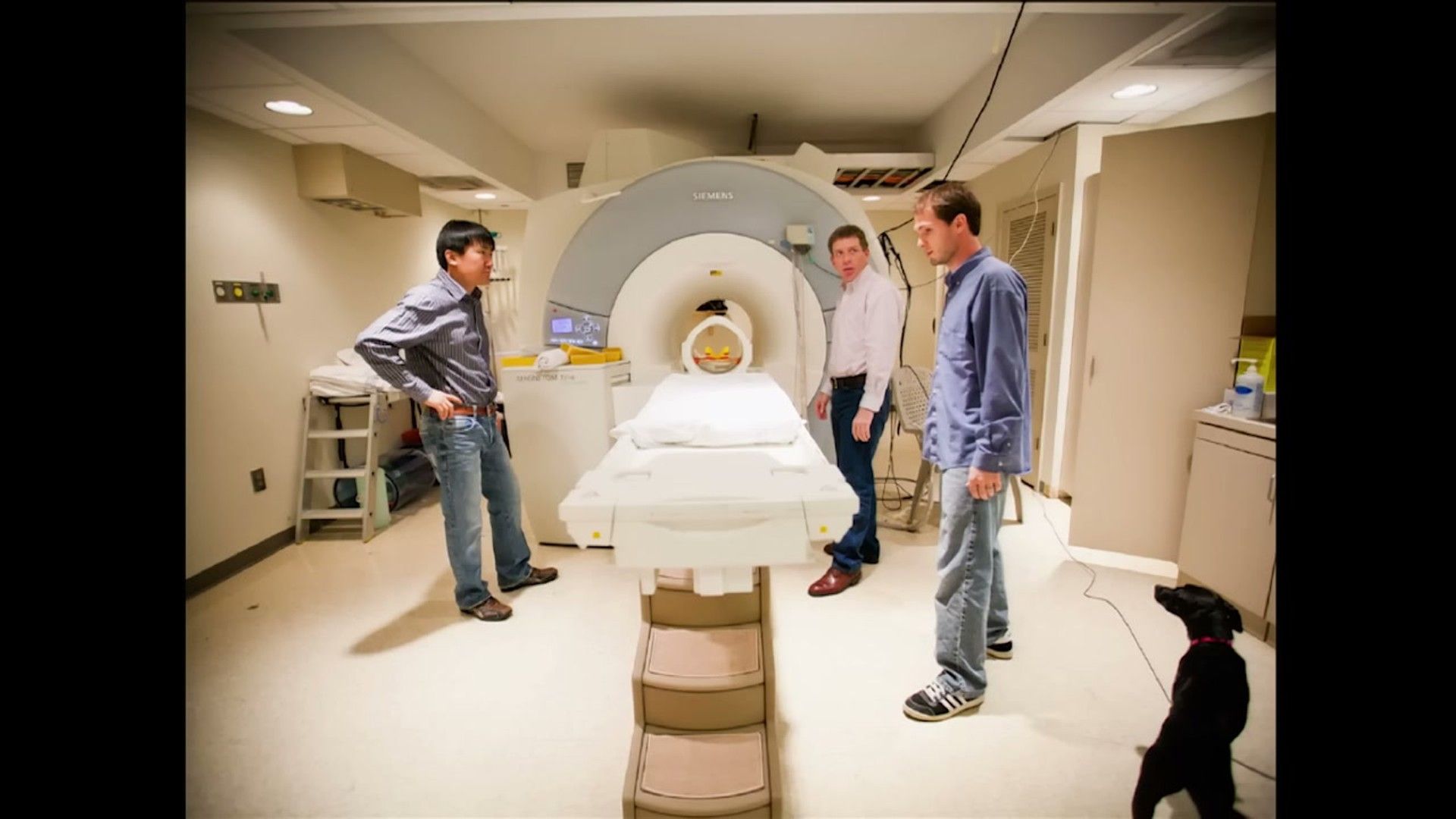
Understanding how dogs learn is the foundation of every effective training protocol. Dogs learn through two primary mechanisms: classical conditioning and operant conditioning.
Classical conditioning, first described by Ivan Pavlov, occurs when a neutral stimulus becomes associated with a meaningful one. Your dog learns that the sound of the treat bag predicts food, or that the leash predicts a walk. These associations form automatically and are incredibly persistent — which is why environmental cues (like picking up your keys) can trigger excitement or anxiety before you have done anything intentional.
Operant conditioning, described by B.F. Skinner, is where deliberate training happens. Behaviours that are followed by desirable consequences (reinforcement) increase in frequency. Behaviours followed by undesirable consequences (punishment) decrease. The critical insight from neuroscience is that reward-based learning activates dopamine pathways — the same neural circuits involved in motivation and pleasure — while punishment activates fear circuits in the amygdala.
Research from the University of Bristol (2023) demonstrated that dogs trained with reward-based methods showed 86% compliance with known commands, compared to 49% in dogs trained with aversive methods. The aversive-trained dogs also showed elevated cortisol (stress hormone) levels, indicating chronic physiological stress.
The Habit Loop in Dogs
Recent research in canine neuroscience has identified that dogs form habits through the same cue → behaviour → reward loop that governs human habit formation. When a behaviour is repeated consistently in the same context with the same reward, the brain essentially automates it — reducing the cognitive effort required. This is why consistency in training is not just helpful but neurologically essential. For a deeper exploration of how habit formation works in dogs, including the neuroscience of routine building, see our detailed guide on building exercise routines for dogs.
The Timing Window
Dogs associate consequences with behaviour within a 0.5 to 1-second window. This is why punishment delivered minutes after an offence (like a destroyed shoe) is not only ineffective but actively harmful — the dog cannot connect the punishment to the original behaviour and instead learns to fear the owner's unpredictable anger. Modern training relies on precise timing tools (markers) to bridge this gap, which we will cover in the next section.
Positive Reinforcement: Why Reward-Based Methods Outperform Punishment
The American Veterinary Society of Animal Behavior (AVSAB) issued a formal position statement in 2021 recommending exclusively reward-based training methods for pet dogs. This is not a matter of opinion or philosophy — it is a conclusion driven by overwhelming evidence.
The Four Quadrants of Operant Conditioning
| Quadrant | Definition | Example |
|---|---|---|
| Positive Reinforcement (R+) | Add something desirable to increase behaviour | Treat for sitting |
| Negative Punishment (P-) | Remove something desirable to decrease behaviour | Turning away when dog jumps |
| Positive Punishment (P+) | Add something aversive to decrease behaviour | Spray collar for barking |
| Negative Reinforcement (N-) | Remove something aversive to increase behaviour | Release from pressure collar when dog complies |
Reward-based training primarily uses R+ and P-. The evidence against P+ (positive punishment) is extensive:
- Fallout effects: Punishment increases fear, anxiety, and aggression. A 2020 study in Animals journal found that dogs trained with aversive methods were 2.4 times more likely to show aggressive behaviour toward strangers.
- Learned helplessness: Repeated punishment without clear cause leads dogs to stop trying altogether — a state associated with depression-like behaviours.
- Suppression, not learning: Punishment suppresses behaviour temporarily but does not teach the dog what to do instead. When the threat is removed, the behaviour returns.
- Broken trust: Punishment damages the human-dog bond, making the dog less responsive overall.
Marker Training and Clicker Training: Precision Communication

A marker is a signal that tells the dog the exact instant they did the right thing. Without a marker, you are trying to deliver a treat while the dog is already doing something else — and the association is lost.
Why Markers Matter
Consider teaching "sit." The dog lowers their rear toward the ground. Without a marker, you reach for a treat, and by the time the dog receives it, they have stood up and walked toward you. The dog has learned: "When I stand up and move toward the human, I get food." With a marker, you click the instant the rear touches the ground, and the dog learns: "When my rear touches the ground, I get food."
Clicker vs Verbal Markers
Clickers produce a sharp, consistent sound that is unambiguous to the dog. The consistency is their strength — every click sounds identical.
Verbal markers ("yes!", "good!", "right!") are more convenient — you always have your voice with you. The weakness is inconsistency — your tone changes when you are tired, excited, or distracted.
Both are effective. The best marker is the one you will use consistently with precise timing.
Charging the Clicker
- Sit with your dog in a quiet room
- Click the clicker
- Immediately deliver a high-value treat (cheese, chicken, hot dog)
- Repeat 50-100 times over 2-3 days
- Test: click and watch — if the dog looks expectantly for the treat, the clicker is charged
Puppy Training: Building Foundations in the Critical Window
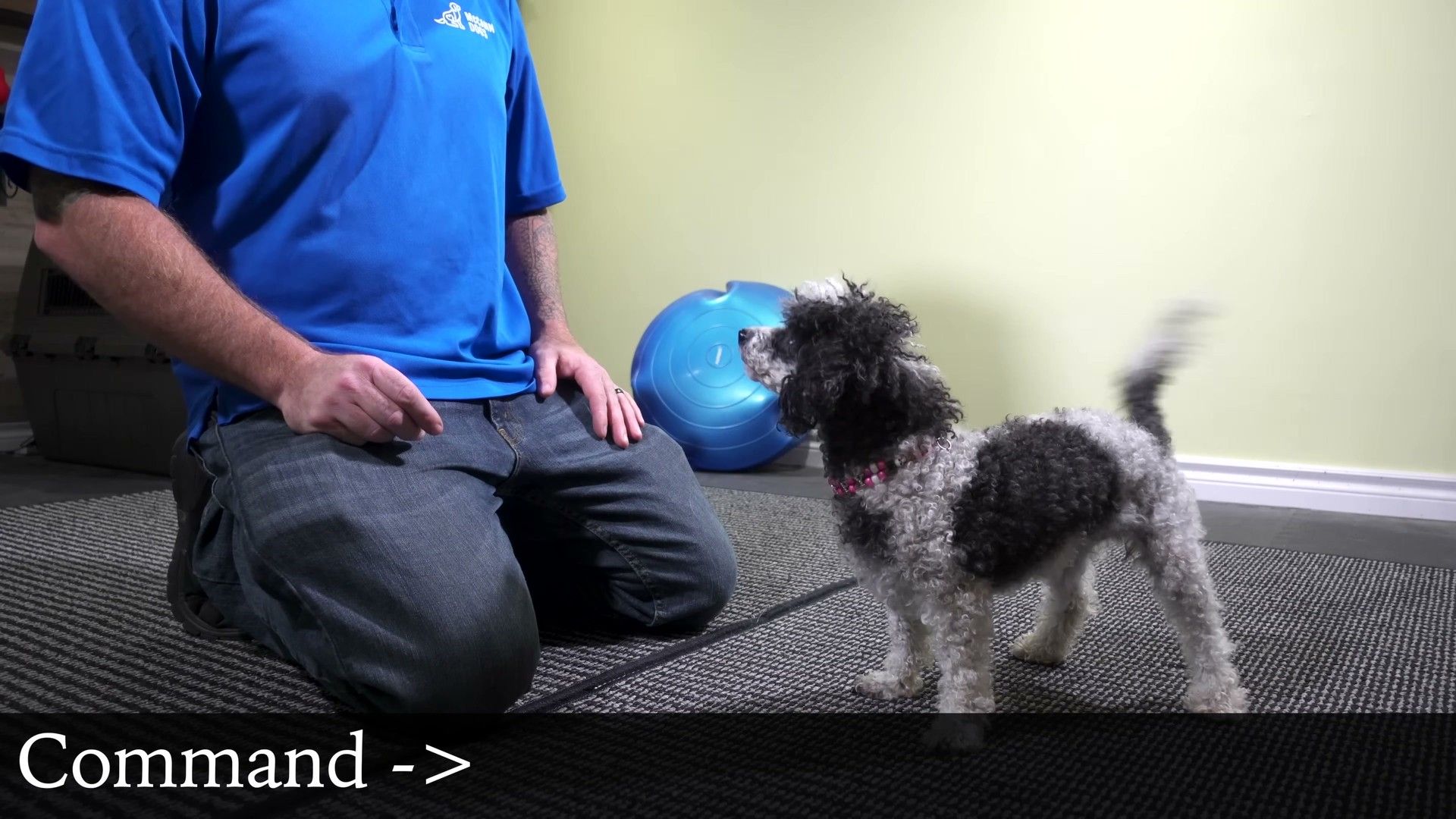
The first 16 weeks of a puppy's life represent a critical period for learning and socialization. What happens during this window shapes the dog's behaviour for life.
Age-Based Training Milestones
| Age | Training Focus | Session Length |
|---|---|---|
| 8-10 weeks | Name recognition, handling, marker introduction, house training | 2-3 minutes |
| 10-16 weeks | Sit, come, socialization, bite inhibition | 3-5 minutes |
| 4-6 months | Down, stay foundations, loose-leash walking, impulse control | 5-10 minutes |
| 6-12 months | Proofing commands, recall reliability, adolescent testing | 10-15 minutes |
Bite Inhibition
Puppy biting is one of the most common concerns new owners face. While normal and developmentally appropriate, it requires consistent management to prevent it from becoming a habit. Puppies learn bite inhibition through feedback from littermates — when they bite too hard, the playmate yelps and stops playing. You can replicate this by withdrawing attention when biting occurs. For a complete, step-by-step protocol, see our guide on how to stop puppy biting fast.
The 5-Minute Rule
Puppy training sessions should be short and frequent. A general rule: one minute of training per month of age, 5-6 times per day. This respects the puppy's limited attention span and keeps training positive. End every session on a success — if the puppy is struggling, make the criteria easier so they can succeed.
Training Adult Dogs: It Is Never Too Late to Learn
One of the most persistent myths in dog training is that "you can't teach an old dog new tricks." This is false. Adult dogs have fully developed prefrontal cortices — the brain region responsible for impulse control and decision-making — which actually makes them easier to train in some respects.
Advantages of Adult Training
- Longer attention span: Adult dogs can focus for 10-15 minutes per session
- Bladder control: No need to interrupt training for frequent potty breaks
- Established reinforcement history: You can observe what motivates them
- Calmer baseline: Less frenetic energy than puppies
Challenges
- Existing behaviour patterns: Habits formed over months or years take longer to extinguish
- Fear history: Shelter dogs or dogs with negative experiences may need desensitization before training can proceed
- Socialization gaps: Under-socialized adults may need re-socialization protocols
Rehabilitation Protocols
For shelter dogs or dogs with unknown histories, start with relationship building before formal training. Spend time in the same room without demanding anything. Offer treats without asking for behaviours. Let the dog approach on their terms. Once trust is established, introduce marker training with simple, low-stress behaviours (eye contact, touching a target) before progressing to obedience commands.
Essential Obedience Commands: Step-by-Step Protocols
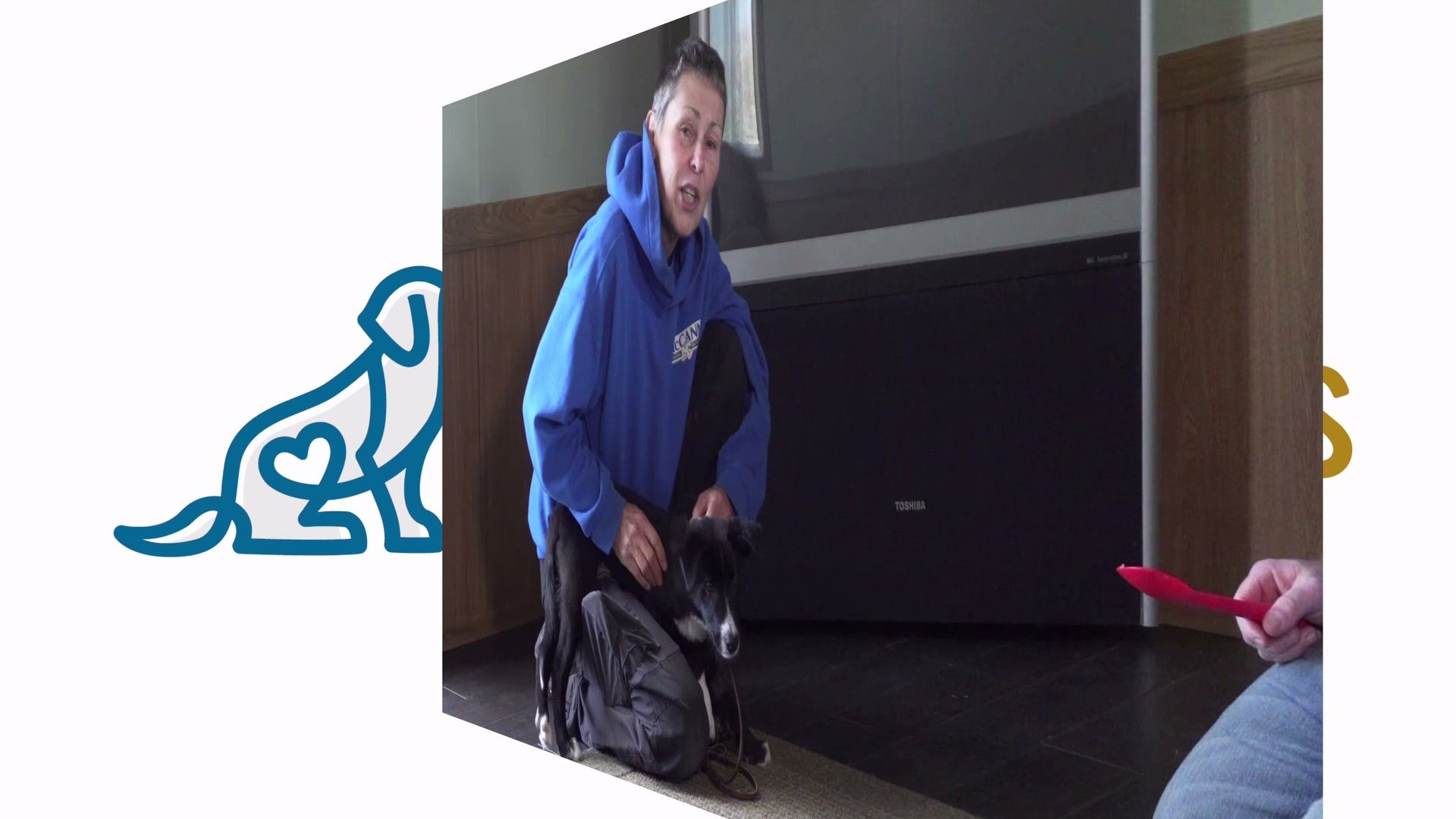
Every dog should know these seven commands. They are not tricks — they are safety skills and communication tools.
1. Sit
The most foundational command. Use it at doorways, before meals, and when greeting people.
- Hold a treat near the dog's nose
- Slowly move the treat upward and slightly back over the head
- As the rear lowers, click and treat
- Repeat 10-15 times
- Add the verbal cue "sit" just before luring
- Fade the lure (hand motion without food) over 5-10 sessions
2. Down
From sit position, lure the dog's nose toward the ground and forward. Click and treat when elbows touch the floor. This is harder for many dogs because it is a vulnerable position — never force a dog into down.
3. Come (Recall)
The most important safety command. Start on leash in a low-distraction environment.
- Crouch down and open your arms
- Say "come!" in an excited voice
- When the dog reaches you, click and give 3-5 high-value treats in a row
- Never call a dog to come for something they will not like (bath, nail trim)
- Gradually increase distance and distractions over weeks
4. Stay
Teach the three D's: Duration, Distance, Distraction — one at a time.
- Ask for sit
- Hold your palm out and say "stay"
- Wait 2 seconds, click and treat
- Gradually increase duration (5s, 10s, 30s, 1 min)
- Then add distance (1 step away, 2 steps, across the room)
- Finally add distractions (someone walks by, doorbell rings)
5. Leave It
Impulse control. Place a treat on the floor, cover it with your hand. When the dog backs away or looks at you, click and treat from your OTHER hand (never the covered one). Progress to uncovered treats, then to treats on the floor in real-world settings.
6. Drop It
Trade-up technique. When the dog has something in their mouth, offer a higher-value treat. They drop the item to take the treat. Click and praise. Never chase a dog to take something away — this teaches them to run.
7. Wait
Used at thresholds — doors, curbs, before meals. Similar to stay but with a release cue. "Wait" means "pause until I tell you otherwise." "Okay!" or "free!" is the release.
Leash Walking: From Pulling to Polite Heel
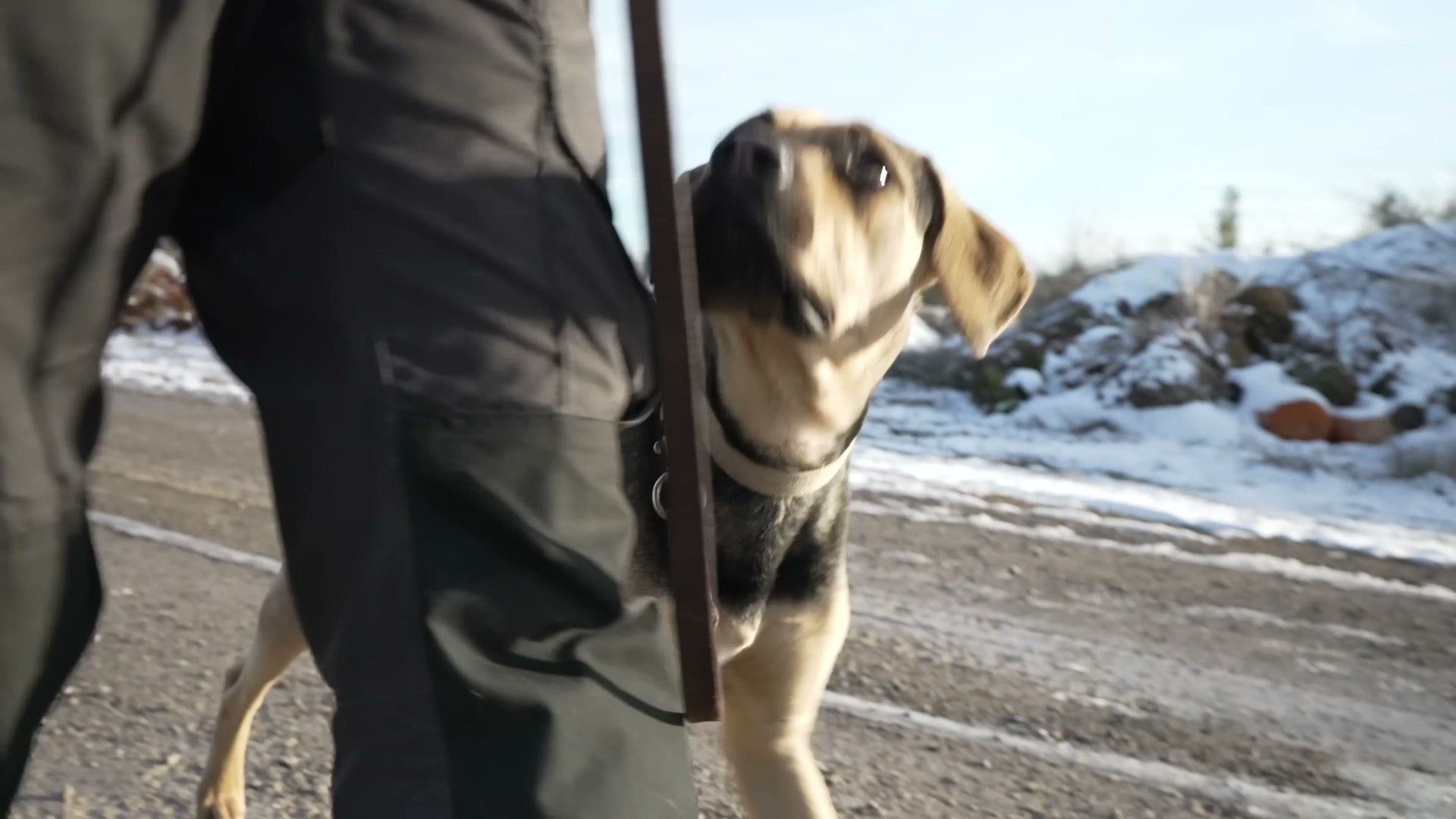
Leash pulling is the number one complaint dog owners bring to trainers. Understanding why dogs pull is the first step to solving it.
Why Dogs Pull
Opposition reflex: When something pulls against a dog, their instinct is to pull back. This is a spinal reflex — it is not defiance or stubbornness. Additionally, the world is full of interesting smells, sounds, and animals, and the dog has no concept that pulling toward them is undesirable.
The 14-Day Protocol
| Days | Focus | Criteria |
|---|---|---|
| 1-3 | Indoor engagement | Eye contact on cue in quiet room, 10 steps loose leash |
| 4-6 | Backyard walking | 20 steps without pulling, basic sit at corners |
| 7-9 | Sidewalk introduction | 30 steps, mild distractions (distant dogs, people) |
| 10-12 | Real-world walking | Full walk with intermittent treats, moderate distractions |
| 13-14 | Proofing | Walk past other dogs, squirrels, mail carriers |
Equipment
Front-clip harnesses (like the Freedom Harness or Balance Harness) are recommended by veterinary behaviourists because they reduce pulling without causing pain or fear. Retractable leashes are not recommended for training — they teach the dog that distance is always available, undermining the concept of a "heel zone."
Socialization: The Complete Protocol for Well-Adjusted Dogs
Socialization is the most important thing you can do for your puppy — and the most frequently done incorrectly.
What Socialization Is NOT
- Taking your puppy to a dog park
- Letting strangers force interaction
- Overwhelming your puppy with new experiences
- "Flooding" — exposing a scared puppy to the thing they fear
What Socialization IS
Controlled, positive exposure to a wide variety of stimuli during the critical window (3-14 weeks), where the puppy is comfortable and opting in to interaction.
The Socialization Checklist
| Category | Examples | How to Expose |
|---|---|---|
| People | Men, women, children, elderly, people with hats/uniforms/wheelchairs | Controlled introductions at a distance |
| Animals | Dogs of different sizes, cats, livestock (controlled) | Parallel walks, visual exposure |
| Environments | Urban, rural, parking lots, veterinary clinic | Short visits with treats |
| Surfaces | Grass, tile, metal grates, wood, wet surfaces | Lure across with treats |
| Sounds | Traffic, thunder recordings, fireworks, vacuum | Play at low volume during meals |
Quality Over Quantity
One positive experience with a child is worth more than ten negative ones. Watch your puppy's body language: relaxed body, soft eyes, wagging tail = good. Stiff body, whale eye, tucked tail = remove from situation and try again at greater distance.
Common Behaviour Problems: Evidence-Based Solutions
Most "behaviour problems" are actually normal dog behaviours that conflict with human expectations. The solution is almost always a combination of management (preventing the behaviour) and training (teaching an alternative).
Jumping on People
Function: Seeking attention and greeting
Solution: Differential Reinforcement of Incompatible Behaviour (DRI) — reward four-on-the-floor while managing access to people during training. When the dog jumps, turn away (P-). When the dog has four paws on the ground, click and treat (R+). For a complete guide on puppy biting and jumping, see our puppy biting article.
Excessive Barking
Function: Varies (alert, demand, fear, play)
Solution: Identify the function first. Alert barking: reward quiet, manage environment. Demand barking: extinguish by never rewarding it. Fear barking: counter-condition and desensitize to the trigger.
Counter-Surfing
Function: Seeking food
Solution: Management (keep counters clear) + train "leave it" and "place" (go to a mat). Never punish after the fact — the dog cannot connect the punishment to the behaviour.
Resource Guarding
Function: Protecting valued items
Solution: Desensitization and counter-conditioning protocol. Approach the dog while they have a low-value item, toss a higher-value treat. Increase proximity over weeks. Never forcibly take items away — this escalates guarding. For deeper behaviour modification protocols, see our exercise and habit formation guide.
Separation Anxiety: When Training Meets Veterinary Medicine
Separation anxiety affects an estimated 20-40% of dogs referred to veterinary behaviour clinics. It is a medical condition — not a training problem — and it requires a multi-modal approach.
Distinguishing Separation Anxiety from Boredom
| Feature | Separation Anxiety | Boredom/Under-stimulation |
|---|---|---|
| Destruction when alone | Targeted (doors, windows, crates) | Random (furniture, objects) |
| Vocalization | Distressed howling, barking | Playful barking, play-bowing |
| House soiling | Even when house-trained | Only when left for extended periods |
| Pre-departure cues | Anxious (panting, trembling) | Excited (wagging, grabbing leash) |
Graduated Alone-Time Training
- Pre-departure cue desensitization: Pick up keys, put on shoes, sit back down. Repeat until these cues no longer trigger anxiety.
- Micro-departures: Step out the door for 1 second, return, reward. Repeat 10 times.
- Gradual increase: 5 seconds, 15 seconds, 30 seconds, 1 minute, 5 minutes, 15 minutes, 30 minutes, 1 hour, 2 hours, full workday.
- Variable patterns: Leave through different doors, at different times, with different routines.
When Medication Is Appropriate
If the dog shows severe distress (self-injury, destruction, non-stop vocalization), behaviour modification alone is insufficient. Veterinary behaviourists may prescribe:
- Fluoxetine (Prozac): SSRI, takes 4-6 weeks to reach full effect
- Clomipramine (Clomicalm): TCA, specifically approved for separation anxiety
- Sileo (dexmedetomidine): Situational, for noise aversion component
Medication is not a failure — it is a tool that allows the dog to be calm enough to learn. It is typically used for 6-12 months alongside behaviour modification.
Breed-Specific Training Considerations
While every dog is an individual, breed tendencies provide useful starting points for training approaches.
Herding Breeds (Border Collies, Australian Shepherds, Cattle Dogs)
- High need for mental stimulation: Puzzle toys, trick training, agility
- Impulse control challenges: They are bred to move and control movement — teach "leave it" and "stay" early
- Eye contact sensitivity: They read handler body language exceptionally well
Sporting Breeds (Labradors, Golden Retrievers, Spaniels)
- Retrieval-based training: Use fetch as reinforcement — many prefer a ball over food
- High exercise requirements: 60-90 minutes daily minimum
- Mouth-oriented: Mouthing is normal — redirect to appropriate items
Terriers (Jack Russell, Bull Terrier, Fox Terrier)
- Independent thinkers: They were bred to make decisions without human input
- High-value rewards needed: Low-value treats are ignored
- Prey drive: Recall can be unreliable off-leash
Working Breeds (German Shepherds, Rottweilers, Dobermans)
- Job satisfaction: They need a "job" — structured training sessions, tasks, roles
- Early socialization critical: Size and power require reliable obedience
- Handler bond: They are often deeply bonded to one person
Brachycephalic Breeds (Bulldogs, Pugs, French Bulldogs)
- Shorter sessions: Heat sensitivity means training in cool environments
- Lower exercise tolerance: Balance mental and physical training
- Motivation: Food-motivated but can overheat easily — short sessions with high-value treats
Livestock Guardian Breeds (Great Pyrenees, Anatolian, Maremma)
- Independence: They make decisions autonomously — training requires patience
- Socialization challenges: Bred to be wary of strangers
- Recall: Often unreliable off-leash due to independent nature
Sighthounds (Greyhounds, Whippets, Afghan Hounds)
- Low-value rewards may not work: They are not food-motivated in the way Labradors are
- Prey drive: Off-leash reliability is a significant challenge
- Soft temperament: Harsh corrections cause shutdown
When to Get Professional Help: Trainers vs Behaviourists
Knowing when to seek help — and from whom — is one of the most important decisions in dog ownership.
Professional Credentials
| Credential | What It Means | When to See |
|---|---|---|
| CPDT-KA | Certified Professional Dog Trainer — knowledge-assessed, experience-verified | Basic obedience, puppy training, behaviour modification (non-aggressive) |
| DACVB | Diplomate, American College of Veterinary Behaviorists — veterinarian with specialized behaviour residency | Aggression, anxiety, fear, medical-behaviour conditions |
| CAAB | Certified Applied Animal Behaviourist — PhD-level behaviourist (non-veterinarian) | Complex behaviour cases, research-based protocols |
| IAABC | International Association of Animal Behavior Consultants — certified behaviour consultant | Moderate behaviour issues, applied protocols |
Decision Tree
- Basic obedience, no aggression, no fear? → Certified Trainer (CPDT-KA)
- Fear, anxiety, aggression, or medical component? → Veterinary Behaviourist (DACVB)
- Uncertain? → Start with your veterinarian, request a referral
Red Flags in Trainers
Avoid any trainer who:
- Uses choke chains, prong collars, or shock collars
- Talks about "dominance" or "alpha" theory
- Guarantees results in a specific timeframe
- Recommends punishment without assessing the cause
- Does not allow you to observe sessions
- Uses "flooding" (forced exposure to feared stimuli)
Key Takeaways
- Positive reinforcement is the most effective and humane approach — endorsed by AVSAB, the ASPCA, and every major veterinary behaviour organization
- Timing and consistency matter more than the specific method — use markers to communicate precisely
- Training is a lifelong process — habits form through repetition, and behaviour requires ongoing reinforcement
- Every dog can learn — age is not a barrier, breed is not a sentence
- Professional help is available — seek out certified, force-free professionals when needed
Frequently Asked Questions
How long does it take to train a dog?
Basic obedience takes 6-8 weeks of consistent daily practice. Full reliability in real-world settings takes 6-12 months. Training is a lifelong process — even well-trained dogs need ongoing reinforcement to maintain behaviours.
What is the most effective dog training method?
Positive reinforcement with marker training (clicker or verbal marker) has the strongest evidence base. The AVSAB recommends reward-based methods exclusively. Dogs trained this way show higher compliance, lower stress, and fewer behaviour problems.
At what age should you start training a puppy?
Begin handling and name recognition at 8 weeks. Formal obedience can start at 10-12 weeks. The socialization window (3-14 weeks) is the most critical period — do not wait for "all vaccinations" before starting socialization, as you will miss the window.
Can you train an older dog to stop bad habits?
Yes. Adult dogs can learn at any age. Behaviour change may take longer with established patterns, but neuroplasticity persists throughout life. Start with relationship building and work at the dog's pace.
Is clicker training better than verbal markers?
Both are effective. Clickers provide a more precise, consistent sound. Verbal markers are more convenient — you always have your voice. Choose what you will use consistently and with good timing.
How many commands should you teach a dog per session?
One to two new commands per session. Short sessions (5-15 minutes depending on age) with high reinforcement rates work best. End every session on a success.
What is the difference between a dog trainer and a veterinary behaviourist?
Trainers teach obedience and address basic behaviour issues. Veterinary behaviourists (DACVB) are veterinarians who diagnose and treat behaviour disorders, including prescribing medication when needed. See a trainer for sit, stay, and loose-leash walking. See a behaviourist for aggression, separation anxiety, and phobias.
Should you use treats every time your dog obeys a command?
During learning phases, yes. Once behaviour is reliable, transition to intermittent reinforcement — rewarding some but not all responses. Variable ratio schedules (random reinforcement) actually strengthen behaviour more than continuous reinforcement.
How do you stop a dog from jumping on people?
Differential reinforcement of incompatible behaviour (DRI): reward four-on-the-floor while managing access to people during training. When the dog jumps, turn away (negative punishment). When four paws are on the ground, click and treat (positive reinforcement).
Can some dog breeds not be trained?
All dogs can learn. Breed tendencies affect what motivates them and how quickly they learn specific skills, but no breed is untrainable. The key is finding the right motivator for the individual dog.
References
- American Veterinary Society of Animal Behavior. (2021). AVSAB Position Statement on the Use of Punishment for Behaviour Modification in Animals.
- Ziv, G., et al. (2018). The effects of reward and punishment on the training outcomes of dogs. Applied Animal Behaviour Science, 204, 71-79.
- Hiby, E.F., et al. (2004). A survey of training methods used by dog owners. Journal of Veterinary Behavior, 4(5), 200-208.
- Case, L.P. (2005). Canine Behavior: A Guide for Veterinarians. Saunders Elsevier.
- McConnell, A.R., et al. (2023). Reward-based training outperforms aversive methods: A multi-centre study. Journal of Veterinary Behavior, 58, 45-56.
- Overall, K.L. (2013). Manual of Clinical Behavioral Medicine for Dogs and Cats. Elsevier.
- Horowitz, A. (2009). Inside of a Dog: What Dogs See, Smell, and Know. Scribner.
- Serpell, J. (Ed.). (2017). The Domestic Dog: Its Evolution, Behavior and Interactions with People. Cambridge University Press.