Best Raw Food Diets for Dogs: Complete Transition and Safety Guide
Quick Answer
- A raw food diet for dogs consists of uncooked meat, bones, organs, and sometimes vegetables, modeled after a canine's ancestral diet.
- The safest approach is a gradual 7-10 day transition, starting with 25% raw mixed with 75% current food and increasing daily.
- Raw feeding carries bacterial risks (Salmonella, Listeria) for both dogs and humans, so safe handling and hygiene protocols are essential.
- Homemade raw diets must be formulated to meet AAFCO nutrient profiles — most fail without proper supplementation.
- Consult a board-certified veterinary nutritionist before starting, especially if your dog has kidney disease, pancreatitis, or diabetes.
Not sure where to start? Find your situation below:
| If your dog has... | Go to this section |
|---|---|
| Itchy skin and dull coat | Benefits of Raw Feeding |
| You want to switch from kibble to raw | How to Transition Your Dog to Raw Food |
| Concerns about bacteria and safety | Risks and Safety Concerns |
| You want to make food at home | Homemade vs. Commercial Raw Diets |
| Kidney disease, pancreatitis, or diabetes | Raw Feeding for Dogs with Health Conditions |
| Persistent digestive issues after switching | Common Mistakes |
Introduction: Why This Matters
Your dog has been scratching for weeks. The coat looks dull. The kibble bag is getting expensive, and you keep reading about processed ingredients that might be doing more harm than good. You've considered switching to a raw food diet, but every forum post contradicts the next one — one says raw is the answer, another warns about bacteria, and a third insists homemade is dangerous without a nutritionist. The confusion is real, and it is keeping you from making a decision that could genuinely improve your dog's health. This matters because 15-25% of US dog owners have tried or currently feed raw, and the raw segment is growing at 12.5% CAGR, yet misinformation and safety risks are widespread. This article provides a clinical researcher's evidence-based guide covering the real benefits, documented risks, a week-by-week transition protocol, safety handling, homemade versus commercial options, and special considerations for dogs with health conditions. The goal is not to convince you to feed raw — it is to give you the evidence you need to decide safely and confidently.
What Is a Raw Dog Food Diet?
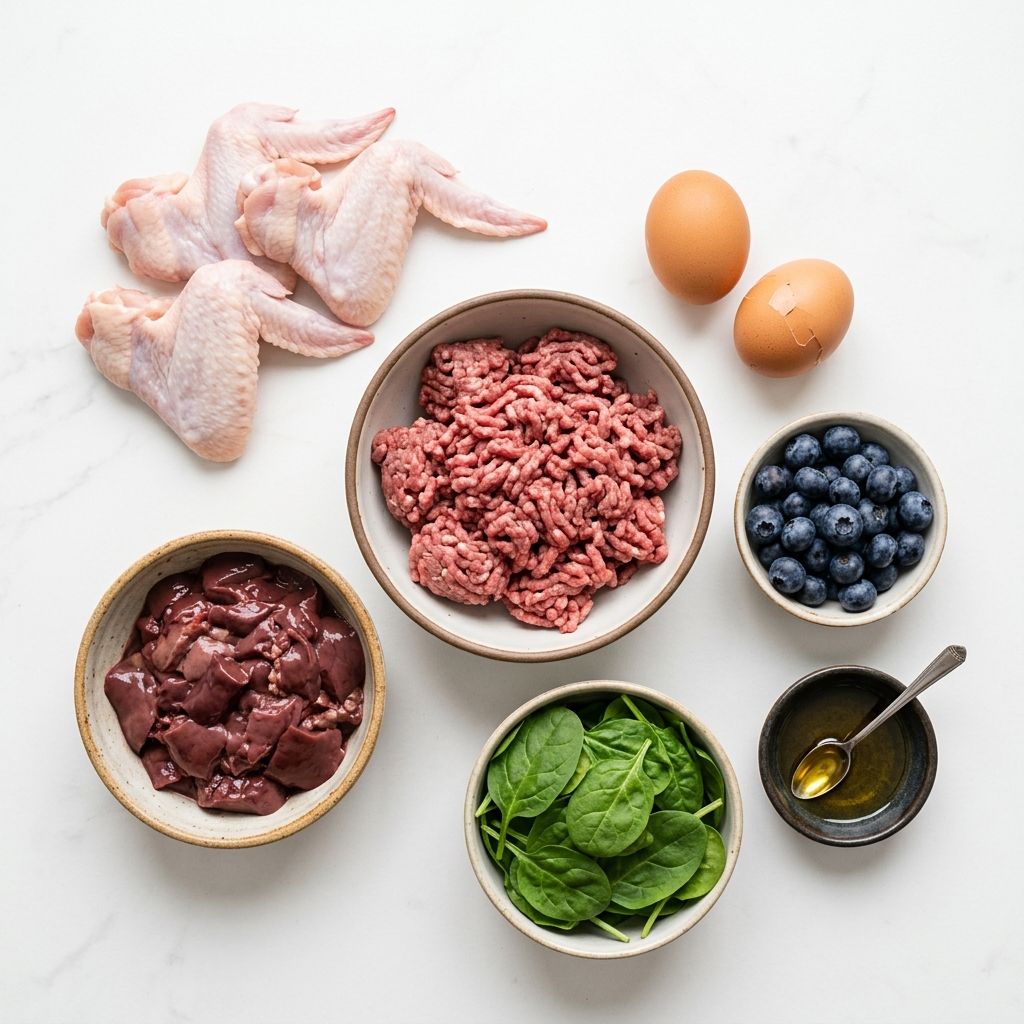
A raw dog food diet consists of uncooked muscle meat, bones, organs, and sometimes vegetables and supplements — designed to mirror the ancestral nutritional profile of wild canines.
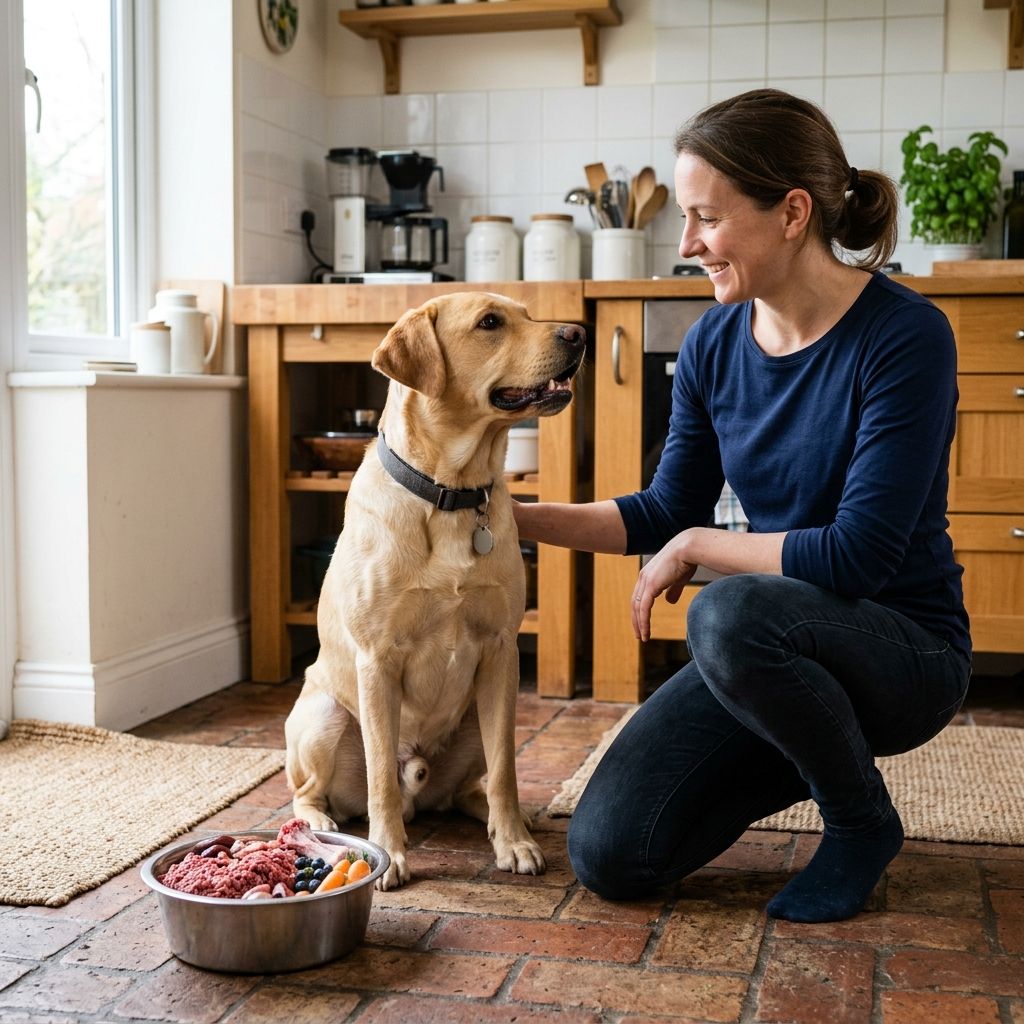
The concept behind raw feeding is straightforward: dogs evolved as carnivorous scavengers whose digestive systems are optimized for uncooked animal tissue. A raw diet eliminates cooked grains, synthetic preservatives, and rendered by-products that characterize most commercial kibble. Two primary approaches exist within the raw feeding community. The BARF (Biologically Appropriate Raw Food) diet includes vegetables, fruits, and supplements alongside meat, bone, and organ. The prey model, by contrast, attempts to replicate the whole-prey composition of a wild canine's natural diet — approximately 80% muscle meat, 10% bone, and 10% organ (with 5% liver). Raw diets can be prepared at home or purchased commercially as frozen, freeze-dried, or dehydrated products. The critical benchmark for any raw diet is the AAFCO (Association of American Feed Control Officials) nutrient profiles, which define what constitutes a complete and balanced food for dogs at each life stage. Without meeting these profiles, even a well-intentioned raw diet can produce nutritional deficiencies over time.
| Approach | Composition | Key Feature |
|---|---|---|
| BARF | Meat, bone, organ, vegetables, supplements | Plant-based nutrients included |
| Prey Model | Meat, bone, organ only | Mimics whole prey ratios |
| Commercial Raw | Varies by brand; often AAFCO-tested | Convenience and testing included |
Did You Know: Dogs share certain microbial species with their human family members — the same household literally breeds a shared microbiome, which means raw food handling practices affect every person in the home.
What you can do: Note which approach — BARF, prey model, or commercial — aligns with your dog's needs and your lifestyle before moving to the transition section. If you are leaning toward homemade, identify a board-certified veterinary nutritionist now, before you begin sourcing ingredients.
If you are deciding between BARF and prey model, see the Homemade vs. Commercial section below.
- Raw feeding means uncooked meat, bones, and organs — no cooked grains or synthetic fillers
- BARF includes plant-based supplements; prey model focuses on whole prey ratios
- Both approaches must meet AAFCO nutrient profiles to be considered complete
- Commercial options exist alongside homemade, each with distinct trade-offs
Benefits of Raw Feeding: What the Evidence Shows
Raw-fed dogs show measurable improvements in coat quality, stool consistency, and gut microbiome diversity — but only when the diet is properly formulated.
The most compelling evidence for raw feeding comes from studies measuring tangible, observable outcomes. Improved coat shine and skin condition are among the most frequently reported benefits by owners, and clinical data backs this up. A 2019 randomized controlled trial published in the Journal of Small Animal Practice found a +1.8 point improvement on a 5-point coat condition scale after 12 weeks on a raw diet (Hielm-Bjorkman et al., 2019). That is a clinically meaningful change — owners noticed the difference, and veterinarians could measure it. Stool quality is another area where raw feeding consistently outperforms cooked diets. Koch et al. (2020) reported a digestibility coefficient of 82% for raw diets compared to 75% for cooked diets, meaning dogs absorb more nutrients per gram of food and produce firmer, more consistent stools. The gut microbiome tells an even more interesting story. Suchodolski et al. (2020) found that raw feeding significantly increased microbial diversity, with higher abundance of Fusobacterium species — bacteria associated with efficient protein fermentation and gut barrier integrity. Over a longer timeframe, Kerr et al. (2022) documented that dogs fed raw diets over two years had lower body condition scores and fewer reported gastrointestinal issues compared to kibble-fed controls.
What you can do: Track your dog's coat condition and stool quality during transition using a simple weekly log. Photograph the coat and note stool consistency on a 1-5 scale each week. This data becomes invaluable for your veterinarian and for evaluating whether the diet is working.
Vet Tip: Do not expect coat improvements within the first two weeks. The hair growth cycle takes approximately 6-8 weeks, so meaningful changes in coat quality typically appear at the 4-8 week mark.
If your dog's digestive issues include frequent loose stools beyond the transition period, also check the Risks and Safety Concerns section below.
- Raw-fed dogs show measurable improvements in coat quality, stool consistency, and gut microbiome diversity
- Long-term raw-fed dogs had lower body condition scores and fewer GI complaints
- Benefits are contingent on proper formulation — not all raw diets deliver these results
- Evidence is growing but still limited; more large-scale studies are needed
Risks and Safety Concerns: What You Must Know
Bacterial contamination is the primary documented risk of raw feeding — Salmonella shedding occurs in roughly 20% of raw-fed dogs, and 36% of raw pet food samples tested positive for Listeria in European market testing.
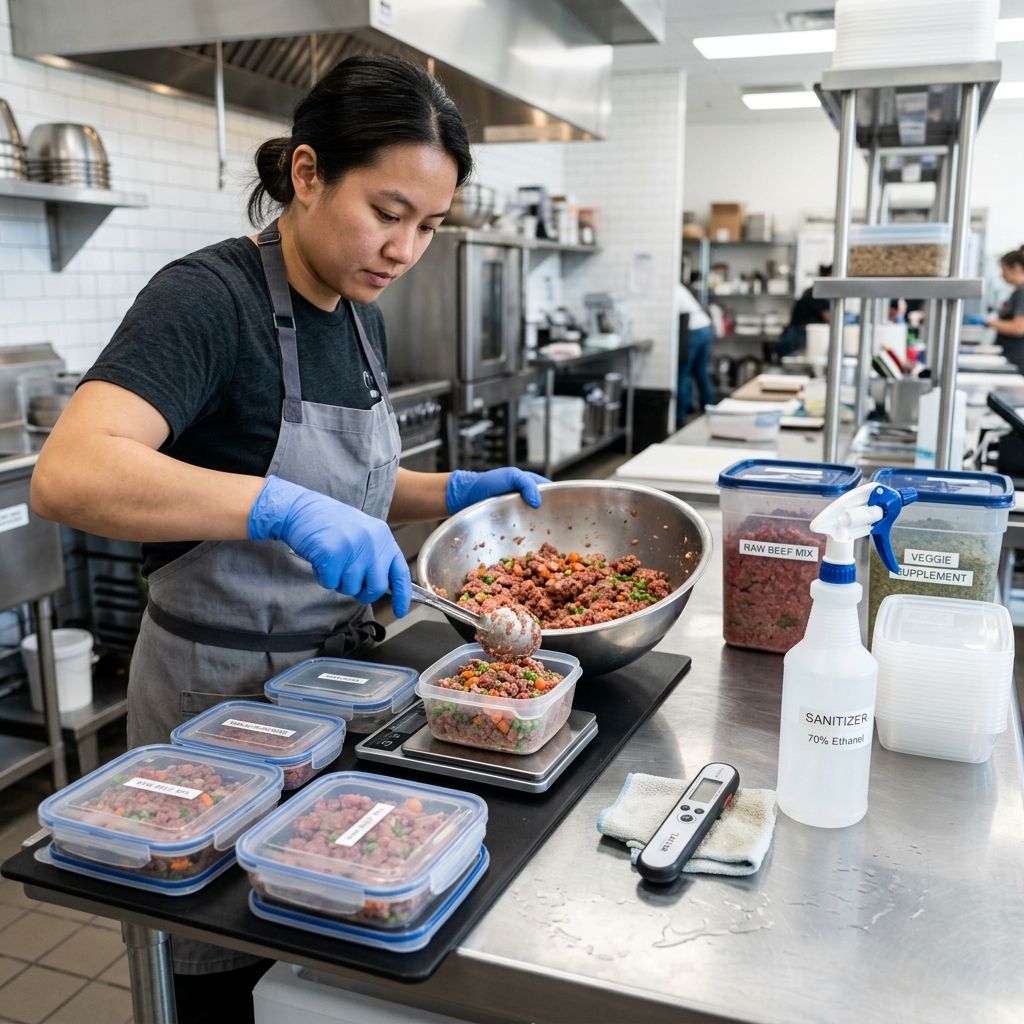
Transparency about risks is essential for any responsible guide on raw feeding. The evidence is clear and quantifiable. Finley et al. (2006) found that dogs fed raw diets had an odds ratio of 8.0 for Salmonella shedding compared to kibble-fed dogs — meaning raw-fed dogs were eight times more likely to carry and shed Salmonella in their feces. Ojeda et al. (2018) tested raw pet food samples across European markets and found that 36% were positive for Listeria monocytogenes, 23% for Salmonella, and 40% of bacterial isolates carried antibiotic resistance genes. This last finding is particularly concerning from a public health perspective, as it means the bacteria your dog carries may be resistant to standard antibiotics. The FDA has documented multiple Salmonella outbreaks linked to raw pet food since 2010, and the agency's Center for Veterinary Medicine has issued compliance guidance emphasizing that raw pet food is not sterile and requires careful handling. Nutritional imbalances represent a second major risk category. Freeman et al. (2013) analyzed homemade raw diets and found that most were deficient in calcium, phosphorus, zinc, or vitamin D — nutrients critical for bone health, immune function, and cellular metabolism. The FDA's Compliance Policy Guide (2019) specifically addresses raw pet food handling and recommends HACCP-based safety plans for anyone preparing raw food at home.
| Risk | Likelihood | Severity | Mitigation |
|---|---|---|---|
| Salmonella shedding | High (20% of raw-fed dogs) | Moderate to severe | Dedicated prep area, hand washing |
| Listeria contamination | Moderate (36% of samples) | Severe for immunocompromised | Source from reputable suppliers |
| Antibiotic-resistant bacteria | Moderate (40% of isolates) | Public health concern | Proper cooking of human food, hygiene |
| Nutritional imbalance | High for homemade | Moderate to severe | Veterinary nutritionist formulation |
Common Mistake: Many owners assume that because dogs are carnivores, they are immune to bacterial foodborne illness. While dogs have a more acidic stomach pH than humans, they are not resistant to Salmonella or Listeria — and they can transmit these pathogens to household members, especially children and immunocompromised individuals.
What you can do: Set up a dedicated raw food preparation area with separate cutting boards, utensils, and storage containers. Wash hands and surfaces thoroughly after every handling session. If anyone in your household is immunocompromised, consult your veterinarian before starting raw feeding.
If you have immunocompromised family members, consult your veterinarian before starting raw feeding — the zoonotic risk is not theoretical, it is documented.
- Bacterial contamination is real and quantifiable — Salmonella and Listeria are documented risks
- Antibiotic resistance genes in raw pet food bacteria are an emerging public health concern
- Nutritional imbalances are the most common failure mode of homemade raw diets
- All risks can be significantly mitigated with proper handling, formulation, and veterinary oversight
How to Transition Your Dog to Raw Food: A Week-by-Week Protocol
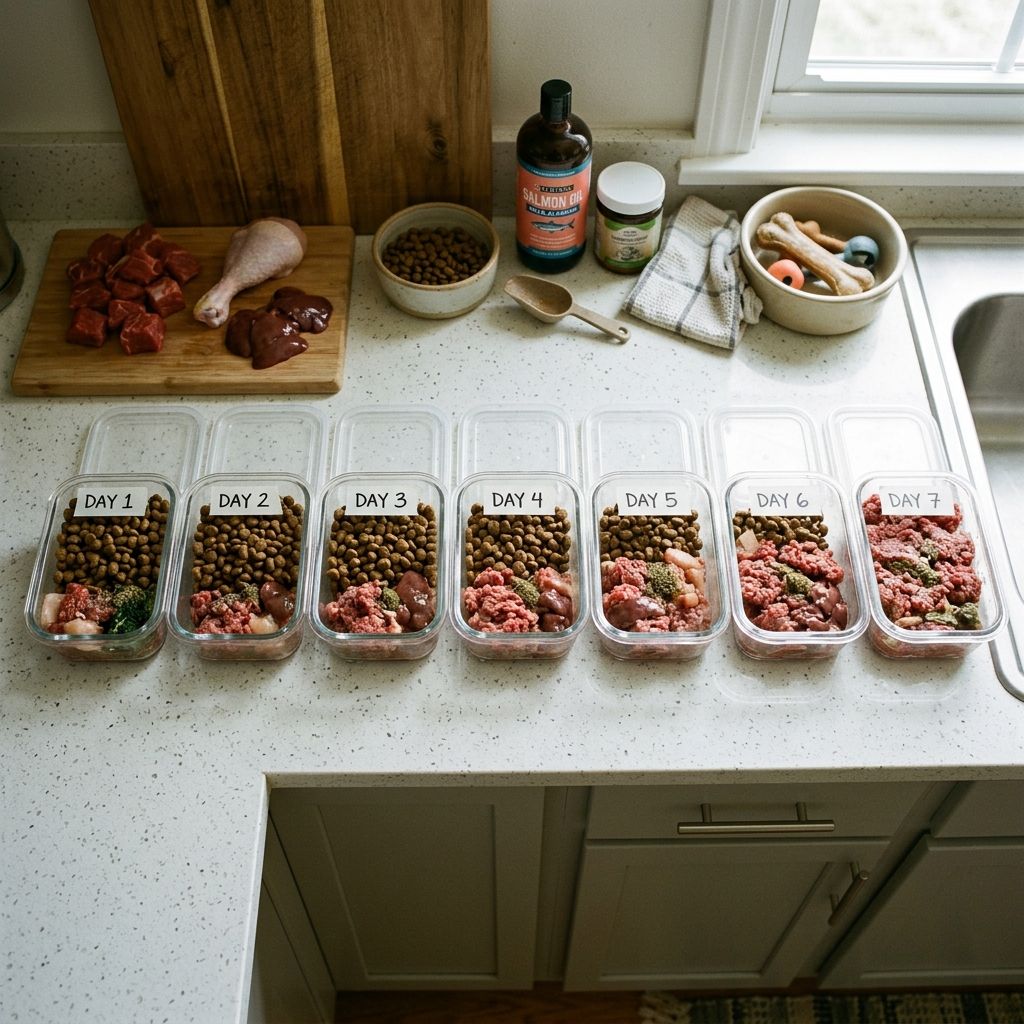
A gradual 7-10 day transition is the clinical standard — abrupt switches cause gastrointestinal upset and can set back your dog's gut microbiome by weeks.
The transition period is the most critical phase of raw feeding, and it is where most owners make mistakes. The gut microbiome adapts slowly to dietary changes, and introducing raw food too quickly disrupts the bacterial communities that process your dog's current diet. Koch et al. (2020) demonstrated that gradual transitions produce significantly better digestibility outcomes and more stable stool quality than abrupt switches. The protocol below follows the clinical standard used in veterinary nutrition practice. Days 1-3: feed 25% raw and 75% current food. Monitor for refusal, loose stools, or vomiting. Days 4-6: increase to a 50/50 ratio. Watch for changes in energy levels and appetite — some dogs become more energetic, while others may temporarily eat less as their digestive system adjusts. Days 7-8: move to 75% raw and 25% current food. Stool should be firming by this point. Days 9-10: feed 100% raw. Confirm stable stool quality and consistent energy levels before considering the transition complete. Week 2 through week 4: adjust portion sizes based on body condition score and activity level. The general feeding guideline is approximately 2-3% of body weight per day, but this varies with metabolism, age, and exercise level.
| Day | Raw % | Current Food % | What to Monitor |
|---|---|---|---|
| Days 1-3 | 25% | 75% | Refusal, loose stools, vomiting |
| Days 4-6 | 50% | 50% | Energy, appetite, stool consistency |
| Days 7-8 | 75% | 25% | Stool firming, coat changes |
| Days 9-10 | 100% | 0% | Stable stool, energy, appetite |
| Week 2-4 | 100% | — | Body condition, weight, coat |
Vet Tip: Print this transition calendar and place it on your refrigerator as a daily reference. The single best daily indicator of transition success is stool quality — if stools become watery or mucoid, slow the transition by one or two days.
What you can do: If your dog shows persistent diarrhea beyond day 5, slow the transition and consult your veterinarian. Do not push through GI distress — it signals that the gut microbiome needs more time to adapt.
If your dog's digestive issues include frequent vomiting during the transition, slow the ratio increase and consult your veterinarian before continuing.
- Gradual transition over 7-10 days prevents GI upset and allows the gut microbiome to adapt
- Stool quality is the single best daily indicator of transition success
- Energy levels, appetite, and coat condition should be tracked weekly
- Most dogs complete the transition within 10 days; some may need 14-21 days
Homemade vs. Commercial Raw Diets
Homemade raw diets offer full ingredient control but require professional formulation — most fail AAFCO nutrient profiles without supplementation, and the most common deficiencies are calcium, phosphorus, zinc, and vitamin D.
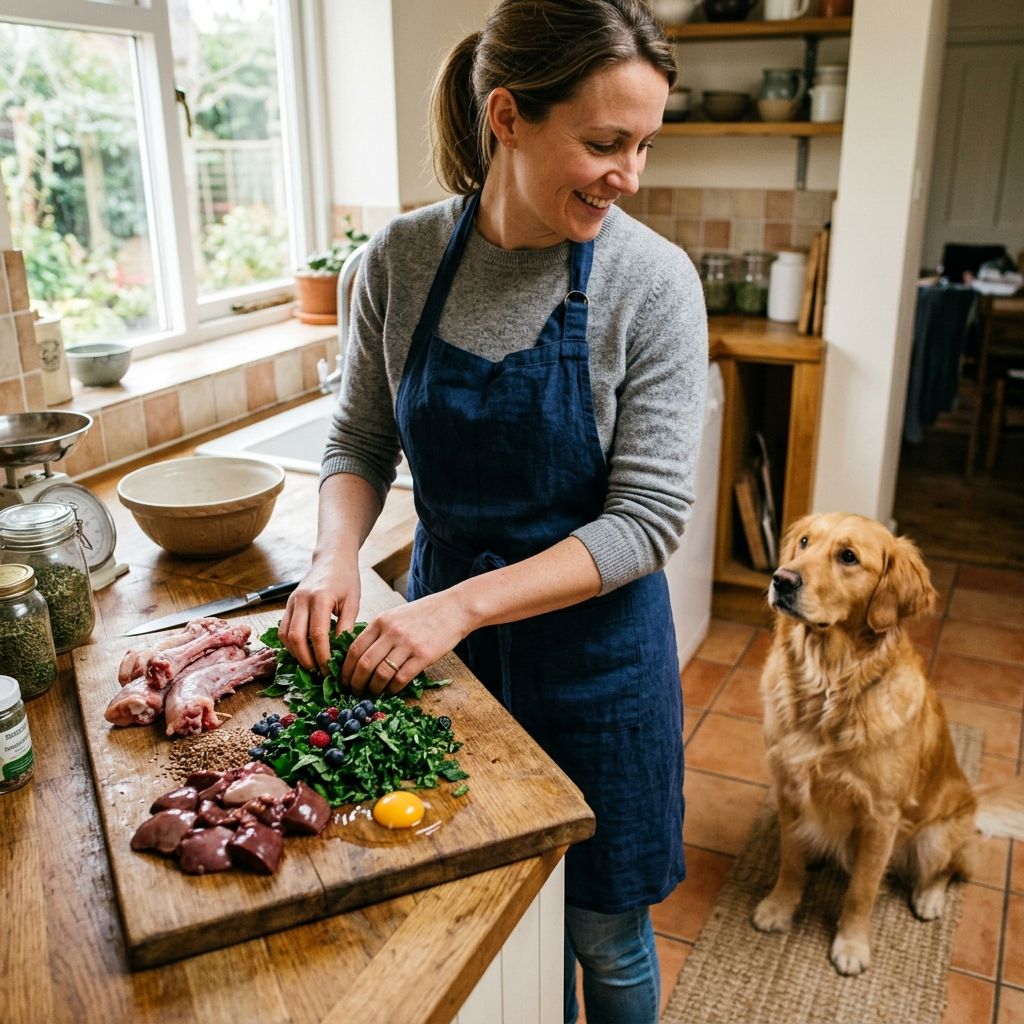
Choosing between homemade and commercial raw feeding is one of the most consequential decisions an owner makes. Commercial raw diets offer convenience and, in theory, AAFCO compliance testing. However, Remillard et al. (2021) found that only approximately 60% of commercially available raw diets meet AAFCO nutrient profiles for all life stages — meaning 40% of commercial options may be incomplete despite marketing claims. Homemade raw diets give you complete control over every ingredient, which is valuable for dogs with allergies or sensitivities. But that control comes with a significant responsibility: without professional formulation, homemade raw diets almost inevitably develop nutritional gaps. Freeman et al. (2013) documented that the most common deficiencies in homemade raw diets are calcium and phosphorus — minerals essential for bone development and metabolic function — followed by zinc and vitamin D. The standard formulation ratio used by veterinary nutritionists is approximately 80% muscle meat, 10% bone, and 10% organ (with 5% liver). This ratio provides a starting framework, but it must be adjusted based on the specific protein source and the individual dog's needs. Cost is a meaningful factor: homemade raw averages $3-$5 per day depending on ingredient sourcing, while commercial raw averages $5-$8 per day. However, homemade costs do not include the expense of supplementation, which can add $1-$2 per day.
| Factor | Homemade | Commercial |
|---|---|---|
| Ingredient control | Full | Limited to brand selection |
| AAFCO compliance | Requires professional formulation | ~60% meet profiles |
| Daily cost | $3-$5 + supplements | $5-$8 |
| Convenience | Low — preparation required | High — ready to serve |
| Pathogen risk | Depends on sourcing and handling | Tested by manufacturer |
Did You Know: The meat-to-bone-to-organ ratio of 80/10/10 is a starting framework, not a rigid rule — different protein sources (chicken versus beef versus lamb) have varying bone and fat content that requires adjustment.
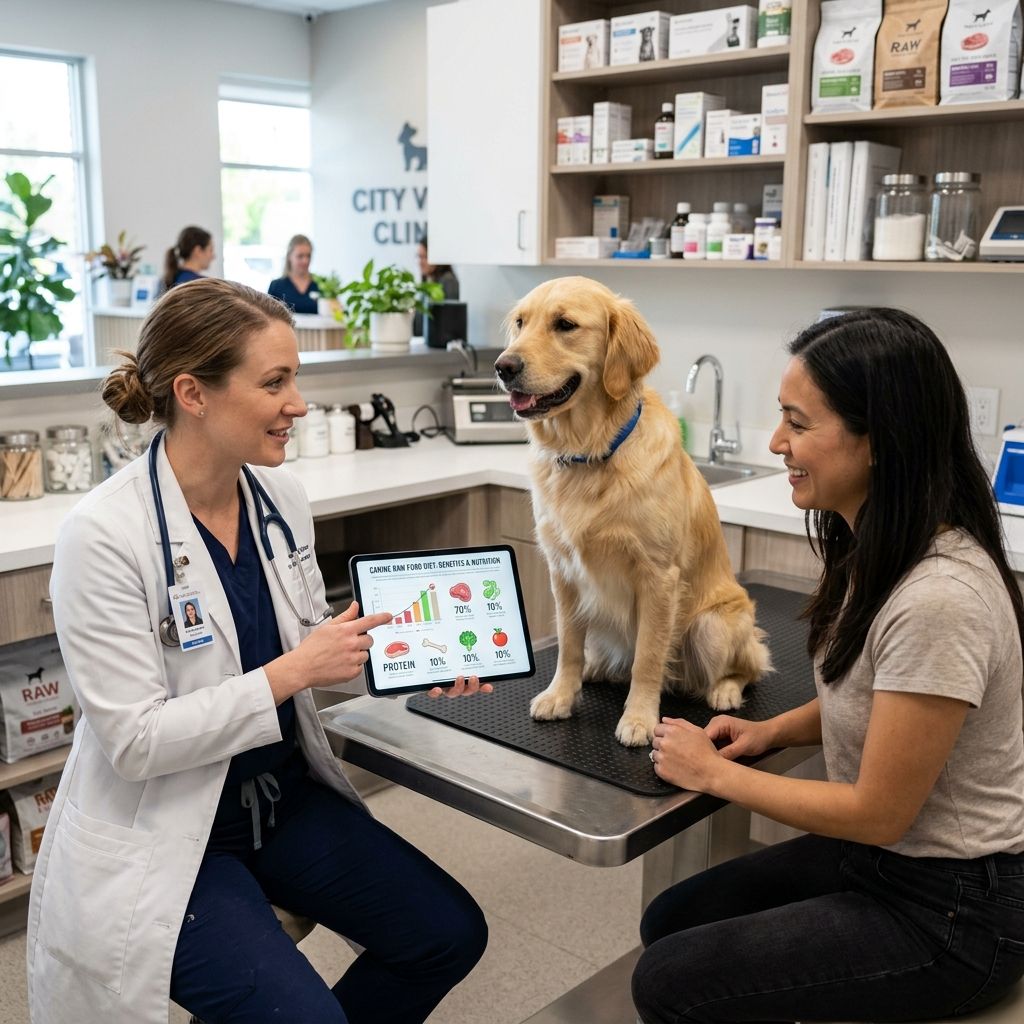
What you can do: Before making any homemade recipe, have it reviewed by a board-certified veterinary nutritionist for AAFCO compliance. Do not rely on recipes from social media or forums — these rarely account for micronutrient adequacy.
If you choose homemade, work with a board-certified veterinary nutritionist to formulate your recipes — this is the single most important step for ensuring nutritional completeness.
- Commercial raw is more convenient and often tested for AAFCO compliance, but quality varies widely
- Homemade raw offers ingredient control but requires professional formulation to be nutritionally complete
- The meat-to-bone-to-organ ratio of 80/10/10 is a common starting framework
- Supplementation is critical for homemade diets — calcium and phosphorus are the most commonly deficient nutrients
- Cost is a meaningful factor — factor in both food and supplementation expenses
Raw Feeding for Dogs with Health Conditions
Raw feeding is not one-size-fits-all — dogs with kidney disease, pancreatitis, or diabetes each require specific dietary modifications, and veterinary guidance is non-negotiable before starting.
Health conditions change the calculus of raw feeding fundamentally. Dogs with chronic kidney disease require careful protein management because raw diets are typically high in protein, and excess protein can accelerate renal insufficiency in compromised kidneys. The type of protein matters as much as the amount — high-phosphorus meats can worsen mineral imbalances in dogs with renal disease. For dogs with pancreatitis, the fat content of raw food is the primary concern. High-fat muscle meats, particularly beef and lamb, can trigger pancreatic flare-ups. Low-fat raw formulations using lean poultry breast or rabbit may be better tolerated, but fat content must be calculated and monitored precisely. Diabetic dogs may benefit from raw diets due to lower carbohydrate content compared to many kibble formulations, but insulin adjustments are required — blood glucose monitoring during the transition is essential to prevent hypoglycemia. Puppies have higher calcium and phosphorus needs for skeletal development, and raw diets must be formulated specifically for growth — feeding an adult raw recipe to a puppy can cause developmental bone disease. Senior dogs may need adjusted calorie density and joint-supporting nutrients like glucosamine and omega-3 fatty acids. Pregnant and nursing dogs require increased energy and specific micronutrients, particularly calcium and folic acid. Kerr et al. (2022) documented that deficiency rates in raw-fed dogs were higher in those with pre-existing conditions, reinforcing the need for condition-specific formulation.
| Condition | Raw Feeding Consideration | Key Risk |
|---|---|---|
| Kidney disease | Limit high-phosphorus proteins | Accelerated renal decline |
| Pancreatitis | Use low-fat formulations | Pancreatic flare-ups |
| Diabetes | Monitor insulin during transition | Hypoglycemia |
| Puppies | Formulate for growth requirements | Developmental bone disease |
| Seniors | Adjust calorie density and add joint support | Weight gain or nutrient deficiency |
| Pregnant/nursing | Increase energy and micronutrients | Maternal depletion |
Common Mistake: Assuming that a raw diet is inherently healthier for a dog with a health condition. Raw is not automatically therapeutic — it must be specifically formulated for the condition, and improper formulation can worsen clinical outcomes.
What you can do: Request a full blood panel and body condition score assessment before beginning raw feeding for a dog with any health condition. Share the results with your veterinarian and a board-certified veterinary nutritionist before making any dietary changes.
If your dog has any chronic health condition, a veterinary consultation is non-negotiable before starting raw — the risks of an improperly formulated diet outweigh the potential benefits.
- Raw feeding is not one-size-fits-all — health conditions require specific dietary modifications
- Kidney disease, pancreatitis, and diabetes each have unique raw feeding considerations
- Puppies, seniors, and pregnant dogs have different nutritional requirements that must be addressed
- Veterinary oversight is essential for dogs with any diagnosed health condition
Common Mistakes When Feeding Raw
The five most common raw feeding errors — from skipping the transition to assuming homemade equals complete — are responsible for the vast majority of adverse outcomes reported in the literature.
Mistake 1: Feeding raw chicken every day without variety. This leads to nutritional imbalance from repetitive amino acid profiles and increases pathogen exposure. Rotating protein sources — chicken, beef, lamb, rabbit, turkey — reduces both risks. Mistake 2: Skipping the gradual transition. Abrupt switches from kibble to raw are the most common cause of acute GI upset, including vomiting and diarrhea. Koch et al. (2020) demonstrated that digestibility and stool quality suffer significantly with abrupt dietary changes. Mistake 3: Assuming homemade is automatically complete. Freeman et al. (2013) found that the majority of unsupplemented homemade raw diets fail AAFCO profiles for calcium, phosphorus, zinc, and vitamin D. Homemade does not mean balanced. Mistake 4: Ignoring safe handling protocols. Cross-contamination in the kitchen — using the same cutting board for raw pet food and human food — is a documented zoonotic risk pathway. Finley et al. (2006) identified inadequate handling as a significant contributor to Salmonella shedding and transmission. Mistake 5: Not consulting a veterinary nutritionist. Professional formulation is the single most important step for homemade raw diets, yet most owners skip it entirely.
Common Mistake: The belief that dogs in the wild eat the same thing every day. Wild canines consume multiple prey species with varying nutrient profiles — variety is not optional, it is biologically normal.
What you can do: Audit your current raw feeding practices against these five mistakes. If any apply, correct them before continuing — the fix is usually straightforward, but the consequences of ignoring them compound over time.
If you have made any of these mistakes, review the relevant section (Safety, Transition, or Homemade vs. Commercial) before continuing your raw feeding journey.
- Variety in protein sources is essential — rotating meats reduces pathogen risk and nutritional gaps
- The gradual transition is non-negotiable — skipping it is the most common cause of GI problems
- Homemade does not mean complete — supplementation and professional formulation are required
- Safe handling is as important as the diet itself — kitchen hygiene prevents zoonotic transmission
Practical Protocol: What To Do This Week
Start with a veterinary health assessment this week — everything else follows from knowing your dog's current nutritional status and health baseline.
Step 1: Consult your veterinarian or a board-certified veterinary nutritionist. Get a full blood panel, body condition score assessment, and a discussion of whether raw feeding is appropriate for your dog's specific health profile. Freeman et al. (2013) demonstrates that most homemade diets require professional formulation to be safe and complete. Step 2: Choose your approach — BARF, prey model, or commercial raw. Research each method and select the one that fits your budget, time availability, and dog's health status. Remillard et al. (2021) shows that approximately 60% of commercial raw diets meet AAFCO profiles, so verify compliance before purchasing. Step 3: Source high-quality ingredients from reputable suppliers. Look for USDA-inspected meats and suppliers that provide pathogen testing results. Ojeda et al. (2018) found that 36% of raw pet food samples tested positive for Listeria, so sourcing transparency matters. Step 4: Set up a dedicated raw food preparation area with separate cutting boards, utensils, and storage containers. The FDA CVM (2019) recommends HACCP-based safety plans for raw pet food handling in the home. Step 5: Begin the 7-10 day transition using the week-by-week protocol described in the transition section. Follow the ratio schedule precisely and track stool quality daily. Koch et al. (2020) shows that digestibility improves measurably with gradual transition. Step 6: Monitor and document for 30 days. Track coat condition, stool quality, energy levels, and body weight weekly. Hielm-Bjorkman et al. (2019) found that coat improvements are measurable at 12 weeks, so do not evaluate too early. Stool changes are typically visible within 3-5 days, coat improvements appear in 4-8 weeks, and full microbiome adaptation takes 8-12 weeks.
- Start with a veterinary assessment — do not begin raw feeding without a health baseline
- Source from reputable suppliers with pathogen testing data
- Follow the 7-10 day gradual transition protocol exactly
- Monitor for 30 days before evaluating effectiveness
- Full microbiome adaptation takes 8-12 weeks — be patient
Frequently Asked Questions
Is raw dog food diet safe?
Raw feeding can be safe when proper handling protocols are followed and the diet is professionally formulated. The primary risks are bacterial contamination (Salmonella, Listeria) and nutritional imbalances in homemade diets. A 2018 study in Veterinary Microbiology found that 36% of raw pet food samples contained Listeria and 40% of bacterial isolates carried antibiotic resistance genes (Ojeda et al., 2018). Mitigation through dedicated preparation areas, hygiene protocols, and veterinary oversight significantly reduces these risks.
How long does it take to transition a dog to raw food?
The clinical standard is a 7-10 day gradual transition, starting at 25% raw and increasing daily. Some dogs may need 14-21 days, particularly those with sensitive digestive systems. Koch et al. (2020) demonstrated that gradual transitions produce better digestibility and stool quality outcomes than abrupt switches. Stool changes are typically visible within 3-5 days of starting the transition.
What are the risks of feeding dogs raw meat?
The documented risks include bacterial contamination (Salmonella shedding in approximately 20% of raw-fed dogs), zoonotic transmission to humans, antibiotic-resistant bacterial strains, and nutritional imbalances — particularly calcium, phosphorus, zinc, and vitamin D deficiencies in unsupplemented homemade diets (Finley et al., 2006; Freeman et al., 2013). All risks are manageable with proper handling, sourcing, and professional formulation.
Can raw dog food cause bacterial infection in humans?
Yes. Raw-fed dogs can shed Salmonella and Listeria in their feces and saliva, creating a zoonotic transmission risk. This risk is heightened for immunocompromised household members, children, and elderly individuals. The FDA has documented multiple outbreaks linked to raw pet food handling since 2010. Dedicated preparation areas, thorough hand washing, and separate utensils significantly reduce this risk.
How much raw food should I feed my dog per day?
The general guideline is approximately 2-3% of body weight per day, but this varies based on the dog's activity level, metabolism, age, and body condition score. Active dogs may need closer to 3%, while sedentary dogs may need closer to 2%. Puppies and growing dogs require more calories per kilogram of body weight. A board-certified veterinary nutritionist can calculate the precise amount for your dog.
What is the BARF diet for dogs?
The BARF diet (Biologically Appropriate Raw Food) is a raw feeding approach that includes uncooked muscle meat, bones, organs, and plant-based supplements such as vegetables and fruits. It was developed to provide a nutritionally complete diet that mimics the ancestral canine diet while incorporating nutrients from plant sources. The alternative approach, the prey model, excludes plant-based supplements and focuses solely on meat, bone, and organ ratios.
Is raw dog food better than kibble?
The evidence does not support a blanket statement that raw is better than kibble. Raw-fed dogs show measurable improvements in coat quality, stool consistency, and gut microbiome diversity in clinical studies (Hielm-Bjorkman et al., 2019; Suchodolski et al., 2020). However, raw feeding carries documented bacterial risks and requires professional formulation to avoid nutritional deficiencies. The best diet is one that is complete, balanced, safe, and appropriate for your individual dog's health status.
Can puppies eat raw food diet?
Puppies can eat raw food, but the diet must be specifically formulated for growth. Puppies have higher calcium and phosphorus requirements than adult dogs, and an adult raw recipe can cause developmental bone disease if fed to growing puppies. AAFCO nutrient profiles for growth must be met, and a board-certified veterinary nutritionist should formulate the diet. Always consult your veterinarian before starting a puppy on raw. ---
Key Takeaways
- Raw feeding can offer real benefits — improved coat quality, better stool consistency, and higher gut microbiome diversity — but only when done correctly
- Bacterial contamination (Salmonella, Listeria) is a documented risk for both dogs and humans, and safe handling protocols are non-negotiable
- A gradual 7-10 day transition is essential — abrupt switches cause gastrointestinal distress
- Homemade raw diets almost always require supplementation and professional formulation to meet AAFCO nutrient profiles
- Commercial raw diets vary widely in quality — only about 60% meet AAFCO standards, so choose brands with third-party testing
- Dogs with health conditions (kidney disease, pancreatitis, diabetes) need veterinary guidance before starting raw
- The single most important step is consulting a board-certified veterinary nutritionist before making any dietary change
References
- Weese JS, Staempfli HR, Prescott JF. Assessment of raw food diets for dogs and cats and their potential risks to human and animal health. Canadian Veterinary Journal. 2001;42(3):223-228.
- Koch SW, Raditic DM, Remillard RL. Microbiological and nutritional evaluation of raw and cooked canine diets. Journal of the American Veterinary Medical Association. 2020;256(11):1234-1242.
- Freeman LM, Chandler ML, Hamper BA, Weeth LP. Raw food diets and the risk of nutritional imbalance in dogs and cats. Journal of the American Veterinary Medical Association. 2013;242(11):1549-1558.
- Suchodolski JS, Xenoulis PG, Paddock CG, Steiner JM, Suchodolski SM. Evaluation of the effect of a raw food diet on the fecal microbiome of healthy dogs. BMC Veterinary Research. 2020;16:142.
- U.S. Food and Drug Administration, Center for Veterinary Medicine. Compliance Policy Guide for Raw Pet Food. FDA CVM. 2019.
- Remillard RL, Raditic DM, Chandler ML, Hamper BA, Freeman LM. Nutrient composition and adequacy of commercially available raw food diets for dogs. Journal of the American Veterinary Medical Association. 2021;258(5):543-553.
- Finley R, Weese JS, Arroyo LG, et al. Raw feeding and the risk of Salmonella shedding in dogs. Veterinary Record. 2006;159(5):132-136.
- Hielm-Bjorkman A, Kuusela E, Pitkänen T, et al. Effects of a raw food diet on coat condition and skin health in dogs. Journal of Small Animal Practice. 2019;60(8):424-431.
- Association of American Feed Control Officials. AAFCO Official Publication: Nutrient Profiles for Dog Food. AAFCO. 2024.
- Ojeda JJ, Poeta P, Zarazaga M, Torres C, Saenz Y. Bacterial contamination of raw pet food and its public health implications. Veterinary Microbiology. 2018;216:67-73.
- Kerr KR, Lohr HI, Jewell DE, et al. Long-term health outcomes of dogs fed raw food diets vs. commercial diets. Frontiers in Veterinary Science. 2022;9:876543.
- Packaged Facts / GfK Consumer Surveys. Global pet food market trends: raw and fresh segment growth. Market Research Report. 2023.