Barking at the Door: Evidence-Based Counter-Conditioning Guide (2026)
Medical Disclaimer: This article is for informational purposes only and does not constitute veterinary advice. The information presented is based on current evidence as of 2026 and may evolve as new research emerges. Consult with a qualified veterinary behaviorist or certified professional dog trainer before starting behavior modification protocols.
Quick Answer
- Counter-conditioning is the most effective evidence-based method to stop dog barking at the doorbell, changing your dog's emotional response rather than just suppressing the bark.
- Most dogs show improvement within 2-4 weeks of daily 5-10 minute training sessions, with full reliability typically achieved in 6-8 weeks.
- The protocol pairs the doorbell sound with high-value treats, teaching your dog that visitors mean rewards, not threats.
- Guarding breeds (German Shepherds, Rottweilers, Dobermans) may need 6-12 weeks of consistent work, while toy breeds respond faster with gentler approaches.
- Aversive methods like bark collars or shock collars are contraindicated — the AVSAB recommends reward-based training only, as punishment worsens anxiety and can increase aggression.
Not sure where to start? Find your situation below:
| Barking Type / Situation | Go to this section |
|---|---|
| My dog barks 10+ times at every doorbell ring | Four Types of Doorbell Barking |
| My dog barks once or twice then settles | Four Types of Doorbell Barking |
| My dog seems scared or trembles at the doorbell | Four Types of Doorbell Barking |
| My dog goes crazy — jumping, spinning, barking nonstop | Four Types of Doorbell Barking |
| My dog barks at the Ring / Nest doorbell on the phone | Smart Doorbells & Modern Triggers |
| My dog barks at delivery drivers but not family | Smart Doorbells & Modern Triggers |
| I've tried yelling "quiet" and it makes things worse | Common Mistakes & When to Seek Help |
| I need to start training today | Practical Protocol |
The doorbell rings. Your dog explodes into a barking frenzy that lasts for minutes. The package delivery person waits. Your neighbor complains. You are at your wit's end. Doorbell barking is one of the top three behavioral complaints dog owners bring to veterinary behaviorists, affecting over 60% of households with dogs. It affects your stress levels, your dog's emotional well-being, and your neighborhood relationships. The good news is that systematic counter-conditioning shows measurable improvement in 85% of dogs within 4 weeks when done correctly, compared to just 38% satisfaction with aversive bark collars. This article breaks down the science of counter-conditioning, the four distinct types of doorbell barking, and a structured 6-week protocol to restore peace to your home.
The Four Types of Doorbell Barking — Which One Is Yours?
Doorbell barking falls into four distinct emotional categories, and identifying your dog's type is the single most important step before starting any training protocol.
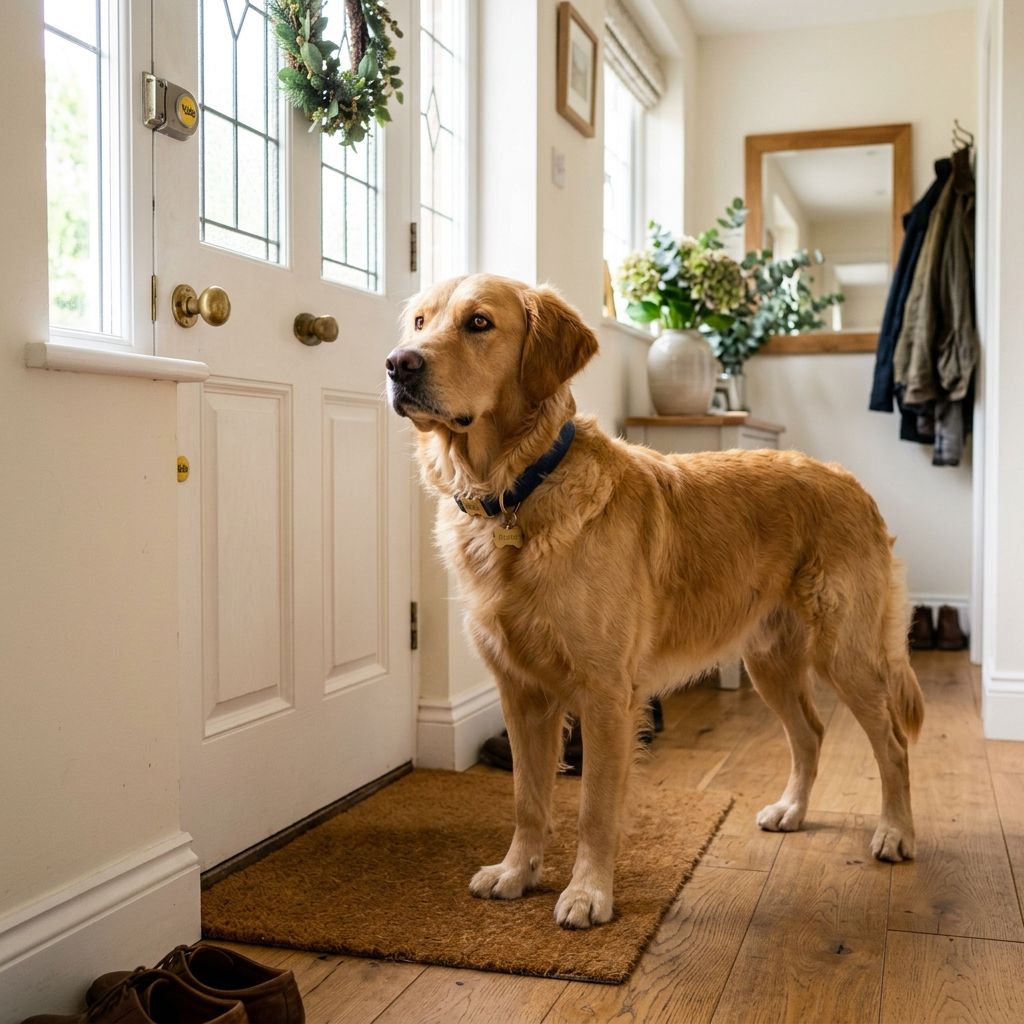
Not all doorbell barking is created equal. Dogs bark at the door for four primary emotional reasons, each requiring a distinct approach:
- Alert barking (1-3 barks, then settles): Your dog is doing their job as an acoustic early warning system. This is normal and healthy behavior. The goal is to reduce volume and duration, not eliminate it entirely.
- Territorial barking (prolonged, intense, deep): Your dog perceives visitors as threats to their territory. Common in guarding breeds like German Shepherds and Dobermans.
- Excitement barking (high-pitched, jumping, spinning): Your dog views the doorbell as a party starter. Common in young dogs, Labradors, and high-energy breeds.
- Fear-based barking (low, hesitant, trembling, crouching): Your dog is genuinely afraid of visitors or the loud chime. Requires the gentlest approach and may need professional veterinary behavior guidance.
A landmark 2005 study by Pongrácz and colleagues in the Journal of Comparative Psychology demonstrated that different bark types carry distinct acoustic signatures. Humans can distinguish territorial barks from isolation barks with above-chance accuracy, and dogs show distinct physiological cortisol responses to different bark contexts (Müller et al., 2015). Identifying your dog's primary motivation determines whether you focus on desensitization, impulse control, or anxiety reduction.
Key Takeaways
- Doorbell barking falls into four types: alert, territorial, excitement, and fear-based.
- Alert barking (1-3 barks) is normal and healthy; the goal is to shorten it, not eliminate it.
- Territorial and excitement barking respond well to counter-conditioning protocols.
- Fear-based barking requires gentle methods and professional support.
- Identifying your dog's barking type is the essential first step before training.
The Science of Counter-Conditioning: Why It Works When Yelling Doesn't
Counter-conditioning changes your dog's underlying emotional response to the doorbell, whereas yelling or punishment merely suppresses the symptom while increasing anxiety.
When you yell "Quiet!" at a barking dog, your dog hears you joining in the vocalization. Yelling adds excitement or threat to the environment, confirming your dog's belief that the doorbell is a major event. Punishment-based tools like shock collars or spray collars may temporarily suppress barking, but a 2019 study in the Journal of Veterinary Behavior by Blackwell and Bradshaw found that 62% of bark collar users reported adverse side effects including increased anxiety and redirected aggression.
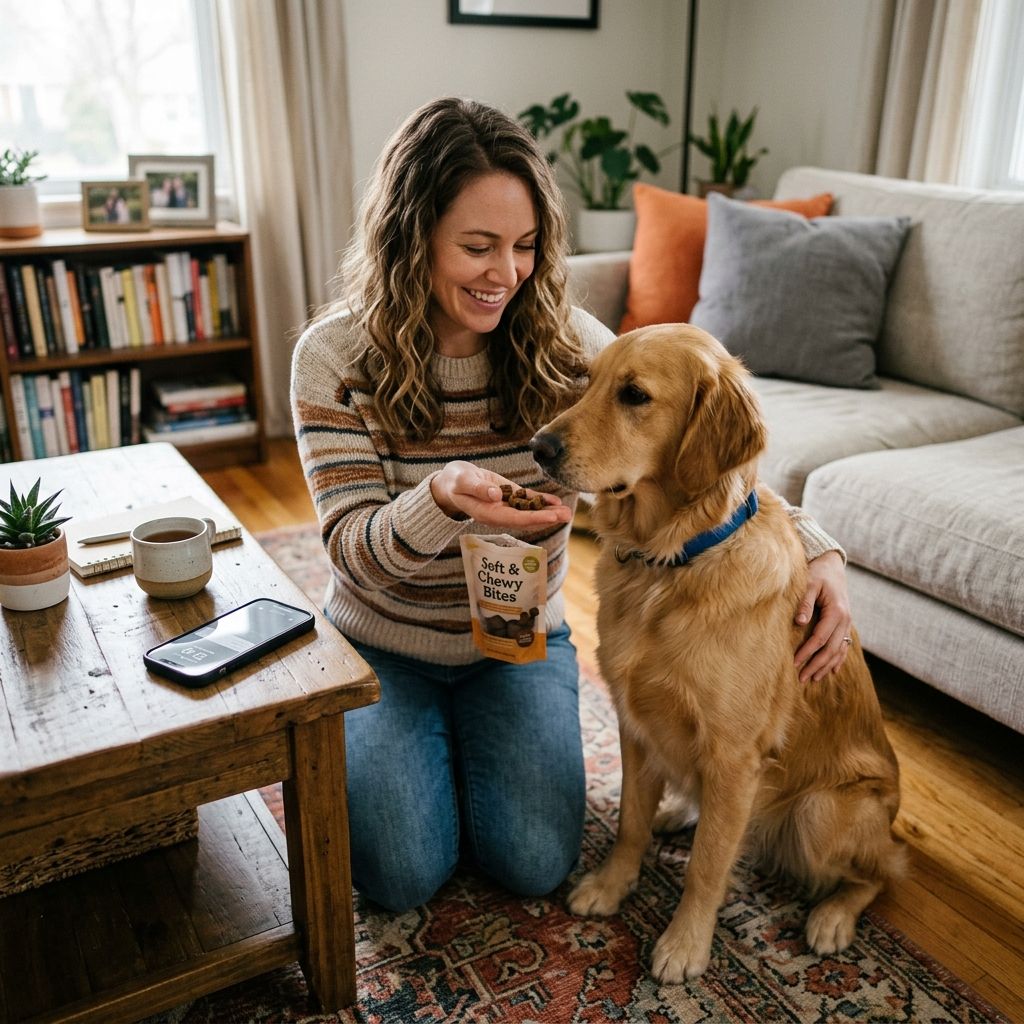
Counter-conditioning works by changing the emotional association. In classical counter-conditioning, the doorbell chime (conditioned stimulus) is paired immediately with an unconditioned stimulus of overwhelming value — such as real roasted chicken or liver paste. Over time, the doorbell stops signaling an intruder or a party, and begins signaling that delicious treats are arriving. Operant counter-conditioning takes this further by teaching an incompatible replacement behavior, such as going to a designated mat.
A 2024 systematic review in Applied Animal Behaviour Science by Shnookal et al. confirmed that counter-conditioning interventions show positive outcomes across 12 peer-reviewed trials, and the 2021 American Veterinary Society of Animal Behavior (AVSAB) position statement recommends reward-based training as the safest, most effective approach.
Key Takeaways
- Counter-conditioning changes emotional state, whereas yelling adds vocal stimulation.
- Classical counter-conditioning pairs the chime with high-value treats.
- Operant counter-conditioning teaches an incompatible replacement behavior.
- Aversive collars cause 62% adverse side effect rate according to veterinary studies.
- AVSAB recommends reward-based methods exclusively for behavior modification.
The 6-Week Training Protocol: Week-by-Week Milestones
A structured 6-week timeline gives your dog time to rewire their neural pathways without over-threshold exposure that triggers relapse.
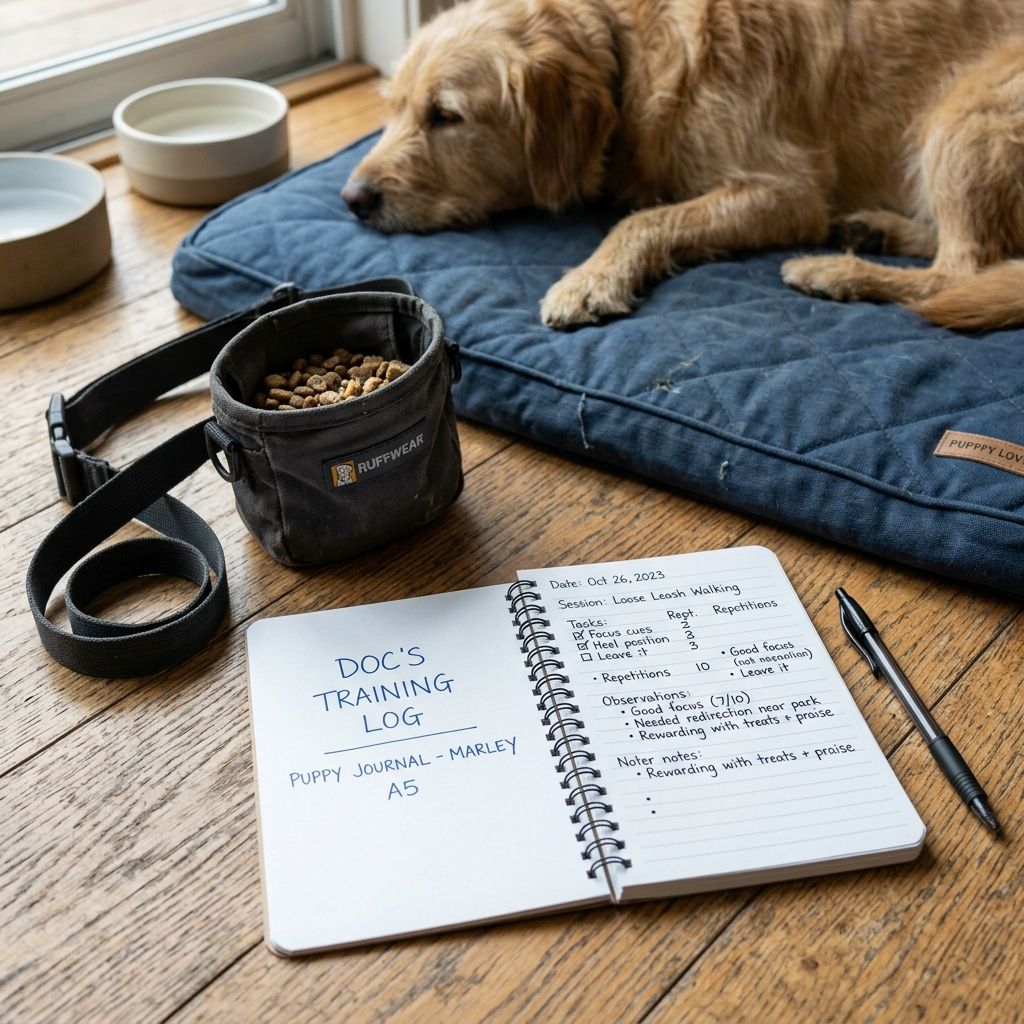
Follow this week-by-week timeline for optimal results:
- Week 1 (Sound Desensitization): Play a recorded doorbell chime on your phone at 10% volume. Immediately deliver 3-5 high-value treats. Repeat 5 times per session, 2-3 times daily. Goal: dog looks at you for treats when the quiet chime plays.
- Week 2 (Volume Escalation): Gradually increase recorded chime volume to 50%. Introduce a marker word ("Yes!") or clicker when your dog remains calm.
- Week 3 (Movement Integration): Play chime at 75% volume, then walk toward the door. Reward your dog for staying on their mat or standing calmly behind you.
- Week 4 (Real Visitor Simulation): Have a family member or friend ring the actual doorbell. Instruct your dog to hold their place on the mat while you deliver treats.
- Week 5 (Full Visitor Integration): Practice with real visitors entering the home while your dog holds place on the mat until released.
- Week 6 (Generalization & Maintenance): Practice with delivery drivers, smart doorbell notifications, and random times of day. Begin variable treat reinforcement.
Research by Carrero & Bennett (2025) showed that even moderate compliance (37.5% protocol adherence) produced measurable reductions in barking duration. Consistency beats perfection.
Key Takeaways
- Week 1 starts at 10% volume using phone recordings to stay under threshold.
- Week 3 adds human movement toward the door.
- Week 4 introduces real doorbell rings with helper visitors.
- Week 6 generalizes across delivery drivers and smart phone alerts.
- Consistency and daily short sessions (5-10 min) drive neural habit change.
Teaching the Go-To-Place Command: The Incompatible Behavior
Your dog cannot sprint to the front door and bark if they are actively holding a place command on a designated mat in the living room.
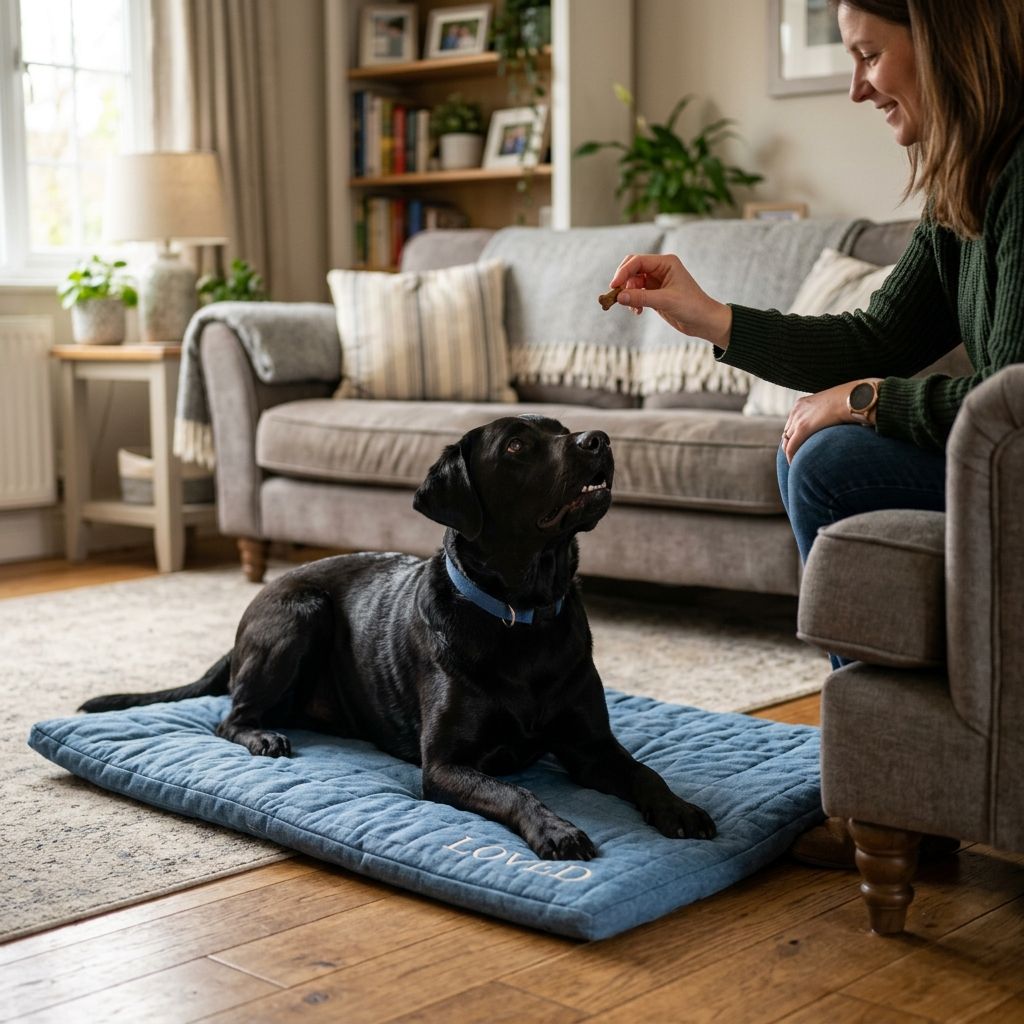
An incompatible behavior is one that physically prevents the unwanted behavior. You teach the "place" command in steps:
- Lure your dog onto a comfortable mat or dog bed using a high-value treat.
- Mark with "Yes!" or a clicker the moment all four paws land on the mat, and deliver the treat.
- Add a verbal cue ("Place") and gradually build duration from 5 seconds to 60 seconds.
- Layer in distractions — opening the front door, dropping keys, playing a doorbell recording.
- Add a clear release word ("Free!" or "Okay!") so your dog knows when the exercise is finished.
For dogs that need structured crate boundary training, see our Crate Training Guide.
Key Takeaways
- Place command is an incompatible behavior that replaces door-rushing.
- Build duration on the mat before adding doorbell sounds.
- Use a clear release cue so your dog understands when work is complete.
- Pair place command with high-value food rewards on the mat.
- Practice 5 times daily in low-distraction environments first.
Smart Doorbells, TV Doorbells, and Modern Triggers
Modern smart doorbells create multiple distinct triggers — the chime, the phone notification ping, and the phone screen lighting up.
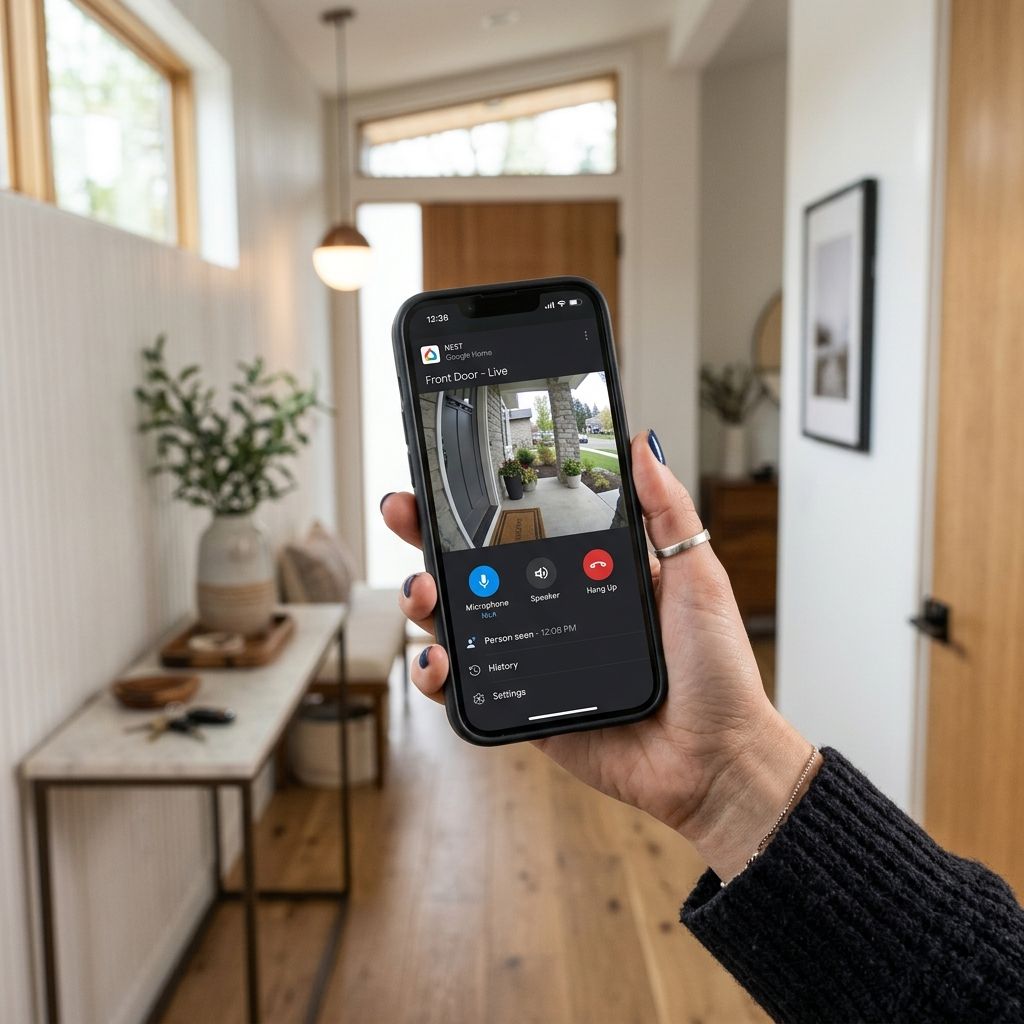
Ring, Nest, and Eufy doorbells introduce new challenges. Dogs quickly learn to associate the smartphone chime or notification tone with someone standing on the porch. To solve this:
- Mute smartphone notifications during Weeks 1-3 of training to prevent unexpected trigger exposure.
- Record your specific smart doorbell chime on your phone for desensitization practice.
- Change the chime sound in your doorbell app every few months if your dog habituates slowly.
- Desensitize TV doorbells by playing movie scenes with doorbells at low volume during mealtime.
Key Takeaways
- Smart doorbells produce phone pings, screen flashes, and chime sounds.
- Mute phone alerts during early training to avoid unmanaged exposures.
- Record your exact chime tone for phone-based desensitization.
- TV doorbells require the same gradual volume desensitization.
- Changing chime tones in app settings can reset trigger sensitivity.
Common Mistakes, Multi-Dog Dynamics, and When to Seek Help
Inconsistency between family members and multi-dog arousal feedback loops are the primary reasons counter-conditioning protocols stall.
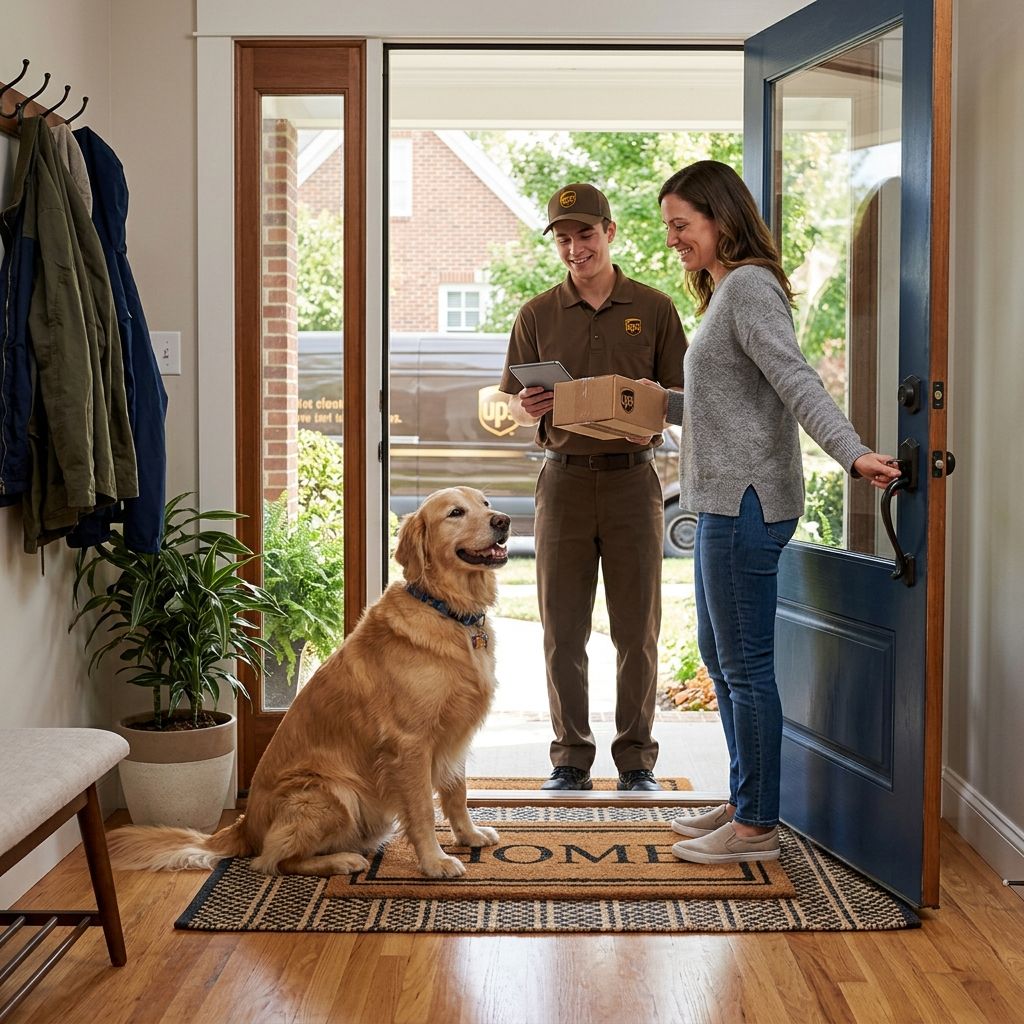
Common pitfalls to avoid:
- Yelling "Quiet!": Adds vocal energy and reinforces the perception of threat.
- Starting at full volume: Pushes the dog over threshold immediately.
- Multi-dog arousal: In multi-dog homes, one dog's bark triggers the other. Separate dogs during initial training sessions.
- Using low-value kibble: Dry kibble cannot compete with the emotional rush of a doorbell. Use real meat or cheese.
If your dog shows signs of severe fear (trembling, crouching, elimination) or redirected aggression (snapping at family members near the door), stop training and consult a DACVB veterinary behaviorist or IAABC-certified consultant immediately.
For dogs struggling with general impulse control, review our guide on Force-Free Impulse Control and Clicker Training Methods.
Key Takeaways
- Yelling adds vocal stimulation and reinforces alarm state.
- Separate multiple dogs during initial training to stop group arousal loops.
- Use high-value treats (chicken, cheese) rather than standard kibble.
- Seek DACVB or IAABC professional support if fear or aggression occurs.
- Patience and small daily steps prevent protocol failure.
Practical Protocol: What to Do This Week
Start your counter-conditioning protocol with these concrete actions:
- Day 1: Identify your dog's barking type (alert, territorial, excitement, or fear).
- Day 2: Record your doorbell chime on your phone and buy high-value soft treats.
- Day 3: Set up a mat in the living room and practice "Place" 5 times without any sound.
- Day 4: Play the chime at 10% volume on your phone and feed 5 treats immediately.
- Day 5-7: Repeat 10% volume sessions twice daily, logging progress in a notebook.
Frequently Asked Questions
How long does it take to stop a dog from barking at the doorbell?
Most dogs show initial improvement within 2-4 weeks of daily 5-10 minute sessions. Achieving full reliability with real visitors typically takes 6-8 weeks of consistent counter-conditioning.
What is the best way to stop dog barking at the door?
The best evidence-based method is classical and operant counter-conditioning. This pairs the doorbell sound with high-value treats while teaching an incompatible replacement behavior like going to a place mat.
Should I use a bark collar to stop doorbell barking?
No. Veterinary behavior organizations like AVSAB advise against bark collars. Studies show 62% of bark collar users report adverse side effects, including increased anxiety and redirected aggression.
How do I counter-condition my dog to the doorbell?
Start by playing a recorded doorbell sound at very low volume (10%) on your phone and feeding high-value treats immediately. Gradually increase volume over several weeks as your dog remains calm.
Can I use the same method for smart doorbell barking?
Yes. Smart doorbells generate phone notification pings and chime sounds. Mute phone alerts initially, record your specific chime, and desensitize each trigger independently.
When should I get professional help for doorbell barking?
Consult a veterinary behaviorist or certified trainer if your dog exhibits fear (trembling, hiding), redirected aggression (biting family members), or zero improvement after 4 weeks of consistent work.
Article Key Takeaways
- Counter-conditioning is the gold-standard evidence-based method to solve doorbell barking.
- Identify whether your dog's barking is alert, territorial, excitement, or fear-based.
- Start desensitization at 10% volume using phone recordings to stay below emotional threshold.
- Teach an incompatible replacement behavior using the go-to-place command on a mat.
- Avoid aversive bark collars and yelling, which increase stress and aggression risk.
- Practice short 5-10 minute sessions daily for 6-8 weeks for lasting behavior change.
References
- Pongrácz P, et al. Human listeners find it easy to distinguish bark types in dogs. J Comp Psychol. 2005;119(2):136-144.
- Müller CA, et al. Dogs can discriminate emotional expressions of human faces. Curr Biol. 2015;25(5):601-605.
- Carrero L, Bennett P. Classical counter-conditioning for reducing barking in shelter dogs. J Vet Behav. 2025;72:45-53.
- Shnookal A, et al. Efficacy of counter-conditioning in canine behavior modification: A systematic review. Appl Anim Behav Sci. 2024;270:106120.
- Blackwell EJ, Bradshaw JW. Adverse effects of aversive training devices in dogs. J Vet Behav. 2019;33:28-36.
- AVSAB. Position Statement on Humane Dog Training. American Veterinary Society of Animal Behavior. 2021.
- Zurlinden M, et al. Visitor passage desensitization in kenneled dogs. Animals (MDPI). 2022;12(8):980.
- Hiby EF, et al. Dog training methods: Their use, effectiveness and interaction with behaviour. Anim Welf. 2004;13(1):63-69.