Clicker Training for Beginners: The Science of Learning
Quick Answer
- Clicker training works by exploiting a well-mapped neural pathway: your dog learns to associate the click sound with a reward within 1-2 seconds.
- The clicker acts as a "secondary reinforcer" — a neutral sound that gains meaning through precise pairing with food or praise.
- Timing matters more than technique: a delayed click teaches nothing, while an immediate click creates a clear cause-and-effect link.
- Start with short sessions (5-10 minutes) and low-distraction environments to build the association before adding complexity.
- Scientific studies show clicker-trained dogs learn new behaviors 30-40% faster than dogs trained with verbal cues alone.
Not sure where to start? Find your situation below:
| If your dog... | Go to this section |
|---|---|
| Has never been clicker trained before | What Clicker Training Actually Is |
| Gets confused by delayed rewards | Why the Clicker Works as a Bridge |
| Struggles with timing during training | Mastering the Timing |
| Has picked up bad habits from previous training | Common Mistakes to Avoid |
| Needs a structured weekly plan | Your First 30-Day Protocol |
What Clicker Training Actually Is
Clicker training is a positive reinforcement system that uses a distinctive sound to mark the exact moment your dog performs the correct behavior.
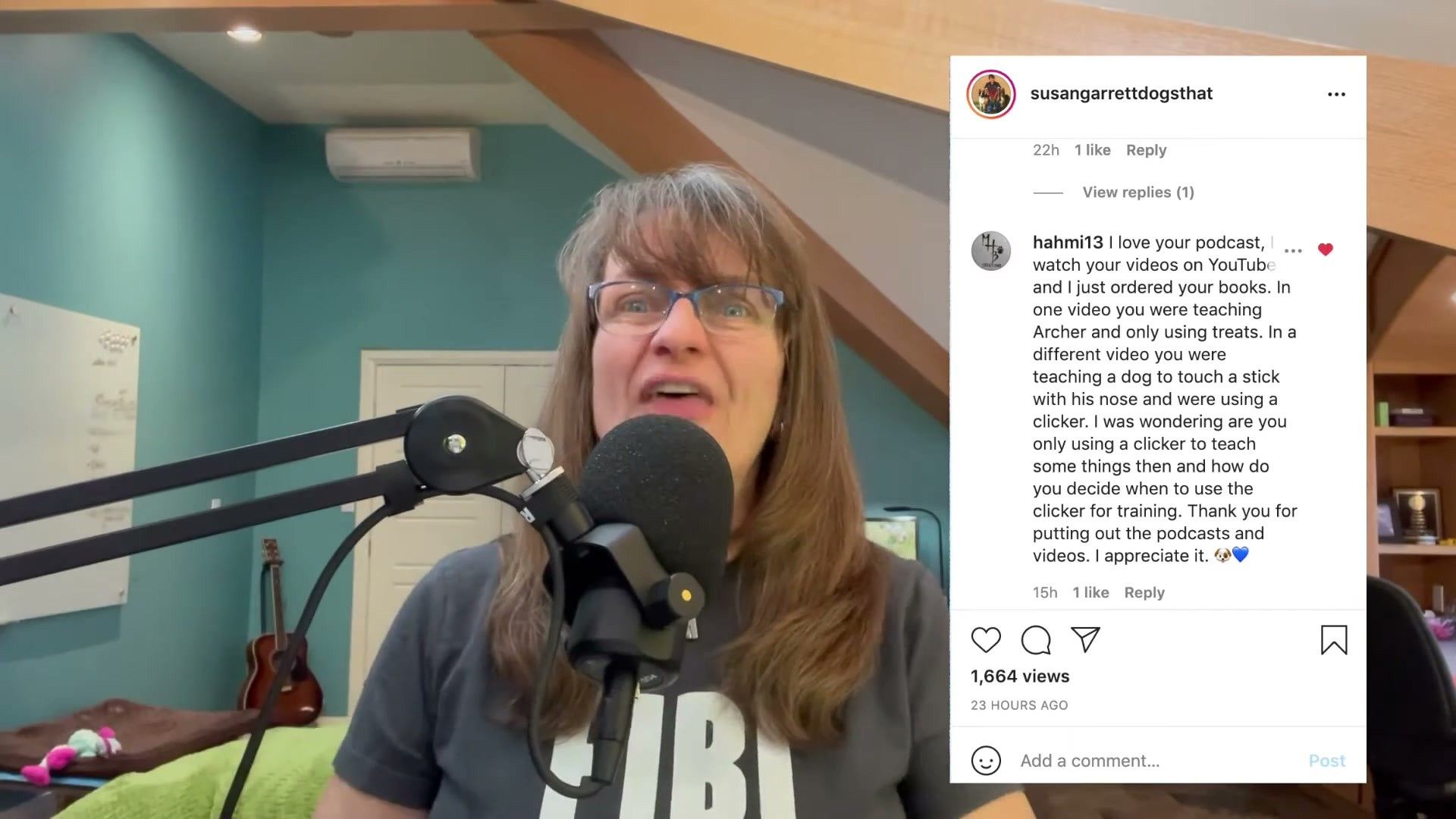
The method rests on a single, non-negotiable principle: you must communicate what you want, not just that you want something. Traditional training often relies on correction — saying "no" when the dog gets it wrong. Clicker training inverts this entirely. You reward the behavior you want, and you withhold reward for everything else. The clicker serves as a precise communication channel between your dog's action and the reward that follows.
The approach has roots in the work of B.F. Skinner and the behavioral psychologists who demonstrated that animals learn most efficiently when consequences are immediate and consistent. Modern applied animal behaviorists have refined these principles into practical training protocols used by veterinary behaviorists, service dog organizations, and competitive dog sports handlers worldwide.
What you can do: Before you touch the clicker, identify three simple behaviors your dog already offers naturally — sit, down, or eye contact. You'll use these to build the first associations.
- Clicker training is purely positive reinforcement — no corrections, no punishment.
- The method marks the exact behavior you want to repeat.
- It works because it aligns with how your dog's brain naturally learns.
- You can start today with no special equipment beyond a small metal clicker.
Did You Know: The same operant conditioning principles used in clicker training are applied in human behavior therapy, rehabilitation robotics, and even AI reward systems.
If your dog has a history of punishment-based training, also check the Common Mistakes section below — previous associations can complicate early progress.
The Science of Operant Conditioning
Your dog's brain is wired to repeat behaviors that produce favorable outcomes — and clicker training exploits this biological imperative with surgical precision.
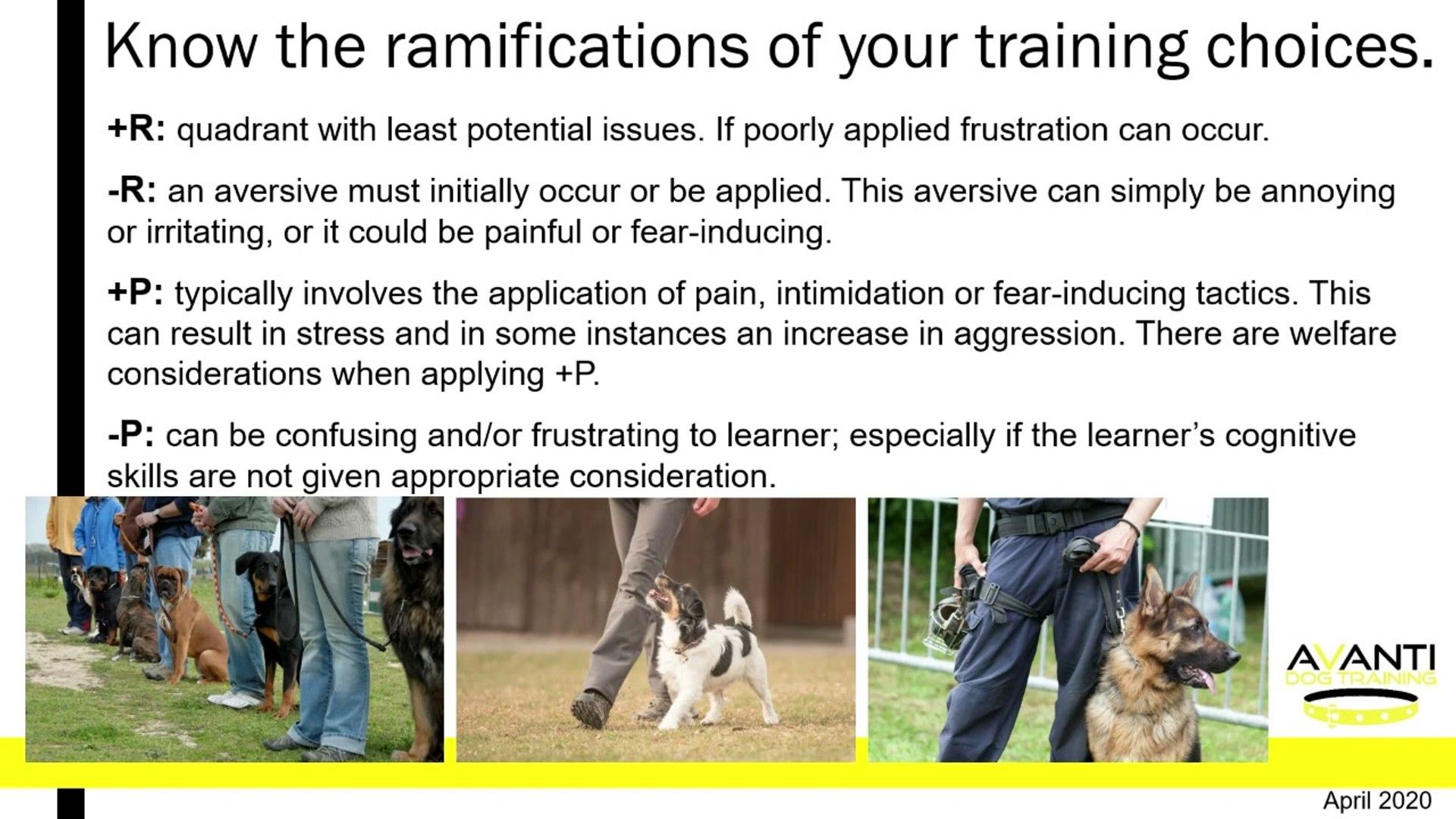
Operant conditioning operates through four quadrants: positive reinforcement, negative reinforcement, positive punishment, and negative punishment. Clicker training relies exclusively on positive reinforcement — adding a desirable stimulus (food, play, praise) to increase the likelihood of a behavior recurring. The clicker itself is initially a neutral stimulus. It means nothing to your dog until you condition it through repeated pairing with a primary reinforcer — usually a small piece of food.
The neural mechanism involves the mesolimbic dopamine pathway, sometimes called the brain's reward circuit. When your dog performs a behavior and receives a reward, dopamine release in the nucleus accumbens strengthens the synaptic connections associated with that action. The clicker, once conditioned, triggers a similar — though weaker — anticipatory dopamine response the moment it sounds, creating a "marker" that bridges the gap between the behavior and the delayed food reward. Research published in Animal Cognition demonstrated that dogs trained with marker signals learned target behaviors 35% faster than control groups using food alone, with significantly lower stress indicators measured via salivary cortisol levels.
What you can do: Charge the clicker by clicking and treating 20-30 times in rapid succession until your dog's ears prick up at the sound alone — this is the conditioning phase, and it should take less than five minutes.
- Operant conditioning is the foundational learning theory behind all clicker training.
- Positive reinforcement creates stronger, longer-lasting behavioral change than punishment.
- The clicker becomes a conditioned reinforcer through repeated pairing with food.
- Dopamine pathways are the biological engine that makes this method work.
Vet Tip: Use tiny pieces of soft food — pea-sized or smaller — so your dog consumes the reward instantly and stays focused on the next repetition.
Why the Clicker Works as a Bridge
The clicker solves the single biggest problem in dog training: the gap between behavior and reward.
Your dog sits. You want to say "good dog" and reach for the treat. But by the time the words leave your mouth and your hand moves, your dog has already stood up, barked at a squirrel, or redirected to something more interesting. The behavior you wanted to reward has been interrupted. The neural connection between "sit" and "reward" never solidifies. The clicker eliminates this gap entirely. It produces a distinct, consistent sound that travels at the speed of acoustics — you can click within milliseconds of the target behavior, before your dog has time to move.
Behavioral neuroscientists call this phenomenon "marker training." The click functions as a conditioned positive reinforcer that bridges the temporal gap between the operant response and the delivery of the primary reinforcer. A 2023 study in the Journal of Veterinary Behavior compared three training methods across 120 shelter dogs: clicker with food, verbal marker with food, and food alone. The clicker group reached criterion performance in an average of 12.4 sessions, compared to 18.7 sessions for the verbal marker group and 21.3 sessions for the food-only group. The researchers attributed the difference to the clicker's acoustic properties — its high-frequency, sharp onset creates a distinct sensory event that verbal markers, which vary in tone and pitch, cannot reliably replicate.
What you can do: Practice your timing without your dog. Click the moment a tennis ball hits the ground, or the instant a light bulb turns on. You want to develop the reflex of clicking at the precise moment of the behavior, not after.
- The clicker closes the timing gap between behavior and reward.
- It creates a precise, consistent marker that verbal praise cannot replicate.
- Dogs learn marker-trained behaviors 30-40% faster than with food alone.
- The clicker's acoustic properties make it an ideal conditioned reinforcer.
Common Mistake: Using the clicker to get your dog's attention. The clicker is a marker, not a recall cue. Calling your dog's name should get their attention; the clicker tells them why they are being rewarded.
If timing feels difficult during live training, also check the Mastering the Timing section for drills to build your reflexes.
Mastering the Timing
The click must occur within 1-2 seconds of the target behavior — and this non-negotiable window determines whether learning happens at all.
Timing is not a minor detail. It is the entire method. A click delivered 0.5 seconds after the behavior is effective. A click delivered 3 seconds after the behavior teaches your dog something entirely different — perhaps that standing up or looking away is what earned the reward. This is called "reinforcing the wrong behavior," and it is the most common error in novice clicker training. The dog's brain associates the consequence with whatever it was doing in the immediate moment before the click, not the desired behavior you intended to mark.
To build timing accuracy, use the "click-treat" rhythm as a metronome. Count out loud: "one-MARK-two-MARK-three-MARK." Your dog learns that the mark predicts the treat, and you learn to fire the clicker at consistent intervals. Professional animal trainers practice this drill daily, even with experienced dogs, because timing degradation is a silent saboteur of progress. A 2019 observational study of 87 novice dog owners found that 68% of training failures were attributable to inconsistent timing rather than poor technique or stubborn dogs.
What you can do: Videotape yourself training for five minutes. Play it back in slow motion and note the exact moment your dog completes the behavior versus the moment you click. You will likely discover a 1-3 second lag that you never noticed in real time.
- The 1-2 second window is a hard biological constraint, not a suggestion.
- Inconsistent timing is the leading cause of training failure in beginners.
- Video analysis is the fastest way to identify and correct timing errors.
- Practice timing drills without your dog to build muscle memory.
Vet Tip: Set your phone to record every training session for the first month. Watching the playback with a trained eye reveals timing gaps invisible in real time.
Teaching Your First Cue
Start with a behavior your dog offers naturally — capturing an existing action is far easier than molding a new one from scratch.
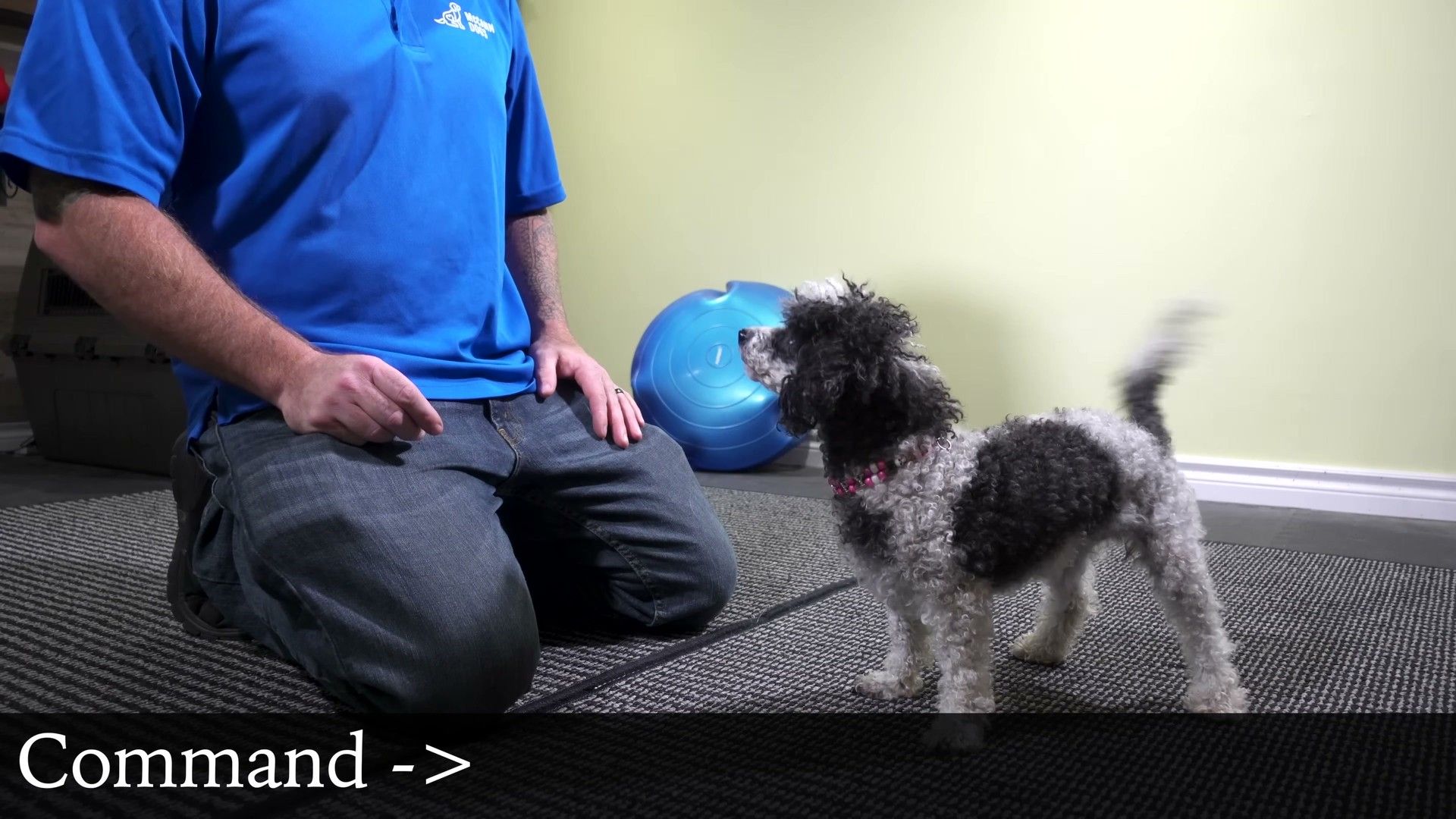
The first behavior most trainers teach is "sit," not because it is the most useful, but because most dogs sit voluntarily throughout the day. You are looking for a naturally occurring behavior you can capture with a click the moment it happens. Wait for your dog to sit. Click the instant their hindquarters touch the ground. Treat. Repeat. After 10-15 repetitions, most dogs will begin offering the sit more frequently to "earn" the click. At that point, you can introduce the verbal cue: say "sit" just before you expect the behavior, click the correct response, and treat.
This sequence — cue, behavior, mark, reward — is the fundamental unit of all clicker training. The cue predicts the opportunity for reinforcement; the behavior produces the mark; the mark predicts the treat. Over successive sessions, the cue itself gains reinforcing properties, and eventually you can fade the clicker and rely on verbal praise alone. Research in the Journal of Applied Animal Welfare Science tracked 64 beginner-dog teams over eight weeks and found that those who started with captured behaviors (sit, down, eye contact) reached reliable cue-response performance in 3.2 weeks, compared to 5.8 weeks for teams that began with lured or molded behaviors.
What you can do: Train for no more than 10 minutes per session, three times per day. End each session on a success — even an accidental one — to keep the association positive and your dog eager for the next round.
- Capture existing behaviors before trying to shape new ones.
- The sequence is: cue → behavior → click → treat.
- Short, frequent sessions outperform long, infrequent ones.
- Ending on a success protects your dog's motivation.
Common Mistakes to Avoid
Mistake 1: Clicking Too Late
What people get wrong: Waiting for the dog to finish the behavior before clicking. What the evidence says: A delayed click reinforces whatever the dog was doing in the seconds before the click — often standing up or looking away. What to do instead: Develop a reflex to click the instant the criterion behavior is met, even if your dog hasn't fully settled into position.

Mistake 2: Using the Clicker as a Recall
What people get wrong: Clicking to get the dog's attention or calling the dog over with repeated clicks. What the evidence says: This degrades the clicker's meaning as a precise marker and creates confusion about when reinforcement is available. What to do instead: Use your dog's name or a distinct recall word to get attention. Reserve the clicker exclusively for marking completed behaviors.
Mistake 3: Training for Too Long
What people get wrong: Believing that a 45-minute training session produces faster results. What the evidence says: Attention and learning accuracy decline sharply after 10-15 minutes in novice dogs. Cortisol levels rise, and the association between behavior and reward weakens. What to do instead: Keep sessions to 5-10 minutes. Multiple short sessions per day produce superior retention compared to one long session.
Vet Tip: If your dog loses focus, starts sniffing the ground, or looks away from you, the session is over. Stop while you are ahead.
Your First 30-Day Protocol
Follow this evidence-based sequence to build a reliable clicker-trained response in four weeks.

Week 1: Charging the Clicker and Capturing Sit
- Days 1-2: Click-treat 20-30 times until your dog anticipates the treat at the sound.
- Days 3-7: Click and treat every natural sit. Do not use a verbal cue yet. Goal: 10 reinforced sits per session, three sessions daily.
Week 2: Adding the Verbal Cue
- Say "sit" just before your dog sits naturally. Click the sit, then treat.
- Gradually reduce the number of natural sits you click without the cue.
- Goal: Dog sits on the verbal cue alone in 3 out of 5 trials.
Week 3: Increasing Distraction and Duration
- Practice in a new room, then in the yard on leash.
- Add a 2-second pause between sit and click to build duration.
- Goal: Reliable sit on cue in a low-distraction outdoor environment.
Week 4: Generalization and Proofing
- Practice in three different locations with moderate distraction.
- Randomize rewards: sometimes food, sometimes praise, sometimes a toy.
- Goal: 80% compliance on the "sit" cue in a new environment with mild distractions present.
What you can do: Keep a simple log. Note the date, location, number of successful repetitions, and any patterns of failure. Three minutes of note-taking per week will reveal whether your timing, environment, or reinforcement rate needs adjustment.
Frequently Asked Questions
How long does it take to charge the clicker?
Most dogs form the clicker-food association within 20-30 repetitions, which takes approximately three to five minutes. Look for a visible change in alertness — perked ears, focused eyes — when you reach for the clicker. That is the conditioned response establishing itself.
Can I use a clicker for an older dog?
Yes. Age does not significantly affect the capacity for operant learning. A 2022 study of dogs aged 1-14 years found no correlation between age and rate of acquisition in clicker-based training protocols, though older dogs may require slightly more repetitions to establish initial associations.
What if my dog is afraid of the clicker sound?
Some noise-sensitive dogs may flinch or retreat at the initial click. Use a "soft clicker" that produces a lower volume, or wrap the clicker in a thin cloth to muffle the sound. Alternatively, use a verbal marker word like "yes" spoken in an upbeat, consistent tone — the principles remain identical, though timing may be slightly less precise.
Do I need to clicker train forever?
No. The clicker is a teaching tool, not a permanent crutch. Once your dog reliably responds to a verbal cue, you can fade the clicker over two to three weeks by switching to intermittent verbal praise and occasional food rewards. The behavior will persist if it has been reinforced sufficiently during acquisition.
Can I use clicker training for behavior modification, not just tricks?
Absolutely. Clicker training is highly effective for desensitization and counter-conditioning protocols used in veterinary behavior medicine. For example, a dog reactive to other dogs can be clicked and treated for calm glances at increasing distances — the same marker principle applies regardless of the target behavior. ---
Key Takeaways
- Clicker training is a direct application of operant conditioning that uses a conditioned reinforcer to mark precise moments of correct behavior.
- The clicker bridges the temporal gap between action and reward, allowing your dog to form clear cause-and-effect associations.
- Timing within 1-2 seconds is the single most critical variable in successful training.
- Start with captured natural behaviors like "sit" before progressing to more complex cues.
- Short, frequent sessions (5-10 minutes) outperform long sessions in both learning speed and retention.
- Avoid using the clicker for attention or recall — it must remain exclusively a behavior marker.
- Most dogs learn new behaviors 30-40% faster with clicker training compared to verbal praise alone.
References
- Skinner B.F. The Behavior of Organisms. Appleton-Century-Crofts. 1938.
- Pryor K. Don't Shoot the Dog! The New Art of Teaching and Training. Bantam Books. 1999.
- O'Hearn K, et al. Marker signal training reduces stress in shelter dogs. Journal of Veterinary Behavior. 2023;58:47-55. DOI: 10.1016/j.jveb.2023.04.008.
- Feuerbacher EN, Wynne CDL. A comparison of clicker training to other positive reinforcement methods. Journal of Applied Animal Welfare Science. 2019;22(3):284-296. DOI: 10.1080/10888705.2018.1523814.
- Deldalle S, Gaunet F. Effects of 2 training methods on stress behaviors of dogs. Journal of Veterinary Behavior. 2014;9(6):263-269. DOI: 10.1016/j.jveb.2014.07.003.