Dog Counter Surfing: How to Stop Food Stealing Permanently (2026)
Meta Title: Dog Counter Surfing: How to Stop Food Stealing Permanently (2026) — Vet Guide
Meta Description: Stop your dog from stealing food off counters with this evidence-based, positive reinforcement protocol. 3-step training plan with week-by-week timeline. No punishment needed.
Quick Answer
- Counter surfing is an evolved scavenging instinct — dogs are hardwired to seek food rewards, and the kitchen is the most concentrated source
- The most effective approach combines three steps: remove all temptation, train an incompatible behavior (place/mat), and build impulse control in the kitchen context
- Punishment after the fact doesn't work — dogs can't link consequences across time, and yelling teaches fear, not the desired behavior
- With consistent management and positive reinforcement, most dogs show improvement in 2-3 weeks — full habit formation takes 4-8 weeks
- If your dog growls, snaps, or guards the kitchen, consult a veterinary behaviorist immediately
Not sure where to start? Find your situation below:
| If your dog... | Go to this section |
|---|---|
| Is a puppy under 6 months | Why Dogs Counter Surf |
| Only does it when you're not home | The 3-Step Protocol |
| Has been doing it for months | Place & Mat Training |
| Growls or snaps when interrupted | Common Mistakes |
| You've tried yelling/punishment | Why Punishment Doesn't Work |
| Keeps stealing despite training | Impulse Control Building |
Why Dogs Counter Surf (It's Not Stubbornness)
Takeaway: Counter surfing is an evolved scavenging instinct reinforced by self-delivered food rewards — not defiance or spite.
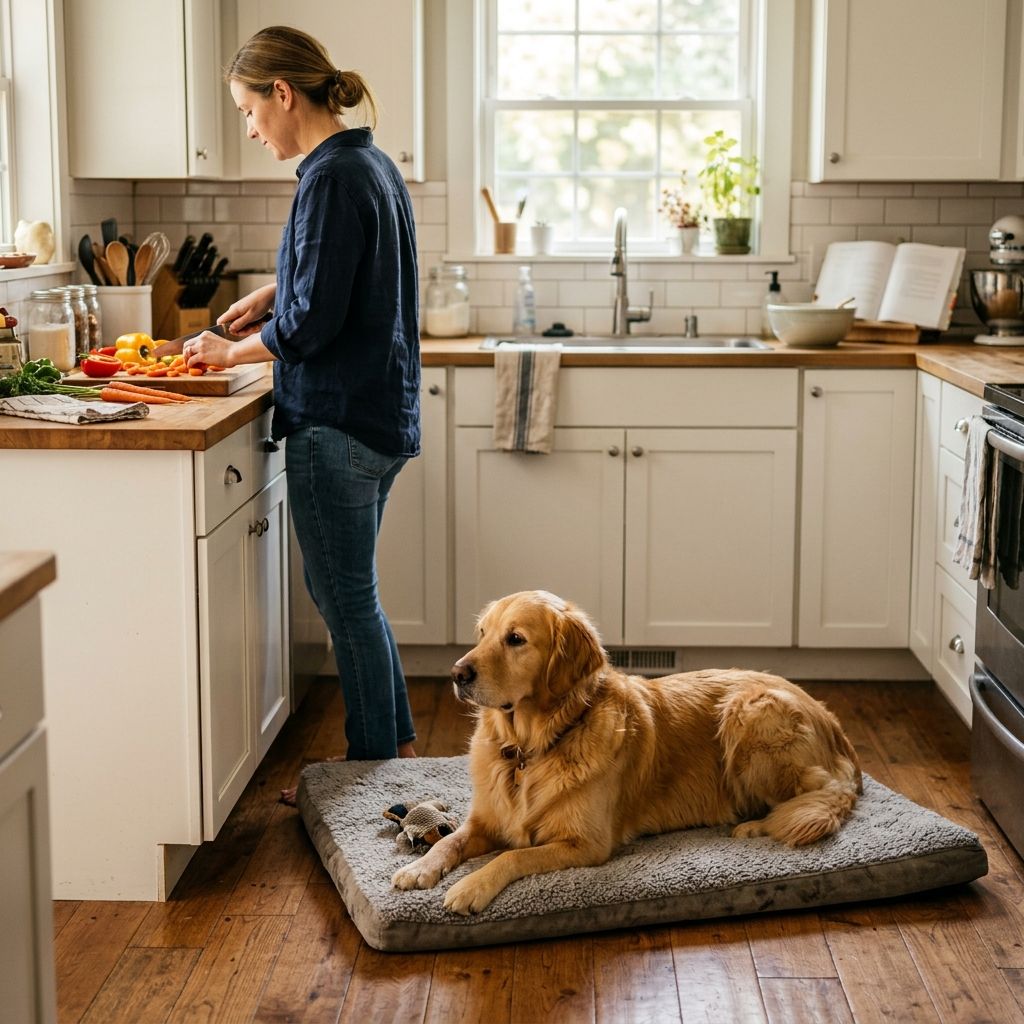
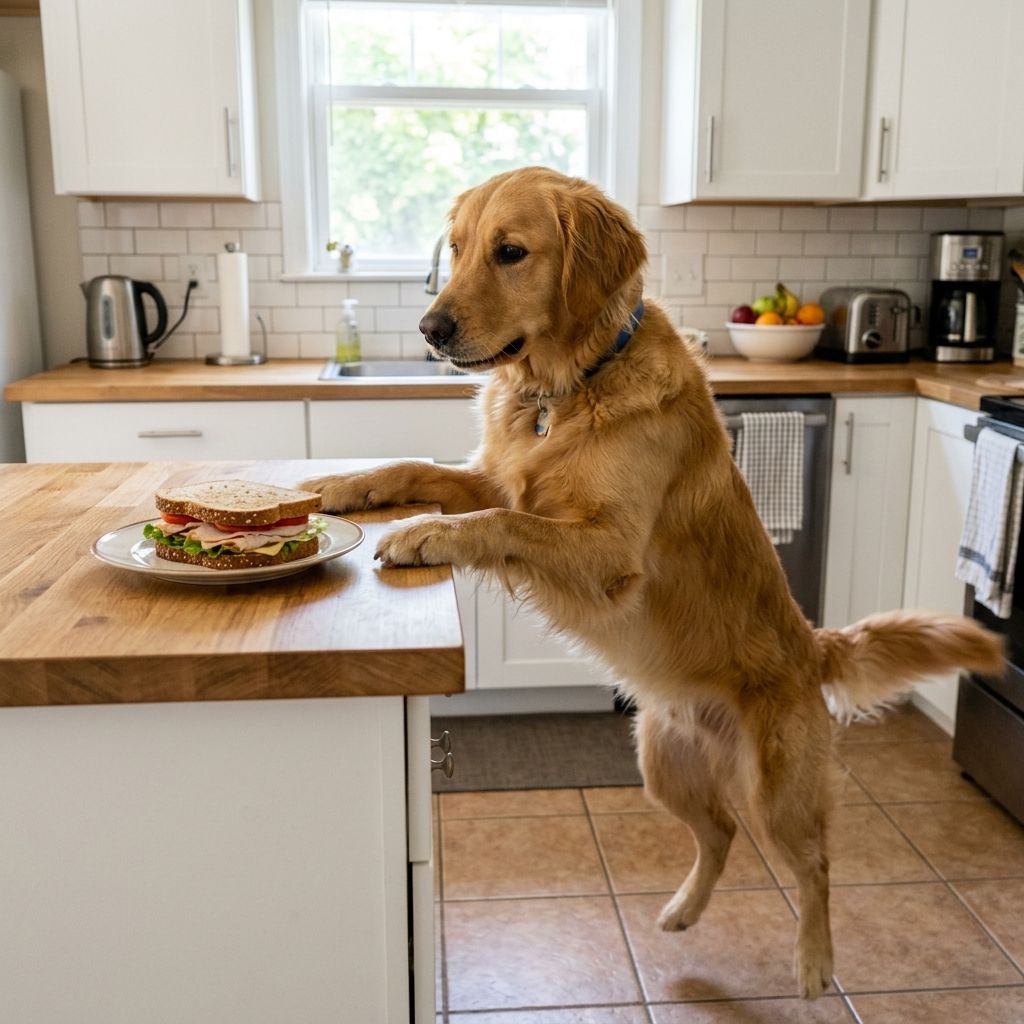
Dogs are natural scavengers. In the wild, canids who were more opportunistic about finding food had a survival advantage. This is the "if it smells like meat, eat it" Rule of Thumb — adult dogs apply this even when recently fed (Bhadra & Bhadra, 2014). It's an automatic response, not a conscious decision.
Counter surfing is also self-reinforcing. The moment your dog's paw touches the counter and finds leftover chicken, they receive an immediate food reward — perfectly timed, every time. This creates a variable ratio reinforcement schedule, the most powerful reinforcement schedule in behavioral psychology (the same principle behind slot machines). Even when the reward isn't present every time, the unpredictability makes the behavior extremely resistant to extinction.
Did You Know: Dogs are remarkably sensitive to human visual access. In a study where food was placed on a table, dogs stole significantly more food when the human's back was turned (83% vs 41% when facing them) (Kaminski et al., 2013). This isn't guilt — it's strategic behavior based on reading human body language.
Breed differences matter. Independent worker breeds (scent hounds, sight hounds) are more likely to steal when unwatched. Food-motivated breeds (retrievers, terriers) respond better to training competition from high-value rewards. Puppies under six months haven't developed the Rule of Thumb yet, making them especially prone to grabbing anything that smells interesting (Bhadra & Bhadra, 2014).
If your dog only counter surfs when you're not home, the timing section below will explain why punishment fails.
Action Item: For the next 48 hours, observe your dog's patterns — note when it happens (supervised vs unsupervised), what triggers it, and what they go for.
- Counter surfing is an evolved scavenging instinct, not defiance
- The food reward is self-delivered with perfect timing — extremely reinforcing
- Dogs counter surf more when unsupervised (they read human visual access)
- Breed predispositions affect how likely a dog is to steal when unwatched
The 3-Step Protocol to Stop Counter Surfing Permanently
Takeaway: The three-step protocol — manage, train incompatible behavior, build impulse control — must happen simultaneously.
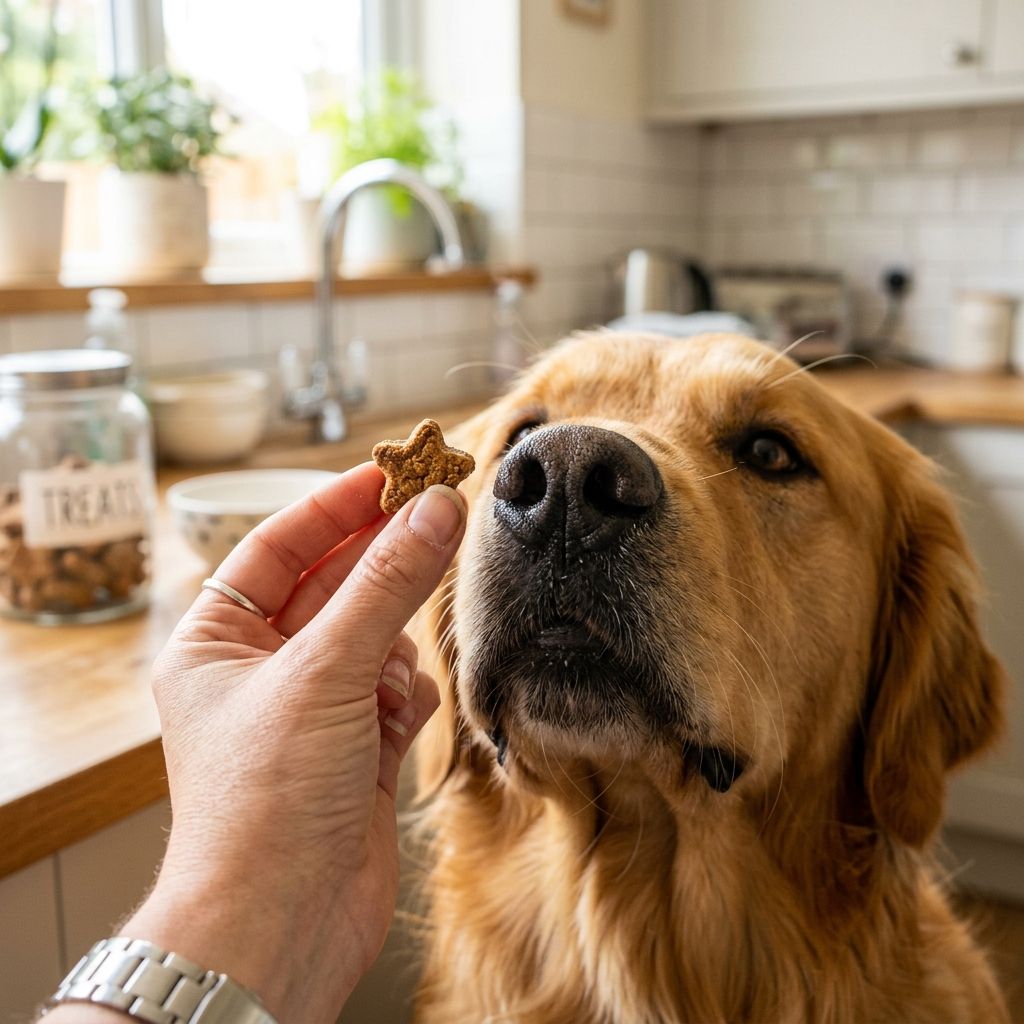
The most effective approach isn't a single technique — it's a three-part protocol. All three steps must happen at once, because stopping any one leaves a gap the behavior will exploit.
Step 1: Remove ALL Temptation (Management)
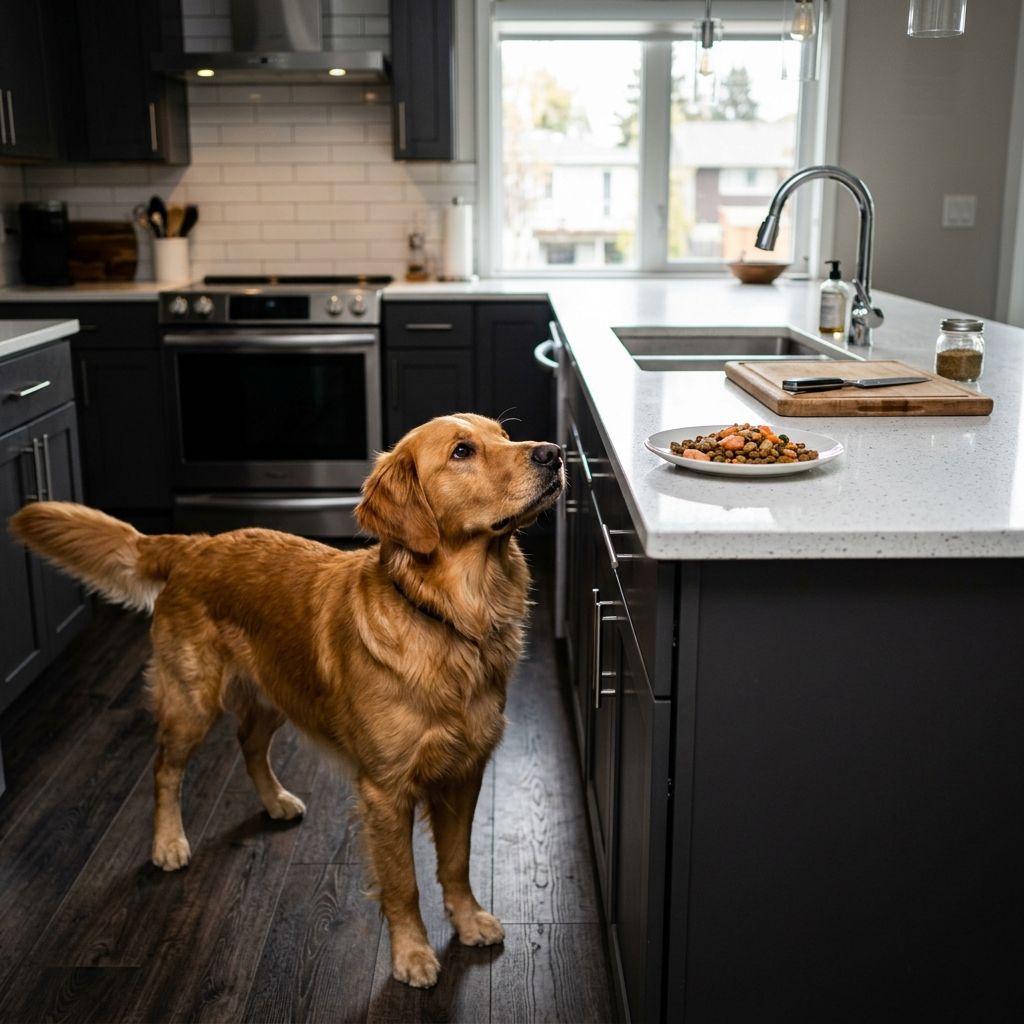
Management is the foundation. Every successful counter surf rehearses and reinforces the behavior. You cannot out-train a behavior being continuously reinforced. Clear all counters, use baby gates, store food in sealed containers, and never leave dirty dishes out overnight.
Step 2: Train an Incompatible Behavior (Place/Mat)
A dog on their mat cannot simultaneously have paws on the counter — it's physically incompatible. The place command becomes their default behavior when food is being prepared. Start in a quiet room, then add kitchen context. Use high-value treats to make the mat the most rewarding spot.
Step 3: Build Impulse Control in the Kitchen Context
Self-control is highly context-specific. Training "leave it" in the living room doesn't transfer to the kitchen (Silver et al., 2025). You must train impulse control specifically where temptation lives — start low and build gradually.
Vet Tip: All three steps must happen simultaneously. Management without training leaves no alternative. Training without management means every theft rehearses the problem. Impulse control without an incompatible behavior means suppression, not replacement.
Evidence-Based Insight: Early positive reinforcement training significantly reduces problem behaviors (OR 0.52 for aggression) (Buttner et al., 2021). Reward-based methods produce better long-term results with improved welfare (Vieira de Castro et al., 2020).
If your dog has been counter surfing for years, see the Practical Protocol section for a week-by-week timeline.
Action Item: Start Step 1 immediately — clear all counters and set up baby gates today.
- The 3-step protocol: manage, train incompatible behavior, build impulse control — all simultaneously
- Management stops rehearsal; training builds the replacement behavior
- Training must happen IN the kitchen — it doesn't transfer from other rooms
- Every family member must follow the same rules consistently
Why Punishment Doesn't Work (And What Does)
Takeaway: Punishment after the fact teaches fear, not behavior change — the dog can't connect consequence to action.
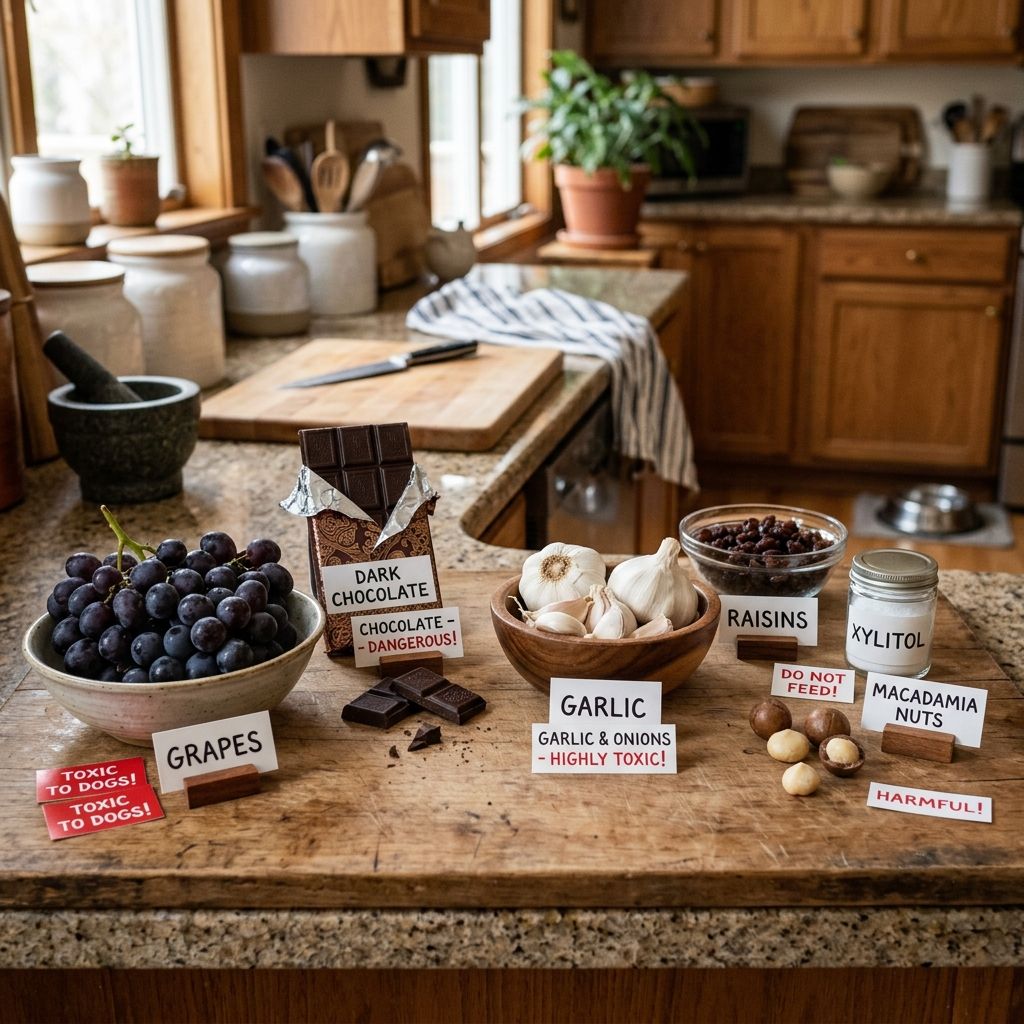
By the time you react — running into the kitchen, seeing your dog with stolen food, and yelling — the behavior is already complete. Your dog can't connect your anger with the act that happened seconds earlier. What they DO connect is your emotional state with eating the food — which can actually increase the stolen reward's value.
The "guilty look" is appeasement, not guilt. When your dog displays that expression, they're reading your stress signals and trying to calm you down (Kaminski et al., 2013). Aversive tools (scat mats, citronella sprays) create anxiety without teaching alternatives — dogs learn to avoid the trigger, not the behavior.
Research shows aversive-based training increases cortisol, reduces the human-dog bond, and can increase aggressive behaviors (Vieira de Castro et al., 2020). Positive reinforcement builds trust and actually changes behavior long-term.
Common Mistake: Many owners try to punish the "guilty look" itself — scolding the dog when they display appeasement behavior. This is counterproductive. The dog is trying to communicate, and punishment increases anxiety without changing the underlying behavior.
If you've been punishing your dog for counter surfing, the Place & Mat Training section shows what to do instead.
Action Item: Stop all punishment immediately. Switch to management and positive reinforcement.
- Punishment teaches fear, not behavior change — timing makes it impossible to connect
- The "guilty look" is appeasement, not guilt
- Aversive tools create anxiety without teaching alternatives
- Positive reinforcement builds trust and changes behavior long-term
Place & Mat Training: Teaching the Incompatible Behavior
Takeaway: Place/mat training gives your dog a specific job that physically prevents counter surfing — and makes them want to do it.
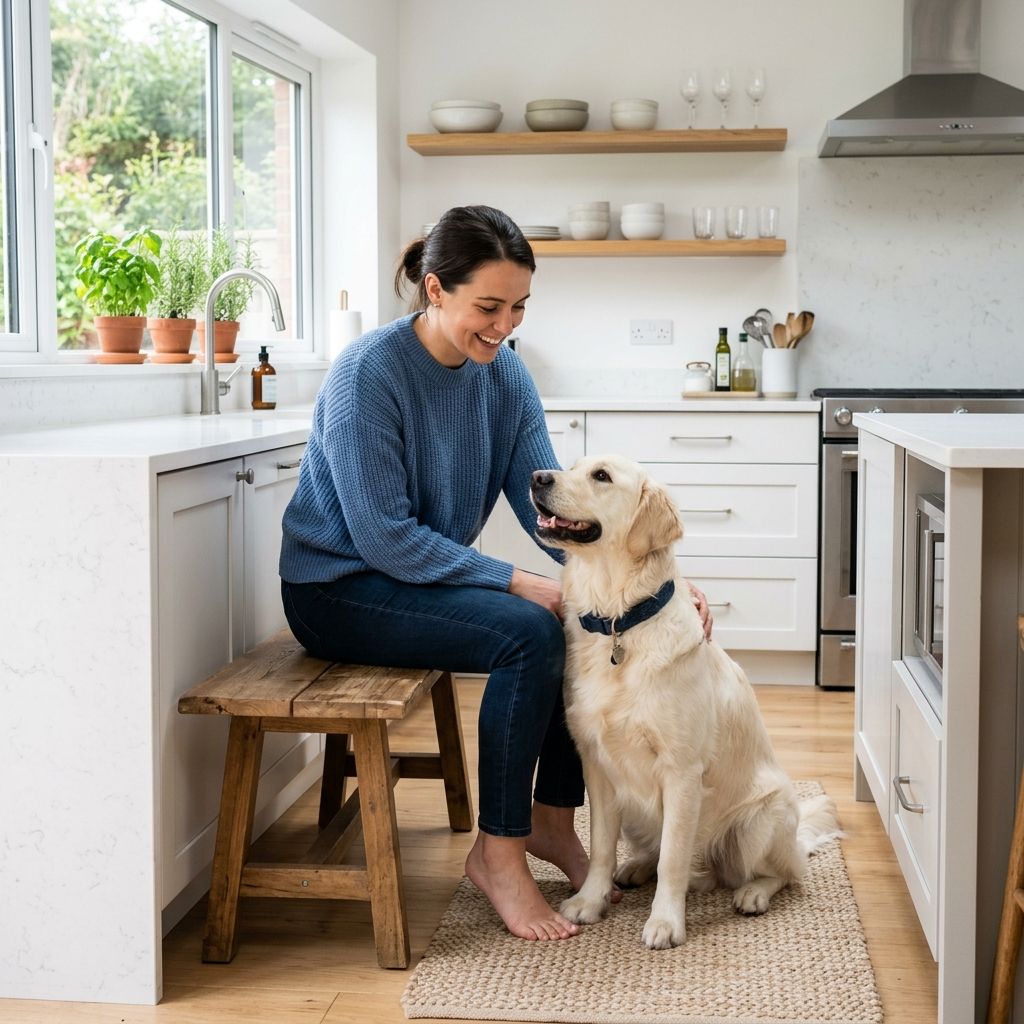
Place training is one of the most powerful tools in a behaviorist's toolkit. It teaches your dog to go to a specific spot and stay there until released. A dog on their mat cannot simultaneously have paws on the counter. It's an incompatible behavior.
But place training does more than prevent the physical act — it gives your dog a positive, rewarding alternative to being excluded from kitchen activity. When done right, your dog will prefer being on their mat to anywhere else in the kitchen.
The 6-Step Place Training Protocol:
- Choose the Mat: Pick a comfortable mat in a quiet location. Associate it exclusively with positive experiences.
- Lure and Reward: Hold a high-value treat, say "place," lure all four paws onto the mat, mark, and reward. Repeat 5-10 times.
- Build Duration: Increase stay time from 2 seconds to 60+ seconds. Always reward while on the mat.
- Add Distance: Take steps back. If your dog gets up, return to the previous step.
- Add Distractions: Start quiet, then gradually add movement, sounds, and kitchen activity.
- Move to Kitchen: Practice with empty kitchen first, then add cooking activity. Reward heavily.
Vet Tip: Use high-value treats that compete with counter food smells. If your dog loves chicken, use cooked chicken on the mat. The mat must be the highest-value location in the room.
Evidence-Based Insight: Mat work training is highly effective for behavior modification (Joshua, 2019).
If your dog struggles with place training, see the Impulse Control section for building underlying self-control skills.
Action Item: Start teaching "place" today — choose a mat, lure your dog onto it, mark and reward.
- Place/mat training is the most effective incompatible behavior for counter surfing
- Start simple (quiet room) and gradually add kitchen distractions
- Use high-value treats to compete with counter food smells
- Build duration, then distance, then distraction — never all at once
- The mat becomes a safety signal and conditioned reinforcer over time
Impulse Control: Making Your Dog Choose You Over Food
Takeaway: Self-control is context-specific — kitchen training doesn't transfer from other rooms.
Even with perfect management and place training, your dog's underlying impulse control determines whether they'll choose the mat over the counter. And here's the critical insight: self-control is highly context-specific. A dog who "leaves it" reliably in the living room may still counter surf in the kitchen.
This is why many owners are frustrated — they have a dog who "knows" the command but still steals food. The training hasn't generalized to the tempting environment.
The "Leave It" Progression:
- Closed Hand: Hold a treat, say "leave it." When they stop trying, mark and reward with a DIFFERENT treat.
- Open Hand: Same, but open palm. Reward the moment they stop.
- Floor: Place treat on floor, cover with hand. Say "leave it." When they stop, uncover and reward.
- Low Surface: Place treat on low table. Stand back. Say "leave it." Reward from distance.
- Counter (Controlled): Dog on mat. Treat on counter. Say "leave it." Reward for staying on mat.
Silver et al. (2025) found that training effects do not transfer uniformly across environments — a dog trained in a quiet room showed no improvement in a high-distraction kitchen.
Food-motivated dogs need mat rewards more valuable than counter scraps. Use pieces of cooked chicken, cheese, or specialty training treats.
If your dog is highly food-motivated, see the Practical Protocol for a modified timeline.
Action Item: Practice "leave it" with a low-value treat 5x/day in a quiet room. Master closed-hand before progressing.
- Impulse control must be trained in the specific context — kitchen skills don't transfer
- Start with low-value distractions and gradually increase temptation
- Reward the choice to look at you instead of the food — this is the key moment
- Food-motivated dogs need rewards on the mat more valuable than counter scraps
- Progress takes time — rushing reinforces the wrong behavior
Common Mistakes (And How to Avoid Them)
Mistake 1: Punishing After the Fact
Wrong: Yelling after catching the dog with stolen food. Why it fails: Dogs can't link punishment to completed actions — they learn fear, not avoidance. Fix: Focus on prevention (management) and reward the alternative behavior.
Mistake 2: Inconsistent Household Rules
Wrong: One person allows table scraps, another doesn't. Why it fails: Mixed signals teach that counter surfing sometimes works (variable reinforcement). Fix: Everyone follows the same rules — no food on counters, same commands.
Mistake 3: Using Aversive Tools (Scat Mats, Citronella)
Wrong: Believing shock mats or citronella collars will stop counter surfing. Why it fails: Creates anxiety without teaching alternatives. Fix: Use positive reinforcement to teach the desired behavior on the mat.
Mistake 4: Expecting "Leave It" to Work Alone
Wrong: Thinking a reliable "leave it" command is enough. Why it fails: Self-control is context-specific — doesn't transfer to the kitchen. Fix: Train "leave it" specifically in the kitchen with real food temptations.
Mistake 5: Training Without Management
Wrong: Teaching place/mat but leaving food on counters. Why it fails: Every successful theft rehearses and reinforces the behavior. Fix: Remove all temptation while training the alternative behavior.
Practical Protocol: What To Do This Week
Days 1-2: Secure the Environment Clear all counters. Set up baby gates. Store all food in sealed containers. This is non-negotiable — management is the foundation.
Days 3-4: Start Place/Mat Training Begin teaching "place" in a quiet room. Use high-value treats. Keep sessions short (5 minutes, 3x/day). Focus on duration first.
Days 5-7: Add Kitchen Context Practice place/mat in the empty kitchen. Add minimal movement and cooking sounds. Reward heavily — the kitchen is high-distraction.
Week 2: Introduce "Leave It" Start the progression in a quiet room. Practice 5x/day with low-value treats. Only progress when your dog succeeds 80% of the time.
Week 3: Combine Place + Kitchen Activity Practice place/mat while cooking a simple meal. Start with low-distraction cooking and gradually increase complexity.
Week 4+: Increase Distractions Gradually increase kitchen activity while your dog stays on their mat. Transition to intermittent reinforcement.
Timeline: Most dogs improve in 2-3 weeks. Full habit formation: 4-8 weeks. Puppies: 6-12 weeks. Entrenched habits: 3+ months.
Frequently Asked Questions
Why does my dog counter surf?
An evolved scavenging instinct combined with self-rewarding reinforcement. The kitchen provides the most concentrated food rewards.
How to stop dog stealing food from counter?
Three steps: remove all temptation, train an incompatible behavior (place/mat), and build impulse control in the kitchen context.
How long does it take to stop counter surfing?
Most dogs show improvement in 2-3 weeks. Full habit formation takes 4-8 weeks.
Should I punish my dog for counter surfing?
No. Punishment fails because dogs can't link consequences to completed actions. Use management and positive reinforcement.
Why does my dog only counter surf when alone?
Dogs are sensitive to human visual access — they steal more when unwatched (Kaminski et al., 2013).
What commands stop counter surfing?
"Place" or "mat" (incompatible behavior) combined with "leave it" (impulse control), trained in the kitchen.
Can counter surfing be cured in adult dogs?
Yes, but it takes longer. Adults need stricter management and more repetition to break established patterns. ---
Key Takeaways
- Counter surfing is an evolved scavenging instinct — not defiance or spite
- The 3-step protocol works: remove ALL temptation, train an incompatible behavior (place), build impulse control in the kitchen context
- Punishment fails — dogs can't link consequences to completed actions
- Training must be context-specific — kitchen skills don't transfer from other rooms
- Most dogs improve in 2-3 weeks with consistent management and positive reinforcement
- If your dog growls, snaps, or guards the kitchen, seek professional help immediately
- Every family member must follow the same rules — consistency is essential
References
- Kaminski, J., et al. (2013). "Dogs steal in the dark: the role of human visual access in food stealing behavior." Animal Cognition, 16(5), 737-744.
- Bräuer, J., et al. (2004). "Dogs' sensitivity to human visual cues: a comparative study of two breeds." Animal Cognition, 7(2), 85-90.
- Heberlein, E., et al. (2017). "Breed differences in canine perspective taking: evidence from a food competition task." Animal Cognition, 20(3), 497-506.
- Huber, L., et al. (2025). "Canine perspective taking in food competition: the role of human attentional states." iScience, 28(3), 112045.
- Barela, D., et al. (2024). "Impulsivity as a trait in domestic dogs: a meta-analysis of behavioral tests." Applied Animal Behaviour Science, 275, 105689.
- Silver, A., et al. (2025). "Training does not uniformly increase canine self-control: context-specific effects of impulse control training." Animals, 15(4), 523.
- Singer, B., et al. (2024). "Impact of training discipline on inhibitory control in domestic dogs." Animals, 14(18), 2723.
- Buttner, B., et al. (2021). "When to start puppy training: a retrospective study on outcomes of early positive reinforcement training." Animals, 11(21), 5970.
- Bhadra, A., & Bhadra, P. (2014). "The rule of thumb in free-ranging dogs: the 'if it smells like meat, eat it' principle." Journal of Ethology, 32(1), 45-51.
- Sarkar, S., et al. (2019). "Foraging strategies in free-ranging dogs: implications for human-dog coevolution." Frontiers in Ecology and Evolution, 7, 234.
- Vieira de Castro, A., et al. (2020). "Aversive-based training impacts on dog welfare and performance." Applied Animal Behaviour Science, 227, 104955.
- Joshua, J. (2019). "Using mat work training in behavior modification protocols for dogs." IAABC Foundation Journal, 1(2), 45-52.